
-
Your next favorite book
is waiting.
Summary | Excerpt | Reading Guide | Reviews | Beyond the book | Read-Alikes | Genres & Themes | Author Bio
 Book Reviewed by:
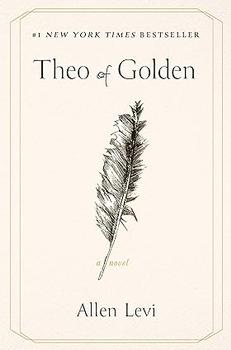
Allen Levi's debut novel Theo of Golden is a feel-good work of love and connection. As
the book opens, its protagonist, Theo, has taken lodgings in Golden, Georgia one spring
day. We learn that he's in his eighties, was born in Portugal but has lived all over
the world, and has made a fortune as a "man of business"—but we don't know why he's
in Golden. He stumbles on The Chalice, a coffee shop near his new home, where he
becomes enraptured by a series of portraits that adorn the café wall. He befriends the
proprietor, who tells him the display is comprised of 92 works drawn by a local artist
depicting people who've stopped by the shop over the years. As Theo studies each work
of art, he concludes that they don't belong there; they should be hanging in
these people's homes. Theo develops a plan: he will buy them one at a time, contact each subject, meet them in the park across the Promenade, and gift them with their portrait.
The bulk of the novel consists of Theo making good on his proposal. As he meets each
of the townsfolk, he sits and talks with them for a period of time, learning about their
lives. He has the uncanny ability to draw out a person's deepest pain or insecurity (one
character remarks that "the old man listened in a way that made one dangerously willing
to talk"). Theo speaks to people of the sadness he sees in their portraits, but also the
goodness he finds there. He tells each one exactly what they need to hear to make them
feel better about themselves. A journalist who's been sent to interview him, for example,
has body image issues and is stunned by the beauty she sees in her portrait. "[T]he
artist simply drew what he saw and what he saw – who he saw – is a work of art," Theo
informs her. He heals the psyches of many people, telling several
that there's so much goodness in them that they have the potential to be saints. Those Theo
meets, in return, start to act toward others with more kindness and
empathy. Readers are treated to many detailed, concise character sketches, and as
Theo forms deeper friendships with some, we come to care about them, too.
In addition to its unforgettable characters, the book overflows with beautifully descriptive
passages:
"The [bench] Theo chose backed up to and was cradled beneath the thick limbs of a chestnut oak…[T]his towering tree, as others had done in other places, served as Theo's quiet companion and mentor in the ancient ways of stillness and listening. It was good company for an old soul."
I suspect that neither the characterization nor the lovely writing is the main reason so
many readers adore this book, however. First, I imagine most people will find themselves
in at least one of the portraits, and Theo's words of acceptance will likely resonate
deeply. Perhaps more importantly, though, readers are encouraged to see those around
them through Theo's eyes, focusing on their gifts rather than their failings. Finally, people
of faith will almost certainly find inspiration here; Theo firmly believes in the goodness of
God and encourages the faith of others by word and by deed. While there is a Christian
slant, the book is never preachy, and the author's message of compassion
is universal.
From a literary standpoint, Theo of Golden does have a couple of weaknesses. There are a few unpleasant characters Theo interacts with, and they are incredibly one-dimensional. Since the book's message is about finding the goodness buried in each of us, it seems out of step to portray these people with no redeeming qualities. The fact that all the "good" characters are depicted with such depth causes this failing to stand out all the more.
My big complaint, though, is that I felt there could have been a stronger
narrative arc. We're drawn into the story by our curiosity about this mysterious do-gooder, but we don't get the answers we seek until the very end, when the author does a
large data dump over the last few pages. Levi is great at setting up the
action, and all the loose ends are tied up at the conclusion, but there's a lot of
text in the middle where there's not a lot of movement, plot-wise. I personally would have
appreciated more clues to Theo's identity seeded throughout.
Theo quotes a poem by Wordsworth, saying he wants to commit "little, nameless,
unremembered acts of kindness and love," and that he wishes to be a "formidable
source for good." Theo of Golden inspires us to strive to do likewise; it's one of those
rare books that may leave the reader a better person after its conclusion. It's a
wonderfully optimistic novel that feels like an appropriate antidote to the cynicism and
hate of the day.
 This review
first ran in the December 10, 2025
issue of BookBrowse Recommends.
This review
first ran in the December 10, 2025
issue of BookBrowse Recommends.

If you liked Theo of Golden, try these:

by Ron Rindo
Published 2026
A remarkable child transforms a small, rural community―and soon the world.

by Shelby Van Pelt
Published 2025
Winner of the 2022 BookBrowse Debut Award
For fans of A Man Called Ove, a charming, witty and compulsively readable exploration of friendship, reckoning, and hope that traces a widow's unlikely connection with a giant Pacific octopus.
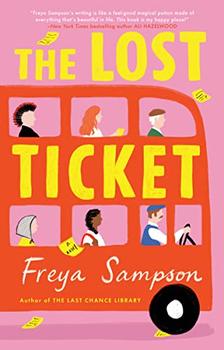
by Freya Sampson
Published 2022
Strangers on a London bus unite to help an elderly man find his missed love connection in the heartwarming new novel from the acclaimed author of The Last Chance Library.

L.A. Women by Ella Berman
Two ambitious writers in 1960s LA face betrayal when one writes a novel based on the other's life.





Your guide toexceptional books
BookBrowse seeks out and recommends the best in contemporary fiction and nonfiction—books that not only engage and entertain but also deepen our understanding of ourselves and the world around us.

