
-
Your next favorite book
is waiting.
Summary | Excerpt | Reading Guide | Reviews | Beyond the Book | Read-Alikes | Genres & Themes | Author Bio
 Book Reviewed by:
This article relates to Theo of Golden

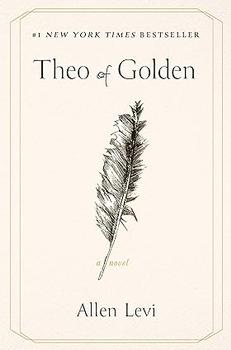
 In Allen Levi's novel Theo of Golden, the protagonist moves to a small city in Georgia
where he forms friendships with many of the town's residents. Among these are a young
man studying the cello at a nearby university and a street musician who plays guitar for
tips; the three bond over discussions about music. Theo, who is from Portugal, mentions
a musical genre called the fado, and later, a fado written by the local musicians features
in an important scene.
In Allen Levi's novel Theo of Golden, the protagonist moves to a small city in Georgia
where he forms friendships with many of the town's residents. Among these are a young
man studying the cello at a nearby university and a street musician who plays guitar for
tips; the three bond over discussions about music. Theo, who is from Portugal, mentions
a musical genre called the fado, and later, a fado written by the local musicians features
in an important scene.
Fado de Lisboa—Lisbon fado—evolved in the port town of
Lisbon, Portugal, in the early 19th century. Meaning "fate" or "destiny" in English, the fado
is a song generally about yearning—pining for lost love or lost youth, sorrow for what
might have been, a desire for a better future. Lyrics are often improvised but are almost
always set to a melancholy melody. Fado is traditionally sung by a soloist
accompanied by a Portuguese guitar (a 12-stringed instrument that's teardrop-shaped like
a mandolin or lute), and is sometimes referred to as the Lisbon blues—a
song meant to be felt deep in the soul. It's believed that fado arose in Lisbon's
working-class neighborhoods as its marginalized residents—sailors, sex workers,
impoverished people—used music as an outlet for their sorrows.
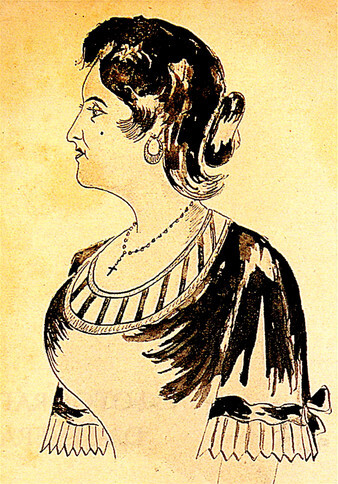
Many credit Maria Severa Onofriana (1820-1846) with popularizing the genre. Known
as "A Severa," she was born in Lisbon. Her father was of cigano
ancestry (a member of the Portuguese Romani community) and her mother (locally
called "A Barbuda"—the Bearded Woman) was known as a prostitute. Severa began
entertaining at an early age in taverns around Lisbon's Rua do Capelão. Her fans cited
her exotic beauty and her dramatic singing style; her specialty was the fado. She became the mistress of the wealthy and influential Count of Vimioso, and as she performed for his guests, her fame increased. The story of her scandalous affair and her tragic early death (thought to have been from tuberculosis) spread across Portugal, and so did the fado.
A second type of fado—the fado de Coimbra—arose in the latter half of the 19th century
in the university town of Coimbra, Portugal. Although this fado is sorrowful like the
fado de Lisboa, it's usually based on poetry and composed in a much more
formal style. It's exclusively sung by men in academic dress—trousers, cassock,
and a black cape. (Women who sing the fado de Lisboa often
wear a black shawl in honor of Severa.) The fado de Coimbra never gained the
popularity of the fado de Lisboa, and when people mention fado, they're almost always
referring to the Lisbon version.
In the 20th century, Amália Rodrigues (1920-1999) helped fado become an
internationally recognized art form. Known as Rainha do Fado ("Queen of Fado"), Rodrigues debuted as a fadista when she was just 15 years old, with her first professional
engagement occurring a mere four years later. By the time she was 25, she was touring
internationally and had recorded her first album. She starred in several movies and had
170 albums to her credit at the time of her death. She was considered a cultural
icon in Portugal—so much so that three days of national mourning were declared to
honor her passing. In this YouTube video, Rodrigues sings "Gaivota," a fado in which she
compares her unattainable love to the flight of a gull:
UNESCO created its Representative List of the Intangible Cultural Heritage in 2008,
which was designed to protect "traditions or living expressions inherited from our
ancestors and passed on to our descendants, such as oral traditions, performing arts,
social practices, rituals, festive events, knowledge and practices concerning nature and
the universe or the knowledge and skills to produce traditional crafts." It's also meant to support communities who are the custodians of such
practices, and to promote cultural diversity. Fado was added to this list in 2011.
One can still hear fado performed in Lisbon today, and the genre is more popular there
than ever. The song form is considered so much a part of Portuguese culture that tour
packages to its larger cities almost always include an evening at a fado
house—an intimate restaurant that hosts musical performances as part of the
dining experience. For those seeking to hear one in a less touristy environment, fados are also sung in many of Lisbon's out-of-the-way taverns.
The Fado-singer Maria Severa by Francisco Augusto Metrass (1825–1861), via Wikimedia Commons
Filed under Places, Cultures & Identities
 This article relates to Theo of Golden.
It first ran in the December 10, 2025
issue of BookBrowse Recommends.
This article relates to Theo of Golden.
It first ran in the December 10, 2025
issue of BookBrowse Recommends.

L.A. Women by Ella Berman
Two ambitious writers in 1960s LA face betrayal when one writes a novel based on the other's life.






Your guide toexceptional books
BookBrowse seeks out and recommends the best in contemporary fiction and nonfiction—books that not only engage and entertain but also deepen our understanding of ourselves and the world around us.


