
-
Your next favorite book
is waiting.
Summary | Excerpt | Reading Guide | Reviews | Beyond the book | Read-Alikes | Genres & Themes | Author Bio
 Book Reviewed by:
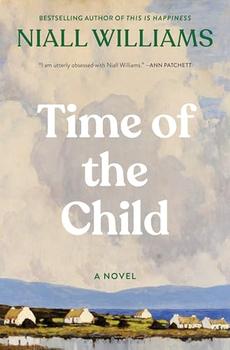
During the Advent season of 1962, the rural town of Faha receives a most unexpected Christmas miracle: a child, left in the dark near the ever-flowing River Shannon. "To those who lived there, Faha was perhaps the last place on earth to expect a miracle," Niall Williams writes. "It had neither the history nor the geography for it. The history was remarkable for the one fact upon which all commentators agreed: nothing happened here." And yet the child will transform the lives of an aging country doctor and his daughter, and will draw forth a love and humanity from those who live in the small Irish town.
In Time of the Child, the widowed, melancholy doctor Jack Troy is the General Practitioner of Faha and dutifully serves its residents; he is well-received and respected by the townspeople, although some perceive him as aloof and distant. His vocation is physically and spiritually exhausting, but his surgery—at Avalon House, the Troys' generational home that serves as both residence and office—is always open, as it was under his father before him.
Living with Jack is Ronnie, the eldest of his three daughters, who assists with the ongoing business of his practice. Having missed a chance at love, Ronnie has focused her passion instead on a life of books and writing; what she doesn't know is that her father is responsible for her failed courtship and is quietly plotting to set things right. Their relationship is one of emotional restraint, and the deep feelings of respect they have for each other go unsaid—a dynamic inherent to "the inveterate layering of all Irish life," Ronnie thinks, "where most important things were never said, and the depth was more valued than surface."
Twelve-year-old Jude Quinlan is the one who finds the baby. He has a large responsibility for a young boy—his father, Pat, is known for his drinking, and Jude is regularly tasked by his mother with retrieving him from the pub in town. While Jude loyally waits outside the pub for his father on the night of Faha's fair, he finds the baby left alone in the cold. When he brings the child to Avalon House, the house that has been so devoid of light and cheer brightens immediately, and the hearts of Jack and Ronnie fill with unfettered joy. Knowing that the law will not permit them to keep the baby, the two become co-conspirators in keeping it a secret (and for the second time that night, young Jude will be given a difficult task by an adult—he must promise to tell no one about the child). The novel's plot hinges on their efforts at secrecy, as both father and daughter attempt to ensure the child isn't taken away from them. But a secret can't last long in Faha—soon enough, a young parish priest comes around to discuss the dementia diagnosis of Father Tom, an older priest, and becomes suspicious by a faint baby's cry and the Troys' unusual behavior. As rumors spread, Jack is forced to put a desperate plan into action, hoping to recify his past mistakes and allow Ronnie to keep the child.
It may feel at first glance as though nothing much is happening in the small village of Faha, but that is the magic of the novel—the plot turns on the daily routines of rural life and the characters' interactions and emotions. The backstories of rich characters like Father Tom and Jude Quinlan help create a larger picture of the communal bonds in the town, enhancing the power of the story; and Williams' breathtaking prose paints vivid, deep portraits of his characters, as when he describes Jude's teetering belief in the lore of fairies:
"It was nonsense, a seafoid he would not have admitted or said aloud, but because he was on the rope-bridge between man and boy the world had a sway in it and the answer to if he believed in spirits was both no and maybe."
Time of the Child is not light reading; it is a slow-moving story, infused with cultural nuances and Irish lore, that calls for concentration from its reader. It's also heavy with observational details and, at times, lengthy passages. Williams has a gift for creating atmosphere and placing the reader in the room, but his long, lyrical descriptions may turn off some readers. For example, here's how he sets the scene of the doctor approaching a dying patient's home:
"The house was a long low farmhouse of the traditional kind. It was thatched, but the thatch had the air of the earth's overcoat, ancient and sombre, here and there patches like black flags of surrender to inevitable defeat by a lifetime's pressing skies."
Told over the weeks of the Christmas season, Time of the Child is a literary stunner that honors the landscape and the "instinctive grace in country people." A nod, a tip of the cap, or a coin extended to one who has none: Faha's Christmas miracle is found not only in the discovery of a child but in the depth of the ordinary where the extraordinary transpires.
 This review
first ran in the December 10, 2025
issue of BookBrowse Recommends.
This review
first ran in the December 10, 2025
issue of BookBrowse Recommends.

If you liked Time of the Child, try these:

by Roisín O'Donnell
Published 2026
From an unforgettable new voice in Irish fiction, a heart-pounding, life-affirming story about one woman trying to leave her marriage and start over.

The Heaven & Earth Grocery Store
by James McBride
Published 2025
From James McBride, author of the bestselling Oprah's Book Club pick Deacon King Kong and the National Book Award–winning The Good Lord Bird, a novel about small-town secrets and the people who keep them.
by Paul Murray
Published 2024
From the author of Skippy Dies comes Paul Murray's The Bee Sting, an irresistibly funny, wise, and thought-provoking tour de force about family, fortune, and the struggle to be a good person when the world is falling apart.
L.A. Women by Ella Berman
Two ambitious writers in 1960s LA face betrayal when one writes a novel based on the other's life.






Your guide toexceptional books
BookBrowse seeks out and recommends the best in contemporary fiction and nonfiction—books that not only engage and entertain but also deepen our understanding of ourselves and the world around us.

