
-
Your next favorite book
is waiting.
Summary | Excerpt | Reading Guide | Reviews | Beyond the Book | Read-Alikes | Genres & Themes | Author Bio
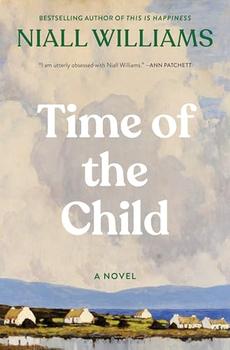
 Book Reviewed by:
This article relates to Time of the Child

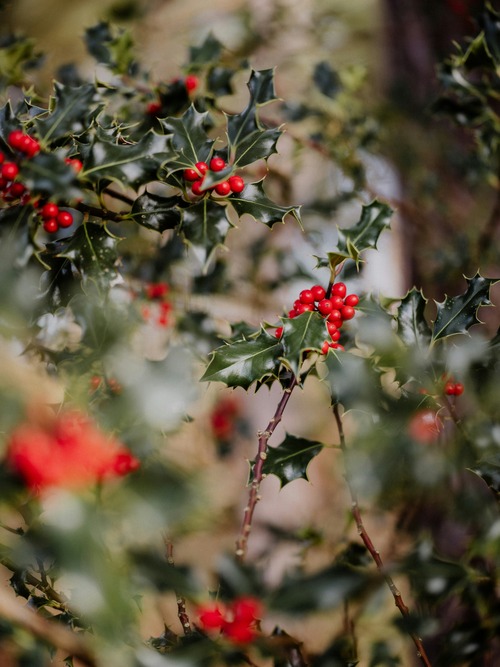 Time of the Child by Niall Williams is rich with Irish lore and tradition. The story is set in the fictional Irish village of Faha, where holly branches adorn the homes, shops, and churches during the season of Christmas. The holly tree that sits at the top of the drive of main character Jack Troy's home is the best-looking in Faha. As the Christmas season approaches, those in town boldly bring tools to cut its fine berry branches—although unfortunately, the remaining branches provide little privacy for the Troy family home, leaving them open to the exposure of a hidden secret.
"It was a known part of the natural clockwork of the parish that, come the first weeks of December, the old tree would be showing the ruby fruit that had the crossed character of being beautiful and toxic," Williams writes. "And because holly had its place in custom and lore—from the Druids' Holly King to Christ himself—berried branches had to be got for each house in the parish."
In Celtic mythology, the Holly King and the Oak King personify the winter and summer cycles of the year. The Holly King rules over the half of the year from the summer solstice to the winter solstice, at which time the Oak King defeats the Holly King and rules until the next summer solstice. The two kings' ongoing battle is a way of explaining the seasonal cycles of the year: the Holly King's half is the "dark half" of the year, when there is less light during the day, and the Oak King's half is the "light half" with more sunlight.
The depictions of the Holly King range from a friendly, Santa-type character to an eerie and frightening figure. The Holly King is male and is typically shown wearing a crown of holly leaves and berries, and the background of images of him often depicts the winter season.
The Arthurian legend Sir Gawain and the Green Knight may have been based on the archetype of the Holly King and the Oak King. In that tale, the Green Knight enters Arthur's court on New Year's Eve wielding a holly bough in one hand and challenging the knights to a beheading contest; Sir Gawain, whose name means "the Hawk of May," potentially symbolizing the waxing year, accepts.
The boughs of the holly tree have long been a representation of the winter season and part of many Celtic and British Christmas traditions. One piece of folklore is that cutting down a holly tree is a harbinger of bad luck, which is why people opt to take only the boughs for decoration. Another tradition is to bring holly into one's home to protect against evil influences or as a symbol of eternal life. People once believed that if the leaves of the boughs brought inside were thorny, the man would be in charge during the winter, but if they were smooth, the women would rule the household.
Image of holly by Annie Spratt.
Filed under Places, Cultures & Identities
 This article relates to Time of the Child.
It first ran in the December 10, 2025
issue of BookBrowse Recommends.
This article relates to Time of the Child.
It first ran in the December 10, 2025
issue of BookBrowse Recommends.

L.A. Women by Ella Berman
Two ambitious writers in 1960s LA face betrayal when one writes a novel based on the other's life.




Your guide toexceptional books
BookBrowse seeks out and recommends the best in contemporary fiction and nonfiction—books that not only engage and entertain but also deepen our understanding of ourselves and the world around us.

