
-
Your next favorite book
is waiting.
Summary | Excerpt | Reviews | Beyond the book | Read-Alikes | Genres & Themes | Author Bio

Adventures in Human Anatomy
by Mary Roach Book Reviewed by:
Mary Roach has been presenting intriguing information about human biology to lay readers since her first book, Stiff: The Curious Lives of Human Cadavers, was published more than 20 years ago. Her eighth, Replaceable You: Adventures in Human Anatomy, takes a deep dive into the various attempts scientists have made to replace failed or damaged body parts. The book covers topics from hair implants to prosthetic feet, and everything in between—lens replacement for eyes, implants for failing teeth, heart replacements from pigs, grafts for damaged skin (there are seventy skin substitutes on the market right now, Roach informs us)—all the way down to the cellular level. And, in typical Roach style, she doesn't shy away from technology for those body parts that people don't usually talk about. For example, we learn why, when fashioning a new vagina, repurposing part of a colon is superior to using an inverted penis, and why no one's been able to build a functioning anus. This is definitely material most of us didn't learn in high school biology!
Roach's prose is clear and easy to understand as she explains complex scientific concepts. In a chapter titled "Gimme Some Skin: Replacing the Human Exterior," for example, she talks about how doctors use a medical tool similar to a woodworker's plane to prepare skin that will be used to heal tissue damaged by a severe burn:
"A skin graft is thin to help it survive in its new location. Until capillaries from the wound bed begin to grow in, the cells of the graft will be nourished by the plasma they sit in. The term for this is osmotic imbibition: drinking through your membrane. If the graft were much thicker, the cells on the inside of it would starve."
The book is more than just a simplified explanation of procedures, however. Roach combines all this medical minutia with healthy doses of history and trivia. (Did you know that in 600 BCE, "the Vedic surgeon Sushruta reconstructed noses from a plot of adjacent facial skin," making rhinoplasty "the original plastic surgery"?) We learn about pioneers in the various medical and scientific fields related to anatomical replacements, as well as early efforts at repairing the human body—like the first-ever hip replacement, performed in 1891, using a ball and socket made of ivory. Her narrative is also part travelogue, as she describes her interesting experiences as she ventures across the globe for her research: in China, she sees an electric car "whose owner, rather than recharge it, backed it into a stall for a quick robotic battery swap"; in Mongolia, she describes an operating table made of wood that looks like an old-fashioned kitchen table. Replaceable You also includes conversations with leading surgeons and scientists about their crafts, as well as scenes from the operating room, as Roach watches the removal of a pig's heart and the cataloguing of a corpse's skin for donation.
Roach also touches on biases in medicine. At one point, she meets a woman whose foot was damaged by spina bifida, making it impossible for her to walk. Yet it took her decades to find a surgeon willing to amputate it so she could use a prosthetic. "It's a common and misguided assumption," Roach writes. "If you're missing a limb, then you must be operating at a sizeable disadvantage compared to anyone with the full complement. There is a strong bias for wholeness." Another example: for decades, doctors didn't even tell women that they had the option to "go flat" after a mastectomy, being certain that they'd opt for reconstruction.
Replaceable You doesn't speculate much on what might be possible in the future, instead focusing on the technology available today (so much so that my advanced reader's copy had notes to Roach's team to check on an experiment's progress before the final version of the book is published). And yet Roach freely admits that she's painting in broad strokes for an audience of general readers. Her book "is not a roundup of the latest advances in regenerative medicine," she writes; "what I offer is more of a primer, a reality check for those who, like me, find themselves bobbing along in the swift current of discoveries that feel at once wondrous, improbable, and surreal."
And Roach's writing is fascinating as always, providing a clear yet absorbing picture of her subject matter. Even non-lay readers—those with medical knowledge or biology degrees—will find Replaceable You, with its wide range of technological, cultural, and historical material, an entertaining and engaging read.
 This review
first ran in the October 8, 2025
issue of BookBrowse Recommends.
This review
first ran in the October 8, 2025
issue of BookBrowse Recommends.

If you liked Replaceable You, try these:
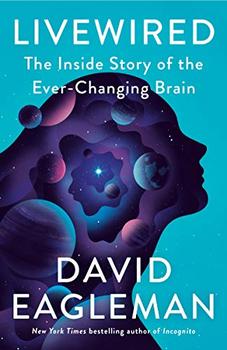
by David Eagleman
Published 2021
From the best-selling author of Incognito and Sum comes a revelatory portrait of the human brain, based on the most recent scientific discoveries about how it continually adapts, recreates, and formulates new ways of understanding the world we live in.
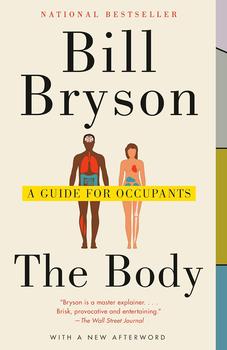
by Bill Bryson
Published 2021
Bill Bryson, bestselling author of A Short History of Nearly Everything, takes us on a head-to-toe tour of the marvel that is the human body. As addictive as it is comprehensive, this is Bryson at his very best, a must-read owner's manual for everybody.

by Ed Yong
Published 2018
Joining the ranks of popular science classics like The Botany of Desire and The Selfish Gene, a groundbreaking, wondrously informative, and vastly entertaining examination of the most significant revolution in biology since Darwin - a "microbe's-eye view" of the world that reveals a marvelous, radically reconceived picture of life on earth.

L.A. Women by Ella Berman
Two ambitious writers in 1960s LA face betrayal when one writes a novel based on the other's life.






Your guide toexceptional books
BookBrowse seeks out and recommends the best in contemporary fiction and nonfiction—books that not only engage and entertain but also deepen our understanding of ourselves and the world around us.

