
-
Your next favorite book
is waiting.
Summary | Excerpt | Reviews | Beyond the Book | Read-Alikes | Genres & Themes | Author Bio

A Journey into Consciousness
by Michael Pollan Book Reviewed by:
This article relates to A World Appears

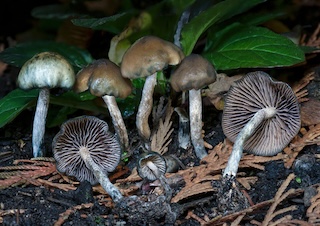 In his book A World Appears: A Journey into Consciousness, Michael Pollan states that his interest in human consciousness sprang from an experiment he undertook using magic mushrooms, a fungus that produces a chemical known as psilocybin.
Many use the terms hallucinogenic and psychedelic interchangeably when talking about certain drugs, but technically they're not the same thing. Hallucinogen is a broad term for any chemical that alters one's perception of reality, while psychedelic drugs accomplish this effect by acting on a specific receptor in the nervous system (i.e., all psychedelics are hallucinogens, but not all hallucinogens are psychedelics). Psilocybin is considered a psychedelic, along with LSD and mescaline (also known as peyote).
Once consumed, psilocybin is converted to another chemical called psilocin, which attaches to and activates the receptors the brain usually used to process serotonin—a hormone with several biological functions, most notably boosting one's mood. Evidence suggests that psilocin changes how regions of the brain communicate, facilitating traffic between areas that don't usually "speak" to each other while disrupting other neural pathways. The part of the brain most impacted is the "default mode network," which is most active when we self-reflect. The decrease in signals traveling through this area may reduce a person's focus on the self, and "may lead to a greater feeling of openness and increased connectedness to the world," according to the NIH.
Magic mushrooms have a long history of use in the Americas; there's evidence that some of the Indigenous peoples of South America employed them in healing and spiritual ceremonies more than 5,000 years ago (Aztecs referred to them as teonanacatl, meaning "god's flesh"). As Spanish missionaries arrived on the continent, they documented the practice. Friar Bernardino de Sahagún wrote in 1529 about a religious rite in which the mushrooms were consumed in order to see visions and speak with the gods. In its misguided attempt to convert the Indigenous population to Christianity, the Roman Catholic Church banned Native rituals and officially prohibited the use of magic mushrooms in 1656. The ritual consumption of psilocybin continued in small pockets across South America, however.
In the 1950s, R. Gordon Wasser, the vice president of J.P. Morgan and an amateur ethnomycologist, traveled across Mexico with a photographer, documenting different cultural practices concerning mushrooms. Near the Oaxacan village of Huautla de Jiménez, he met Mazatec healer María Sabina, who allowed him to witness some of the ceremonies and introduced him to magic mushrooms. Wasser proceeded to write an article for Life magazine about the experience, thereby introducing the drug to the United States public and helping to spark the psychedelic counterculture of the 1960s and '70s. Unfortunately, this notoriety had a ruinous effect on Sabina and Huautla de Jiménez. After the publication of the article, tourists began arriving in droves, completely disrupting the sacred ceremonies and village life in general.
Psilocybin was banned by the U.S. government in 1968 and listed as a Schedule 1 substance (drugs that have a high potential for abuse). Recently, however, researchers are taking a second look and are discovering it may treat some mental health disorders, such as anxiety and depression, and consuming it can actually aid those struggling with substance use disorders. Clinical trials are also pointing to magic mushrooms as therapeutic for PTSD.
Unlike some other hallucinogens, psilocybin is deemed relatively safe. It's not known to be addictive, and fatal overdoses are extremely rare because of the substance's low toxicity. Nevertheless, the chemical does raise a person's heart rate and blood pressure, which can be dangerous for people with cardiovascular conditions. It can also lead to dangerous behaviors while under the influence, since one's reality becomes altered. "Bad trips" are possible, too, where people experience extreme fear or paranoia. Finally, other mushrooms, including some that are deadly, can be mistaken for magic mushrooms, so accidental poisoning is not unheard of.
There are about 200 different types of magic mushrooms, and they vary in potency and appearance. They're easy to grow and prepare—they can be dried, turned into a powder, eaten fresh, or steeped in tea. They're becoming increasingly popular as well; according to a RAND study, approximately 11 million U.S. adults used them in 2025.
Psilocybe baeocytis, photographed near Issaquah, Washington, courtesy of Alan Rockefeller on Mushroom Observer via Creative Commons Attribution Share-Alike 3.0 Unported (CC BY-SA 3.0)
Filed under Medicine, Science and Tech
 This article relates to A World Appears.
It first ran in the February 25, 2026
issue of BookBrowse Recommends.
This article relates to A World Appears.
It first ran in the February 25, 2026
issue of BookBrowse Recommends.
Theo of Golden by Allen Levi
One spring morning, a stranger arrives in the small southern city of Golden. No one knows where he has come from…or why…






Your guide toexceptional books
BookBrowse seeks out and recommends the best in contemporary fiction and nonfiction—books that not only engage and entertain but also deepen our understanding of ourselves and the world around us.

