
-
Your next favorite book
is waiting.
Summary | Excerpt | Reviews | Beyond the Book | Read-Alikes | Genres & Themes | Author Bio
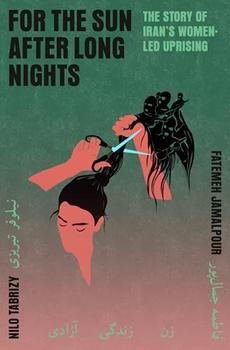
The Story of Iran's Women-Led Uprising
by Nilo Tabrizy, Fatemeh Jamalpour Book Reviewed by:
This article relates to For the Sun After Long Nights

 Before the 1979 Islamic Revolution, Iran had started taking significant steps to improve women's rights. Under Reza Pahlavi, many reforms were implemented, increasing women's access to education, work, and public life, while also protecting their freedoms in the private sphere. With the Family Protection Law (1967, 1975), for example, the minimum age of marriage was raised to 15 and later to 18, and women were granted rights in divorce and custody matters.
Women in Iran After the 1979 Revolution
During the 1979 revolution, many women participated in the protests, hoping that the revolution would accelerate what had already started. However, once in power, the new clerical regime revoked most of their gained rights. The Family Protection Law was suspended, the marriage age for girls was lowered to 8 years and 9 months with a male guardian's permission, and fathers were granted automatic custody. Compulsory hijab in public was enforced, women were banned from many professions and activities (sports, singing/dancing in public, etc.), and universities were segregated.
The "Woman, Life, Freedom" Movement
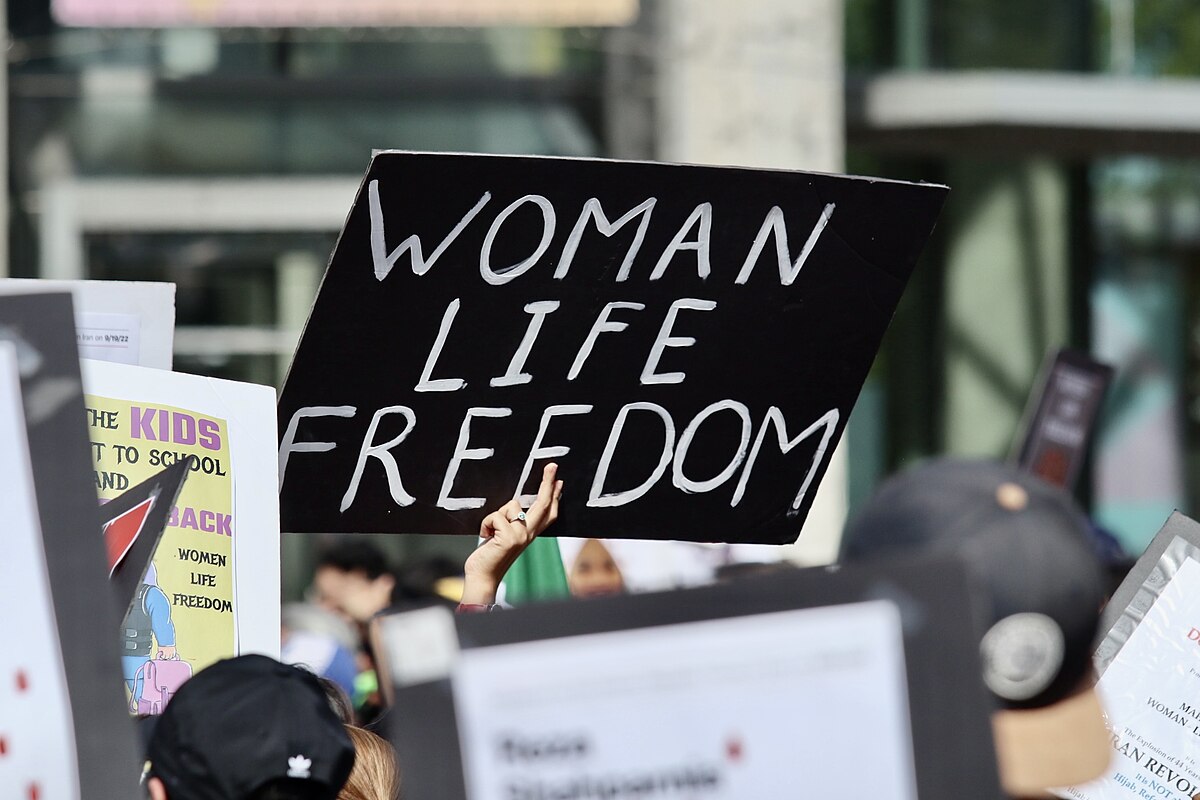
Before it was adopted by Iranian women, the "Woman, Life, Freedom" (Jin, Jiyan, Azadî) slogan had already been in use for decades, originating in Kurdish protests against patriarchy and oppression. It became more prominent in 2022 after the death of Jîna Amini, a 22-year-old Kurdish-Iranian woman who was brutally beaten and killed while in custody of Iran's "morality police." She had been arrested for "wearing her hijab too loosely" in violation of the country's strict dress code. Her death immediately sparked protests in solidarity throughout Iran, which quickly turned into a widespread movement demanding equal rights for women. The movement took its name from the above slogan.
This movement was unprecedented in modern Iranian history because even though Iranians were no strangers to protests, up until that point most centered on elections or economic matters. The Woman, Life, Freedom movement, however, focused on women's rights and freedoms, and even more importantly, it was led by women themselves. No prior protest in Iran had so openly put women's oppression at the center.
Soon protests started also taking place across Europe and the Americas in solidarity with Iranians, leading the UN and many foreign governments to condemn Iran's repression. In November, the UN's Human Rights Council condemned the brutal repression of peaceful protesters after Amini's death, and passed a resolution for further investigation. A month later, the UN voted to expel Iran from the Commission on the Status of Women.
Inside Iran, authorities reacted with extreme violence. Security forces used tear gas, brutal force, executions, and mass arrests to suppress the movement. Amnesty International documented that on Sept 19–20 alone, at least eight people (including one minor) were killed and hundreds were injured. In the years since the protests began, hundreds of protesters have been killed and tens of thousands arrested. Reports highlight the use of secret, rushed trials, torture, and sexual violence against detainees, mostly women. Yet, many Iranian women continue to appear in public without hijabs, openly defying the state and its unjust laws.
Achievements and Current Status
Even though the movement has not managed to change the status quo, overturn discriminatory laws, and improve women's rights and freedoms, its achievements in the cultural and societal space are clear. Feminism and demanding change have become part of Iran's national consciousness as well as the consciousness of the Iranian diaspora. Iranian artists, athletes, and intellectuals have symbolically joined the movement by removing their hijabs in public. Families of victims continue to demand justice, holding memorials despite intimidation. Young men have become increasingly aware of and sensitive to the injustices experienced by women, and the new generation is moving away from the prejudices of the old. All in all, the movement has managed to shift public perception and ignite hope for the future. Today, it still carries on, with women defying the regime and protesting for their rights all over Iran.
Woman, Life, Freedom protest sign
Photo by Taymaz Valley, CC BY 2.0
Filed under Society and Politics
 This article relates to For the Sun After Long Nights.
It first ran in the October 22, 2025
issue of BookBrowse Recommends.
This article relates to For the Sun After Long Nights.
It first ran in the October 22, 2025
issue of BookBrowse Recommends.

L.A. Women by Ella Berman
Two ambitious writers in 1960s LA face betrayal when one writes a novel based on the other's life.






Your guide toexceptional books
BookBrowse seeks out and recommends the best in contemporary fiction and nonfiction—books that not only engage and entertain but also deepen our understanding of ourselves and the world around us.

