
-
Your next favorite book
is waiting.
Summary | Excerpt | Reviews | Beyond the book | Read-Alikes | Genres & Themes | Author Bio
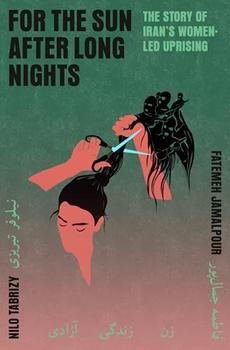
The Story of Iran's Women-Led Uprising
by Nilo Tabrizy, Fatemeh Jamalpour Book Reviewed by:
Longlisted for the National Book Award, For the Sun After Long Nights is a gripping account of more than six generations of Iranian feminists fighting against oppression. It's divided into three parts, each titled with a single word drawn from the slogan used by protesters through the years, which is also the name of the movement that inspired—and remains the central focus of—the book.
Woman, Life, Freedom.
The first part, "Woman," focuses on the murder of 22-year-old Mahsa Jîna Amini, and the Woman, Life, Freedom movement ignited by her death. Jîna was beaten and murdered in 2022 while in custody of Iran's morality police. She had been arrested for not wearing her hijab properly. Her death initially sparked a series of protests led by angry women seeking justice, but these soon grew into a wider social resistance movement drawing in people and communities long oppressed by the regime, especially minorities like Kurds and Baluchis. They all demanded the end of the dictatorship and a brighter future. This section offers a detailed account of the movement, the protests, and the stories of the women who took part in them, while also underscoring the importance of journalism during times of social unrest and the duty of journalists to uncover and share the truth. Second to Jîna's heartbreaking story, another significant takeaway is the strength, resilience, and perseverance of everyday Iranian women, journalists or not, who fight despite the cost and put their lives in danger.
The second part, "Life," narrates the personal and family stories of the book's two authors. Fatemeh Jamalpour is a journalist born and raised in Iran. While writing the book, she was still living in the country, joining the protests and documenting them from within. Nilo Tabrizy, an investigative reporter whose family emigrated from Iran when she was a child, writes from outside. Through snippets of deeply personal and emotional events, they guide us through the history of Iranian politics, movements, and important figures from the late 19th century to the present. This is a highly informative section that exposes the regime's corruption and crimes, while also highlighting the role of the West in both the establishment of the regime as well as in the constant back and forths, gains and losses of rights and freedoms of women.
The third part, "Freedom," delves deeper into the lives and resistance of protesters and the people fighting inside and outside Iran. It shares the stories of everyday women who were either murdered or persecuted by the regime, or fought against it. Often both. It also includes accounts of kids, men, journalists, and artists, and goes beyond the Woman, Life, Freedom movement to whole generations of protesters and other movements in Iran: protests against the regime's repression of women and minorities, against the killings and unlawful arrests by the police, and for seeking justice, accountability, and freedom. One of its most striking elements is its exploration of the role of public grief in these protests. Cemeteries and funerals turn into battlegrounds as mourners try to seek justice and the regime tries to control them by extorting, arresting, and persecuting them. The greatest strength of this section lies in its stories, which together reveal the courage and resilience of the Iranian people.
All in all, this is a gripping and highly engaging book. At times inspiring and uplifting, at others heartbreaking and shocking, it presents details and stories of Iran—its history and its people—often absent from Western media. It does not rely on dry facts and statistics. Instead, it tells the stories of real people, giving us not only their struggles and deaths but also their humanity: their names, their lives, what they loved. This is how we learn about Nika, a 16-year-old girl who lost her life during the protests, or Bibi Maryam, an Iranian revolutionary born in 1874. About the twins Elaneh and Elnaz Mohammadi. About Kian, a 9-year-old boy who liked boats and was killed by security forces.
Another of the book's assets worth mentioning is the different styles and perspectives of the two authors, whose chapters alternate and are based on their encrypted correspondence over the years. Nilo's style as she writes from outside Iran is sometimes detached and informative, other times emotional and personal, but always analytical. On the other hand, Fatemeh writes from within. Her voice is raw, angry, and powerful. Nevertheless, she cares deeply for the people she meets and interviews, and shows sensitivity when sharing their stories.
The way poetry is woven into the book adds a distinctive elegance, mirroring the value of poetry in Iranian culture. Chapters take their titles from the song "Baraye" by Shervin Hajipour.
For the Sun After Long Nights is indispensable reading for anyone seeking to understand the 2022 protest and the broader struggles of women, minorities, and journalists in Iran. In spite of its fast-paced rhythm and engrossing nature, it's a book that should be read slowly since readers will be challenged to witness real-life stories of people who fought and continue to fight under impossible conditions.
 This review
first ran in the October 22, 2025
issue of BookBrowse Recommends.
This review
first ran in the October 22, 2025
issue of BookBrowse Recommends.

If you liked For the Sun After Long Nights, try these:
by Azadeh Moaveni
Published 2019
A gripping account of thirteen women who joined, endured, and, in some cases, escaped life in the Islamic State—based on years of immersive reporting by a Pulitzer Prize finalist.

The Underground Girls of Kabul
by Jenny Nordberg
Published 2015
An investigative journalist uncovers a hidden custom that will transform your understanding of what it means to grow up as a girl.
Children of the Jacaranda Tree
by Sahar Delijani
Published 2014
A stunning debut novel set in post-Revolutionary Iran that gives voice to the men, women, and children who won a war only to find their lives–and those of their descendants - imperiled by its aftermath

L.A. Women by Ella Berman
Two ambitious writers in 1960s LA face betrayal when one writes a novel based on the other's life.







Your guide toexceptional books
BookBrowse seeks out and recommends the best in contemporary fiction and nonfiction—books that not only engage and entertain but also deepen our understanding of ourselves and the world around us.

