
-
Your next favorite book
is waiting.
Summary | Excerpt | Reviews | Beyond the Book | Read-Alikes | Genres & Themes | Author Bio

A Novel
by Gish Jen Book Reviewed by:
This article relates to Bad Bad Girl

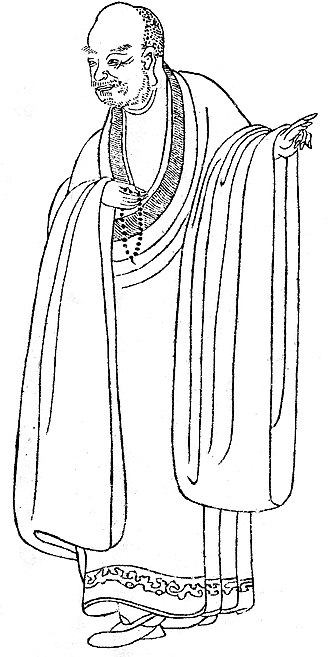 The first part of Gish Jen's book Bad Bad Girl narrates her mother Agnes's life in China. Although Agnes was treated cruelly by her mother (Jen's grandmother), Agnes's father doted on her and encouraged her intellect. He had her reciting poetry almost as soon as she could talk, their joint favorite being An Ode to the Goose by Luo Binwang.
The poem is one of the most famous works in China and is memorized by every schoolchild. One English translation is:
Goose, goose, goose,
You bend your neck towards the sky and sing.
Your white feathers float on the emerald water,
Your red feet push the clear waves.
An Ode to the Goose is revered for its carefree spirit and for how its few simple words create such a vivid picture of the serene beauty of nature. The poem's author, Luo Binwang, is considered one of the Four Paragons of the Early Tang Dynasty, four poets who were active during the era (618-907 CE).
Little is known about Luo's early life. He was born sometime around 619 CE in what is now Yiwu, a city in the central part of Zhejiang province, and historians have found evidence that he spent most of his childhood in Shandong to the north. He was acknowledged as a child prodigy in poetry, composing simple works by age six, and it's said that An Ode to the Goose was written when he was just seven.
Luo was working in a low-level government position by 665, but five years later ran afoul of his employer General Pei Xingjian, a commandant in the Tao Prefecture (in modern Qinghai province). He was exiled to Xinjiang and later travelled to Yunnan with the army. At this point in his life, Luo became very well known—but not for his poetry. Enter Empress Wu Zetian.
Wu was a beautiful concubine of Emperor Taizong, and it's believed that during Taizong's life she was simultaneously the mistress of his son, Gaozong. When Gaozong became emperor after his father's death, Wu became his empress. Gaozong had a stroke soon after, and Wu gradually assumed control as the emperor's condition worsened. She seized the throne for herself after Gaozong's demise, thereby becoming China's only female emperor in 684 (deposing both her sons in the process).
A rebellion ensued, particularly among government officials who backed Li Jingye, the Duke of Ying. Luo was among the insurgents and became one of Wu's most vocal critics. He famously wrote a declaration against her, penning such lines as:
"She has a heart similar to a snake and a lizard, and a disposition similar to a wolf. She is close to insidious individuals and murders the faithful and the good. She killed her sister, slaughtered her brothers, murdered her emperor, and poisoned her mother. Both gods and human hate her, and both heaven and earth cannot allow her to exist."
Funnily enough, Wu was actually impressed with Luo's prose, and wondered how the government chancellors could have lost the services of such a talented writer.
Although best known for An Ode to the Goose, Luo wrote some of his most well-regarded poetry during the rebellion, such as A Political Prisoner Listening to a Cicada:
While the year sinks westward, I hear a cicada
Bid me to be resolute here in my cell,
Yet it needed the song of those black wings
To break a white-haired prisoner's heart…
His flight is heavy through the fog,
His pure voice drowns in the windy world.
Who knows if he be singing still?—
Who listens any more to me?
Luo was killed during the suppression of the uprising, and Wu retained power until 705 CE, when she was overthrown in a coup. She died a few months later at the age of 81.
Image of Luo Binwang from Wikimedia Commons.
Filed under Books and Authors
 This article relates to Bad Bad Girl.
It first ran in the October 22, 2025
issue of BookBrowse Recommends.
This article relates to Bad Bad Girl.
It first ran in the October 22, 2025
issue of BookBrowse Recommends.
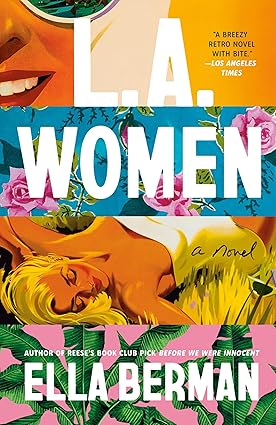
L.A. Women by Ella Berman
Two ambitious writers in 1960s LA face betrayal when one writes a novel based on the other's life.




Your guide toexceptional books
BookBrowse seeks out and recommends the best in contemporary fiction and nonfiction—books that not only engage and entertain but also deepen our understanding of ourselves and the world around us.


