
-
Your next favorite book
is waiting.
Summary | Excerpt | Reviews | Beyond the Book | Read-Alikes | Genres & Themes | Author Bio
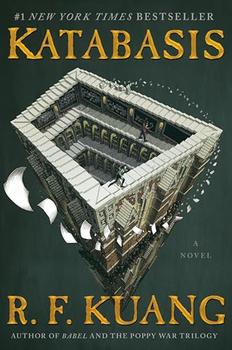
A Novel
by R. F. Kuang Book Reviewed by:
This article relates to Katabasis

 R.F. Kuang's Katabasis is part of a long lineage of stories about traveling into the underworld; in fact, the novel's title is the Ancient Greek name for these stories. These are journeys that test the hero, reshape their understanding of life, and force them to confront questions of mortality and meaning; the hero's descents are never merely about a new geography, they are about transformation.
In the Western canon, these stories began with Homer and Virgil. In Homer's Odyssey, Odysseus ventures into Hades to consult the prophet Tiresias, seeking knowledge. In Virgil's Aeneid, Aeneas is guided by the Sibyl in his katabasis, which forces him to confront his personal grief, as he meets the shade (the dead soul) of his father Anchises.
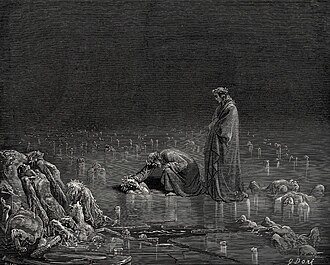
Dante Alighieri's Inferno, the first part of his narrative poem The Divine Comedy, depicts perhaps the most famous literary Hell. Guided by Virgil, a fictionalized Dante descends through the nine concentric circles, each one meant for people who have committed different types of moral sins (like greed, violence, or treachery). The eternal punishment in each circle fits the sin as a form of poetic justice; for example, murderers and war-makers are immersed in a river of blood and fire, to the degree of their guilt, to represent the way they basked in blood in their lives. Unlike earlier epics, Dante's Hell is a theological map, an encyclopedia of sin, punishment, and medieval cosmology. Yet it is also deeply personal: the poet encounters political enemies, literary heroes, and former friends, blending autobiography with allegory.
The Greek myth of Orpheus is another famous katabasis. In his descent to rescue Eurydice, Orpheus embodies love's defiance of death—and its tragic failure. In the underworld, Hades agrees to let Eurydice return with Orpheus to earth, but on one condition: that Orpheus walk in front of her and not look back until they are out of the underworld. Orpheus' backward glance, breaking the gods' command and condemning Eurydice to an eternity in the underworld, has resonated across centuries as a metaphor for doubt, loss, and the limits of human devotion. Where Aeneas and Dante return with knowledge, Orpheus returns empty-handed, transformed by grief rather than glory.
Filed under Books and Authors
 This "beyond the book article" relates to Katabasis. It originally ran in September 2025 .

L.A. Women by Ella Berman
Two ambitious writers in 1960s LA face betrayal when one writes a novel based on the other's life.







Your guide toexceptional books
BookBrowse seeks out and recommends the best in contemporary fiction and nonfiction—books that not only engage and entertain but also deepen our understanding of ourselves and the world around us.

