
-
Your next favorite book
is waiting.
Summary | Excerpt | Reading Guide | Reviews | Beyond the Book | Readalikes | Genres & Themes | Author Bio
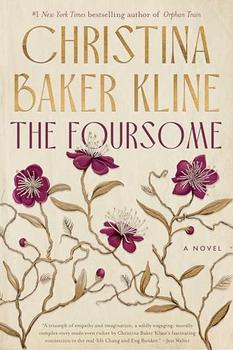
A Novel
by Christina Baker Kline Book Reviewed by:
I didn't share my sister's dreams, but I had some of my own. I longed to explore the world like the adventurers on Papa's shelf of well-thumbed favorites—Journey to the Polar Sea, Tales of a Traveller. In my mind I was right there with them, lighting a fire in the bitter cold beside a raging river, picnicking on some sunlit slope in the Bois de Boulogne.
I'd never had much patience for fabric and furnishings, for ladies' teas and luncheons and sewing bees that filled long afternoons. I preferred the woods, the winding path to the pond, the thrill of coming home with a muddy hem and damp underarms, my hair frizzed from the humidity, my cheeks blotched with heat. Mama scolded me to wear a bonnet—or better yet, to stay inside. "If you keep carrying on like this," she said, "you'll never find a husband."
In truth, I wasn't much interested.
Getting married to a local boy, I knew, would mean little more than trading one farm for another, a life with people who knew and understood me for one with someone who didn't. Someone who had likely spent years slouched behind me in church, kicking my bench. Someone who'd sat in the back of the schoolhouse, chewing on a stalk of hay, cracking jokes. Someone whose uninspired observations and opinions I'd be expected to take seriously for the rest of my life.
I thought of the girls I knew who were already married: The hours they'd spent fretting over the embroidery on their wedding dresses and which cakes to serve at the reception. The disillusionment once they settled into their day-to-day lives and learned what marriage was really like. That a wife was meant to reflect, not to shine. To echo, not to call. To walk a path someone else has cleared. "A lady's opinions are like her elbows," Papa liked to say. "Necessary, perhaps, but best kept covered."
I wondered if romantic love was a made-up thing, like Father Christmas—invented to give people something to hope for, some magic to believe in.
* * *
Our family plantation, Mulberry Farm, lay eight miles northwest of the county seat of Wilkesboro. The white clapboard house stood high on a hill above apple and peach orchards, a large vegetable garden, twelve cabins, a red barn, several outbuildings, and Mulberry Creek. Papa's land stretched for more than a thousand acres below.
By the time the twins came to town, our four older siblings were grown and gone, with families of their own. Only Addie and I remained at home. Our schooling was behind us, and the future ahead felt as fixed and familiar as the long road to our farm. Each day was a version of the one before, varied only by the shift of seasons and the anticipation of holidays and birthdays.
Our primary task was to find, or be found by, suitable mates.
Alas, in recent years our birthdays had become more cause for anxiety than celebration. As we got older, the already small pool of viable marriage candidates was rapidly diminishing. And the incident, as Mama called it, had only made things worse.
I still went on occasional chaperoned outings with young men from neighboring counties whose families were distant enough that rumors hadn't reached them, or flawed enough to overlook what they'd heard. But these dates were mostly miserable.
One prospect spent an hour explaining the minutiae of crop rotation. One tried to teach me to whistle. A third launched into a sermon on wifely obedience, quoting Ephesians 5 from memory: Wives, submit yourselves unto your own husbands, as unto the Lord. For the husband is the head of the wife, even as Christ is the head of the church.
And those were the most eligible ones. The bachelors over thirty-five, it seemed to me, had dulled like knives in a drawer.
* * *
"Do we really think they'll be there?" I asked, blotting my brow with a handkerchief as we bumped along the dusty road. On either side, tobacco fields stretched like patchwork squares, the plants broad-leafed and green, their waxy sheen catching the afternoon light. Field hands—slaves—moved among the plants, bent low in the rows.
Excerpted from The Foursome by Christina Baker Kline. Copyright © 2026 by Christina Baker Kline. Excerpted by permission of Mariner Books. All rights reserved. No part of this excerpt may be reproduced or reprinted without permission in writing from the publisher.
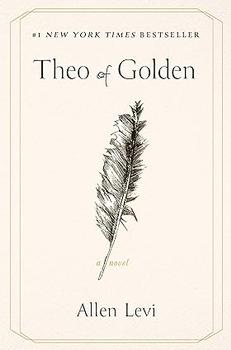
Theo of Golden by Allen Levi
One spring morning, a stranger arrives in the small southern city of Golden. No one knows where he has come from…or why…




Your guide toexceptional books
BookBrowse seeks out and recommends the best in contemporary fiction and nonfiction—books that not only engage and entertain but also deepen our understanding of ourselves and the world around us.


