
-
Your next favorite book
is waiting.
Summary | Excerpt | Reviews | Beyond the Book | Readalikes | Genres & Themes | Author Bio

The Story of Nature's Revolutionaries
by David George Haskell Book Reviewed by:
Most of what I'm admiring under the lens are not the tissues of the seeds' embryos, but the ground‑up remains of the lunch box that the mother flower carefully packaged and gave to each of her departing children. White, tan, and purple "sand" and the glassy bulk of the rice grain are all what botanists call "endosperm," a tissue that feeds the embryo when it germinates. Endosperm is only found in flowering plants, although a few close relatives like the nonflowering shrubby joint fir, Ephedra, have its rudiments. The evolution of endosperm was one of the innovations that gave early flowering plants an edge.
It takes strange sex and disturbing sibling relations to make endosperm. When pollen grains hatch on the female stigma of a flower, each pollen grain first grows a tube toward the egg, then sends a pair of tailless sperm down the tunnel. If the female part of the plant decides to accept them, both merge with the female tissues. One sperm unites with the egg, making an embryo. The other unites with ladies‑in‑waiting cells nestled alongside the egg. This second fertilization forms a sibling that never develops root or stem, but instead fattens with starch and other food, all drawn from the mother flower. This is the endosperm. Every seed of a flowering plant carries two genetic individuals. One, the embryo, can grow into a new plant. The other, the endosperm, is an undifferentiated mass of cells whose fate is to feed its sibling and die in the process.
I look on my piles of flour with horror. Not only am I admiring pulverized embryos, most of what I'm seeing are the remains of creatures that, thanks to evolution, grew into starchy blobs destined to be devoured by their siblings. The mushroom trip just took a bad turn. At lunchtime, hunger overrides my qualms. Endosperm makes excellent bread, rice, or tamales. Thank you, doomed siblings.

Excerpted from How Flowers Made Our World by David George Haskell. Copyright © 2026 by David George Haskell, published by Viking Books, an imprint of Penguin Publishing Group, a division of Penguin Random House, LLC. Copyright © 2026 by David George Haskell.
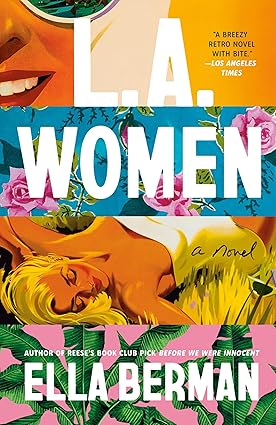
L.A. Women by Ella Berman
Two ambitious writers in 1960s LA face betrayal when one writes a novel based on the other's life.






Your guide toexceptional books
BookBrowse seeks out and recommends the best in contemporary fiction and nonfiction—books that not only engage and entertain but also deepen our understanding of ourselves and the world around us.

