
-
Your next favorite book
is waiting.
Summary | Excerpt | Reviews | Beyond the Book | Read-Alikes | Genres & Themes | Author Bio

The Story of Nature's Revolutionaries
by David George Haskell Book Reviewed by:
This article relates to How Flowers Made Our World

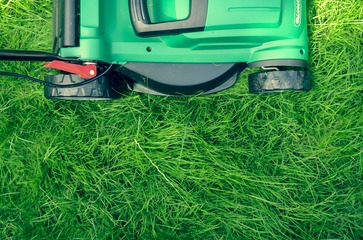 The smell of cut grass is a ubiquitous scent of summer, but did you know it's actually a cry for help? What we smell is a volatile organic compound (VOC) released by grass blades to signal that they're under attack. This is just one manifestation of how plants use chemical signals to communicate, and humans have only recently begun to understand how widespread and effective these signals are.
David George Haskell describes this phenomenon with flowers using scents to attract pollinators, the same aromas that attract human admirers. But these scents can also be used for protection or even deception, as he recounts in How Flowers Made Our World:
"Go away, say the chemicals, this plant is nasty. These volatiles not only taste bad or are poisonous but advertise the plants' unpalatability. A few plants extend the conversation to the enemies of their enemies. When attacked by insects, plants release volatiles into the air and soil that summon parasitic wasps, predatory mites, and insect-killing nematode worms."
These complex interspecies communications went largely ignored and even ridiculed for decades following the publication of the pseudo-scientific book The Secret Life of Plants in 1973. This spread the purported evidence of plants responding to different styles of music among other un-replicated experiments. Botanists vigorously rejected any ideas about "plant intelligence," as the ideas in The Secret Life of Plants threatened to undermine the legitimacy of the entire field.
But the tide has turned in recent years, and academic researchers have conducted rigorous, peer-reviewed studies that prove plants do, in fact, communicate with each other and with other species all the time. As Zoe Schlanger explained in The Light Eaters, birch trees absorb the scent of nearby rhododendrons to ward off parasites, and crops can even signal to predators to come eat the caterpillars eating them:
"The plant then releases a finely tuned chemical gas. Within an hour, the correct wasps arrive. The wasps…insert their needle-like appendages in the caterpillars' bodies, injecting their eggs inside them…And thus the plant attempts to save itself. De Moraes discovered this behavior in corn, tobacco and cotton in 1998."
The field of botany still lives in the long shadow of The Secret Lives of Plants, and researchers remain wary of using terms like "intelligence," not only because of the book but also in an effort to not anthropomorphize plants. It's important to recognize that plants experience the world differently than we do and to not assume their reactions are the same as ours.
But even if they're not as obvious to humans as the warning cries of a freshly mowed lawn, plants use VOCs and chemical signaling to communicate in ways far more sophisticated than many give them credit for.
Filed under Nature and the Environment
 This article relates to How Flowers Made Our World.
It first ran in the May 20, 2026
issue of BookBrowse Recommends.
This article relates to How Flowers Made Our World.
It first ran in the May 20, 2026
issue of BookBrowse Recommends.

L.A. Women by Ella Berman
Two ambitious writers in 1960s LA face betrayal when one writes a novel based on the other's life.

Your guide toexceptional books
BookBrowse seeks out and recommends the best in contemporary fiction and nonfiction—books that not only engage and entertain but also deepen our understanding of ourselves and the world around us.

