
-
Your next favorite book
is waiting.
Summary | Excerpt | Reviews | Beyond the book | Read-Alikes | Genres & Themes | Author Bio

The Story of Nature's Revolutionaries
by David George Haskell Book Reviewed by:
How could something as decorative and ephemeral as a flower play a role in human evolution? At first glance, the title of David George Haskell's latest book, How Flowers Made Our World, seems hyperbolic. But as he explains, in clear, scientific prose combined with descriptive personal observations, the rise of flowering plants was, in fact, a biological revolution, and our past, present, and future are bound up with these organisms much more than we realize.
A professor of environmental science and award-winning author, Haskell has written extensively about evolution, trees, and forests, and now he turns his attention to beloved yet underappreciated flowers. Not that they're "underappreciated" in terms of their beauty or scent, but in the understanding of how the forms of plant reproduction specific to flowers affected all of life on Earth.
Most of the book is structured in chapters named after a particular flower, which is then used to exemplify the topic of the chapter. He begins with magnolias—ancient flowers that were some of the first to drive the evolutionary explosion of bees, wasps, butterflies, and myriad other insects over 100 million years ago. Birds also underwent incredible diversification as nectar-filled flowers evolved. We learn in the Magnolia chapter that while flowers didn't "invent" insect pollination, they improved upon the haphazard pollination of existing plants like mosses and ferns (those that reproduce by spores, not separate male and female flower parts) by prehistoric insects. These interrelationships also led to the evolution of fruit, as flowering plants found more ways to encase their seeds in attractive and nutritious packages for animals to help spread them.
Haskell goes on to explain the genetic diversity that accompanied all of these botanical innovations, such as chromosome duplication and cutting. It's the trial-and-error approach so fundamental to natural selection. He explores it simply and clearly for the non-expert, but it's detailed enough that plant nerds (speaking as one) won't be bored.
The Orchid chapter provides a deeper dive into flowers' co-evolution with other non-human species, but for readers more interested in what this all means for people, the Grass, Rose, and Tea chapters provide the most eye-opening connections between the floral world and our own. The chapter on roses explores the many ways plants use scents for their own ends (see Beyond the Book), but Haskell also shows the cultural functions of flowers throughout human history; for example, wearing perfume dates back to ancient times, and using aromatic plants and incense in funerary rights and burials goes back even further.
Grasses, which aren't traditionally thought of as "flowers," do in fact have flowering components, without which agriculture would never have been invented—the seeds of plants that, botanically speaking, are grasses, such as wheat and rice, are the grains that we eat and make into bread. As Haskell describes, certain mutant grasses held onto their seeds longer than their siblings. "By selectively keeping and replanting the mutants, ancient humans gained the first cereal crops," he explains.
Haskell rightly doesn't shy away from the ugly sides of flowers. The pursuit of flowering plants like tea made and unmade empires and played a role in slavery and colonialism. Efforts to categorize plants during the Enlightenment led to both discovery and discrimination, as evolutionary principles were warped to justify racism and exploitation.
He also does an excellent job of provoking readers to think about the darker side of the modern horticulture industry—namely environmental damage from pesticides and "invasives," which are plants moved to an area where they didn't evolve, in which they crowd out indigenous plants and starve local pollinators. He deftly navigates the artifice and waste of an event like the Chelsea Flower Show, but also its potential to teach visitors and open their minds to different ways of seeing the natural world:
"Flower lovers don't need shielding or diverting. We are not so naïve to believe that a garden is an escape from every travail… Gardening puts us in intimate touch with the earthy, green troubles of the living world, from failed plantings, uncooperative weather, difficult soils, and the balance of control and acceptance that every 'pest' and 'weed' challenges us with."
Once again, casual plant fans will learn new things, while grizzled veterans will appreciate the nuanced perspective.
Haskell ends the book by imagining how flowers might adapt in a changed climate, and how our relationships with them can evolve for our survival as well, for example, by not eradicating weeds but rather appreciating their tenacity and ability to keep flowering. The afterword even offers fun, helpful tips for engaging with flowers in new ways: how to distill rosewater, how to hand pollinate an orchid, how to keep a flower diary, and more.
These sections tackle complex topics and hard science, but they do so with approachable language and humanizing personal anecdotes, which are invaluable in any good science writing. Whether you can currently identify a stamen and pistil or you're hearing those words for the first time since eighth grade biology, How Flowers Made Our World is an engaging and thought-provoking walk through botanical evolution. And Haskell never loses sight of the wider community—of fungi, pollinators, and the most impactful animal of all, humans—in the story of how life's ingenuity always works as a team.
 This review
first ran in the May 20, 2026
issue of BookBrowse Recommends.
This review
first ran in the May 20, 2026
issue of BookBrowse Recommends.

If you liked How Flowers Made Our World, try these:

by Adam Nicolson
Published 2025
An intimate exploration of the lives of birds and their interactions with man, by a preeminent naturalist.

by Rob Dunn
Published 2025
How rethinking our relationships with other species can help us reimagine the future of humankind.

by Zoë Schlanger
Published 2025
Award-winning Atlantic staff writer Zoë Schlanger delivers a groundbreaking work of popular science that probes the hidden world of the plant kingdom and reveals the astonishing capabilities of the green life all around us.
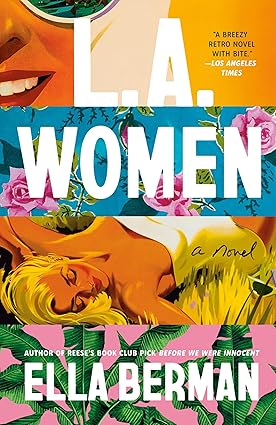
L.A. Women by Ella Berman
Two ambitious writers in 1960s LA face betrayal when one writes a novel based on the other's life.






Your guide toexceptional books
BookBrowse seeks out and recommends the best in contemporary fiction and nonfiction—books that not only engage and entertain but also deepen our understanding of ourselves and the world around us.

