
-
Your next favorite book
is waiting.
Summary | Excerpt | Reviews | Beyond the Book | Readalikes | Genres & Themes | Author Bio

A Novel
by Ray Nayler Book Reviewed by:
Now the bird flew twenty meters or so, landed, and looked back at Neriya again.
She, in turn, looked at the shtetl where her family spent their summers. At its crooked roofs wet and glistening in the early morning.
In front of the house that the communists had commandeered from the former village head, the red flag of the Soviet Union hung limp in the still air.
The communists had turned the house into what they called a "library." Her father called it (but only in the privacy of their own kitchen) the "nonsense house."
The village head they had taken the house from was gone. Some said that he had fled into the forest. Others, that he was in prison somewhere in Russia.
Once, Neriya had passed a group of men talking on the corner and heard one of them whisper that he had been shot.
This year, when Neriya's family had arrived in the shtetl, it had been filled with new people. Many people had fled the Bolsheviks. They were replaced by people who, even if they spoke Yiddish, were not the same. People who spoke of collectivization of labor. Who spoke of "kulaks"—mythical rich peasants who gobbled up the resources of shtetl and farm for themselves, leaving nothing for the poor.
The new people hung Stalin's mustached face everywhere, like an Orthodox icon and just as unwelcome.
They claimed they were bringing liberation, but Neriya's father crossed the street when he saw them coming.
"If you think you can trust the Russians," he said, brooding over his tea one evening with her mother in the kitchen, "just ask anyone who had to live under them. My father knew the Russians. He was educated in Moscow. Nobody spoke Russian better than him. But he joined the Lithuanians and Germans to help push them out after the Great War. Anything to save us from returning to Russian rule. And now they walk in and take over, just like that. Call them communists or Bolsheviks or Soviets or anything you like. They are Russians, and we have known them for a long time."
But now, just one summer after they had come, the Bolsheviks were on the run. Now it was the Germans who were coming. They were already across the border. In a few weeks, at most, they would be here. There were worries about that too.
Here and there in the shtetl, a chimney released a vertical streak of soot, dividing the endless sky. Later Neriya would remember that as well: The still threads of smoke that rose into the air. Breakfast being cooked. Bread being baked. The quiet, almost invisible life of early morning.
With all its worries, old and new, the town still felt whole. Her father had his practice, in the room that had once been the family parlor, its walls painted white, the inherited china cupboard repurposed as a medical cabinet.
In the evenings, while Neriya listened and pretended to read, her father and mother talked through medical cases, drifting between Yiddish and the Königsberg-inflected German Neriya's mother had grown up speaking. Her father's German was halting, dotted with Yiddishisms. He had learned it as a quota student at the medical school in Warsaw—German was the only way, he said, to read the best medical texts.
These evening discussions of goiters, abscesses, fractures, arrhythmias, and sepsis were, besides Neriya's time with her crows in the morning, some of her only entertainment here.
In the summer, Neriya missed Vilnius. She missed the cold stone city, heavy with age, full of wonders. She missed the movie theaters with the newest films. She missed huddling down in that velvet dark.
She even missed school, and the meager warmth of the classroom's coal stove.
But leaving for the village in the early summer, she was excited to see her crows. She was excited for the walks in the fields, and grateful to finally be out of the oppressive classroom and away from uniforms, starch, chalk, the rest of it.
In the city, she longed for the shtetl, and in the shtetl, she was homesick for Vilnius.
Excerpted from Palaces of the Crow by Ray Nayler. Copyright © 2026 by Ray Nayler. Excerpted by permission of MCD. All rights reserved. No part of this excerpt may be reproduced or reprinted without permission in writing from the publisher.
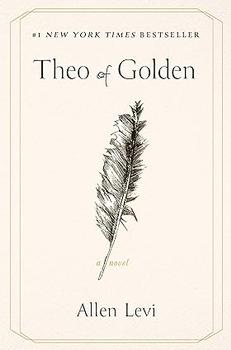
Theo of Golden by Allen Levi
One spring morning, a stranger arrives in the small southern city of Golden. No one knows where he has come from…or why…






Your guide toexceptional books
BookBrowse seeks out and recommends the best in contemporary fiction and nonfiction—books that not only engage and entertain but also deepen our understanding of ourselves and the world around us.


