
-
Your next favorite book
is waiting.
Summary | Excerpt | Reviews | Beyond the Book | Readalikes | Genres & Themes | Author Bio

A Novel
by Elizabeth Strout Book Reviewed by:
"Reginald MacDonald," Artie said, shaking his head slowly. "Poor brilliant man." He added, "He drank too much, though."
"He had to, living with Flossie," Evie said, and Artie let it go.
"She drinks too much herself," Evie added, and Artie let that go as well; it was true.
* * *
This was now the first week of September, a Friday, and the weather was staying warm. The leaves had not yet really started to change, and from his classroom windows on the second floor Artie could see the soccer field and the trees behind it, with only one tree turning red at its very top. It was the last class of the day, and he understood that the students were restless. He leaned back against his desk and said, "Would you folks like to know about venereal disease during the Civil War?"
The students looked up at him, they were interested.
"Whoa, Damn-dam," said one fellow who had shaggy brown hair; his name was Willoughby.
"Topic for Monday," Artie said. "Now get together in your groups." And they shuffled their chairs around until they were sitting in the four separate sections Artie had assigned earlier.
Artie taught history to eleventh graders at the local high school. For years he had also been the assistant coach to the boys' soccer team; he was not a tall man, and he was thick, and while he had always been fit, he had begun to gain weight in his stomach, so he'd had to stop running down the field a few years ago and he became the assistant coach to the baseball team instead. But Coach Clark liked him, as did the soccer and the baseball teams, as did his students and the other faculty.
"Damn-dam, the greatest man," his students would sometimes say to him, their faces shining with affection, and he would laugh, his big chest moving. "Damn-dam," they said, and he would tell them, "Go on, go on, get out of here now," waving his hand and chuckling. He was fifty-seven years old, and he did still love his students.
But the pandemic had been hard on them, he had noticed this in the more than three years since: The students had changed. They were anxious, and not argumentative—with him or with one another—as he had known them to be in the past, when there had been lively discussions. It was often difficult now to get them even to talk.
On the first day of every school year Artie would hand out sheets of white lined paper, saying to his students, "Write anything you want. But I need at least two pages. Write about who you can't stand, what you like, write anything. But write."
"Why?" a student sometimes asked, and Artie told the truth: "So I get to know you. And so I get to see how you put sentences together." He was always surprised at the students' willingness to do this. Some would sit for many minutes and then start to write quickly, others began to write immediately; over the years he had noted that their handwriting had become increasingly bad. He was often very moved at what they wrote. Many lately had written about the pandemic. Two students had started this year with the sentence "I'm scared." And yet neither of these two had been able to really articulate what it was they were scared about.
Today Artie had put the students in the groups he had assigned on the first day of the school year, only a few days earlier. Each student was to take on the role of a Civil War soldier or a nurse from Massachusetts and discuss this soldier or nurse with the group. They were talking quietly among themselves now, and he heard one of them—a young woman named Tamera, with long red hair—say, "No, he wrote his girlfriend that he enlisted because of slavery. He wrote that in his letter home to her. That he didn't think people should buy other people."
"Good for you." Artie nodded at Tamera as he walked among the groups; he stopped and rapped on a desk. "That's exactly what you should be doing, using their letters home."
Excerpted from The Things We Never Say by Elizabeth Strout. Copyright © 2026 by Elizabeth Strout. Excerpted by permission of Random House. All rights reserved. No part of this excerpt may be reproduced or reprinted without permission in writing from the publisher.
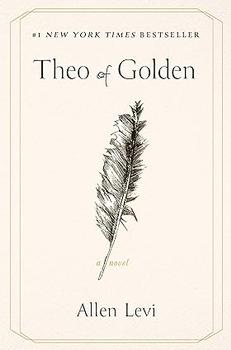
Theo of Golden by Allen Levi
One spring morning, a stranger arrives in the small southern city of Golden. No one knows where he has come from…or why…






Your guide toexceptional books
BookBrowse seeks out and recommends the best in contemporary fiction and nonfiction—books that not only engage and entertain but also deepen our understanding of ourselves and the world around us.


