
-
Your next favorite book
is waiting.
Summary | Excerpt | Reviews | Beyond the book | Read-Alikes | Genres & Themes | Author Bio

A Novel
by Elizabeth Strout Book Reviewed by:
"I did not want to die, I just did not want to live." How many of us can relate to that feeling? As COVID-19 changed the world forever and our political landscape descended into vitriolic chaos, thousands, if not millions, of people wrestled with a desperate desire to return to normalcy and a deep abiding fear of what "normal" would even look like.
Artie Dam, the protagonist of Elizabeth Strout's latest captivating novel, The Things We Never Say, is one of those people. He is an adored, award-winning high school history teacher with a beautiful, wealthy wife and a successful adult son. He spends his days inspiring his students and sailing his beloved boat on the New England bays. What he hides from the world is that none of it brings him any sense of fulfillment anymore. He is being driven daily into a deeper well of isolation but can't articulate his misery even to himself. "Because to say anything real was to say things nobody wanted to know."
He is surrounded by friends and admirers: a co-worker quietly in love with him, a son desperate to re-connect after a past tragedy drove a wedge between them, students whose lives are forever changed by actions he never thinks twice about, a wife he loves but with whom he can't share his pain. He is loved, thought well of, a good person by every definition—with no idea why he should bother living anymore.
Even deciding to end his life doesn't solve his existential crisis. A genuine near-death experience only cements his desire to continue living. So if death isn't the answer, how does he find a way to live again?
Then a devastating revelation from his past is brought to light. A secret that should destroy everything instead fosters a new and deeper relationship with someone he was afraid he would never connect with again.
Strout has written a beautiful and devastating character study that also puts into words the psychological toll of our recent history. Though she never includes overt references to the time like mask wearing or red ball caps, the specter of COVID and the terrifying political unrest that hangs over the country permeate every part of the narrative. It is the real world where death happens abruptly, without warning or fanfare. Personal tragedies and triumphs are just that, and the earth keeps turning. Here a good man lives his life, carries his regrets, feels despair, finds joy again, and finally discovers that, in the end, "it was a private thing to be alive."
In Artie, Strout has created a man readers will fall effortlessly in love with. She has also crafted a rich supporting cast of characters who orbit him and occasionally chime in with their own thoughts about how this simple seeming man has impacted their lives, often in deeply profound ways.
Artie is not destined to change the world, nor does he want to. He is instead destined to change the worlds of the people around him and cursed with the inability to see it happening. It's that inability to see his own value that truly resonates.
Strout's own voice seems to reach out through the narrative just once to communicate this sentiment to her readers: "So blind we humans are—so blind. To each other and to ourselves, moving through life as though through shadows, putting out a hand in the dark and thinking we have touched someone." This observation doesn't belong to Artie or any of the other characters—it comes from outside the story. "…mostly we travel through life unsighted, grasping only the smallest details of one another's selves including our own. Thinking all the while that we can see."
The Things We Never Say is a book to be read more than once. Wildly hopeful despite its tragic premise, it reminds us that there is still so much good in the world, even if it goes unrecognized by all but a few.
This novel is an excellent choice for anyone who enjoys contemplative character studies and for all those struggling right now. It's a perfect choice for book clubs looking for deep discussion of big issues. Strout doesn't provide answers to the big questions like "Why are we here?" or "Do we choose our path or is it chosen for us?" But she does remind her readers that the struggle is universal and not without joy.
 This review
first ran in the May 6, 2026
issue of BookBrowse Recommends.
This review
first ran in the May 6, 2026
issue of BookBrowse Recommends.

If you liked The Things We Never Say, try these:
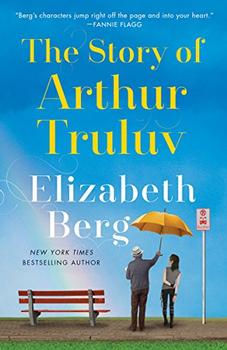
by Elizabeth Berg
Published 2018
An emotionally powerful novel about three people who each lose the one they love most, only to find second chances where they least expect them—from New York Times bestselling author Elizabeth Berg.
by Joshua Ferris
Published 2010
What drives a man to stay in a marriage, in a job? What forces him away? Is love or conscience enough to overcome the darker, stronger urges of the natural world? The Unnamed is a deeply felt, luminous novel about modern life, ancient yearnings, and the power of human understanding.

by Jane Hamilton
Published 2001
With her inimitable grace and compassion, Jane Hamilton has created a novel full of gentle humor and rich insights into the nature of love and the deep, mysterious bonds that hold families together.

L.A. Women by Ella Berman
Two ambitious writers in 1960s LA face betrayal when one writes a novel based on the other's life.






Your guide toexceptional books
BookBrowse seeks out and recommends the best in contemporary fiction and nonfiction—books that not only engage and entertain but also deepen our understanding of ourselves and the world around us.

