
-
Your next favorite book
is waiting.
Summary | Excerpt | Reviews | Beyond the Book | Read-Alikes | Genres & Themes | Author Bio

A Novel
by Elizabeth Strout Book Reviewed by:
This article relates to The Things We Never Say

Artie struggles throughout The Things We Never Say with the concept of free will. He wrestles not just with the idea that he may or may not have control over his life, but also with what it actually means. Has he earned the good things he has in life or done things to justify the struggles he's faced—or is it all just random chance? Though he poses the question to various people in his life, he never arrives at an answer that feels like the right one.
The battle between the concepts of free will (the ability to make our own choices and forge our own destinies) and determinism (that everything in the universe is predetermined and cannot be altered) has been a frequent subject for writers throughout history. Characters struggle to gain autonomy or to win out against a prophesied destiny, often with tragic results. They might battle an unnamed force or will—whether the machinations of supernatural entities or the will of the gods.
In Sophocles' tragic Oedipus cycle, oracles predict that the Theban king Laius will be murdered by his son, who will go on to marry his own mother. In an attempt to thwart fate, Laius leaves his infant son in the wilderness to die. It is revealed that he himself has put the prophecy into action when the baby is raised by a foreign king and as an adult returns to Thebes (after hearing about the oracle and fearing it referred to his adopted parents), where he unwittingly kills his father in a fight and unknowingly marries his mother. By trying to thwart the will of the gods and assert his free will, Laius instead becomes the catalyst of the prophecy he sought to circumvent.
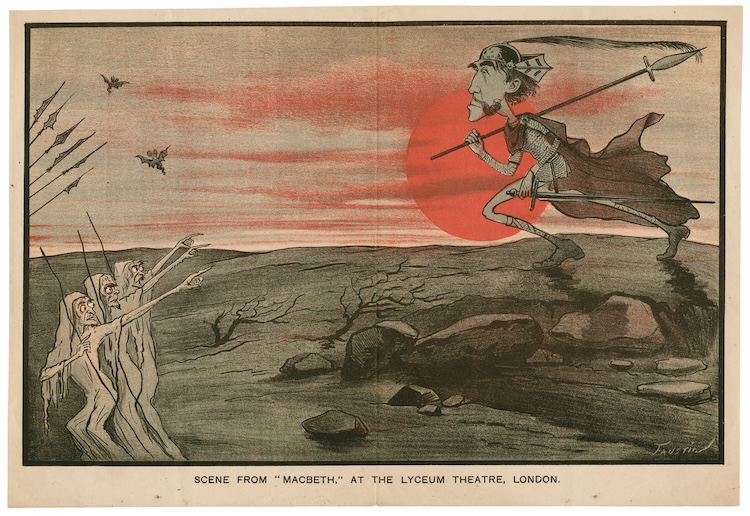 Shakespeare's Macbeth changes the terms of the battle between fate and free will by positing that attempting to exert your influence on fate can also produce dire consequences. When he learns from three witches that he will one day be king, rather than allow fate to take its course he tries to hurry things along by murdering the current king with the help of his wife. Tragedy and a great deal of bloodshed ensue, leaving the audience to wonder if the outcome would have been the same if fate were allowed to take its course or if Macbeth was always bound to reach his destiny by bloody means.
Modern television shows like Germany's multiverse epic Dark and HBO's Westworld also dabble in the idea that free will might not always be worth the pain and suffering it can cause. Westworld treated free will as personal identity. As the robots who live in the Westworld theme park slowly attain sentience and the ability to retain memories, they also gain the ability to make their own decisions. Though the result is once again mass chaos and bloodshed, the implication is this is necessary for humanity to attain its next step in evolution. Dark harkens back to Sophocles' idea that it is impossible to fight fate and if by some chance an event outside of what has been predetermined occurs, it will literally disrupt reality and create whole timelines never meant to exist.
Artie never gets the answer to his question, eventually arriving at the conclusion that he doesn't really care. Whoever or whatever might control the narrative, all we can do is make the most of the time we're given.
Scene from Macbeth at the Lyceum Theatre (1875) by printmaker London Faustin, courtesy of Folger Shakespeare Library
Filed under Cultural Curiosities
 This article relates to The Things We Never Say.
It first ran in the May 6, 2026
issue of BookBrowse Recommends.
This article relates to The Things We Never Say.
It first ran in the May 6, 2026
issue of BookBrowse Recommends.

L.A. Women by Ella Berman
Two ambitious writers in 1960s LA face betrayal when one writes a novel based on the other's life.







Your guide toexceptional books
BookBrowse seeks out and recommends the best in contemporary fiction and nonfiction—books that not only engage and entertain but also deepen our understanding of ourselves and the world around us.

