
-
Your next favorite book
is waiting.
Summary | Excerpt | Reviews | Beyond the Book | Readalikes | Genres & Themes | Author Bio

A Novel
by Nadia Davids Book Reviewed by:
Mrs. Hattingh also asks some unusual questions.
"Do you think you'll be happy here?"
"Yes, madam."
"You won't mind such an empty house?"
I have to stop a laugh running free from my throat, for what servant would prefer more people to clean up after?
"Would you like to have a look around before you give your answer?"
I shake my head, because, really, there is nothing else to see; the wage is fair, the house large but mostly vacant, and, more, there is no man about to trouble us.
It is only then that she announces that the position is for a live-in maid. Her voice quavers as she reveals this, and I know that she knows this is an unreasonable request, sprung late. Neither of us needs state that to sleep here is to be not only cook and cleaner but companion and protector too. I protest (very faintly) that 23 Heron Place is not far from my family's home in the Quarter, that I could come to her early each morning and would not leave until my duties for the day are fulfilled. At this she dips her chin like a small, frail bird, her lips tremble, her hands reach for her long, swaying necklace that runs all the way to her waist. She clutches and rolls the garnet beads lying gleaming and purple against her dark dress as though she were praying and does not answer me directly; instead, she turns her eyes to the back garden and whispers something about holiday half pay. I understand then that my nights are a condition of employment, that she wants my sleeping hours as well as my waking ones, that there is only one answer to secure the job, and so I give it: I will sleep here every night of the week and go home but one Sunday a fortnight.
Her head snaps up, and with a full smile she tells me how much safer she feels already, just knowing I will be here.
My face twitches into a sneer that I try to still. My mother gave me just two lessons before I set out to my first job all those years ago, and I am already failing at one of them: The first was to do as I was told as well as I could, to wash, cook and clean as though I were caring for my own home and person. The second was how to arrange my face. Always keep something back, she told me, there is no need for them to know what you are truly thinking.
So I do not tell Mrs. Hattingh that I am useless in a crisis, have never bested anyone in self-defense and have no intention of shielding her at any cost to myself against marauding burglars or mountain baboons. She rises to her feet and announces that she will give me a tour of the house and steps into a quick march as I trail after her. At each door we pause, and she names the room behind it. The breathy voice has turned no-nonsense: "Pantry, dining room, sitting room, guest room, gun room, my late husband's study."
She speaks and walks at such a speed that words and feet seem to trip up on each other. The pace, I realize, is because this is all so unbearable, for this is not something that would ordinarily fall to her. In a house of this size, for a family of this station, it should be the task of the housekeeper, not the employer, to show the new housemaid what's what.
But Mrs. Hattingh is forging ahead—almost as if she were another person now, made brisk by the business of it all. She points, and as she does so, she instructs: "You will dust daily, the windows must be washed once a week. You see how very tall they are? This house has wonderful light, but as with every bit of good fortune, it extracts its price, for all is visible, every speck of dust and dirt, and I must warn you, I am eagle-eyed. My linen must be changed every fortnight and the floors scrubbed weekly. Mind you work with the grain, not against it, or you'll do irreparable damage. These are yellowwood." She taps a toe to a floor plank. "My late husband, Mr. Hattingh, took very seriously the preservation of the Cape's good homes."
A turn, a swish of that long, flounced skirt and the rustling petticoat beneath it, and down the corridor we go. She twists her head over her shoulder, her words small darting fish.
Excerpted from Cape Fever by Nadia Davids. Copyright © 2025 by Nadia Davids. Excerpted by permission of Simon & Schuster. All rights reserved. No part of this excerpt may be reproduced or reprinted without permission in writing from the publisher.
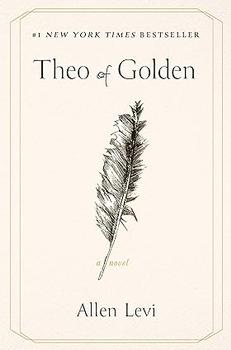
Theo of Golden by Allen Levi
One spring morning, a stranger arrives in the small southern city of Golden. No one knows where he has come from…or why…






Your guide toexceptional books
BookBrowse seeks out and recommends the best in contemporary fiction and nonfiction—books that not only engage and entertain but also deepen our understanding of ourselves and the world around us.


