
-
Your next favorite book
is waiting.
Summary | Excerpt | Reviews | Beyond the book | Read-Alikes | Genres & Themes | Author Bio

A Novel
by Nadia Davids Book Reviewed by:
In Nadia Davids' Cape Fever, it's 1920 and the world is still reeling from the First World War. Soraya lives with her family in the Muslim Quarter of an unnamed colonial city, and though she longs to stay in a community that understands her culture and religion, duty compels her to find work so that she can support her family. She is soon employed as the live-in housemaid for Mrs. Hattingh, a widowed English settler. When Mrs. Hattingh learns that Soraya, whom she incorrectly assumes is illiterate, is engaged, she offers to transcribe letters to Soraya's fiancé on her behalf. This seemingly generous offer sparks a quiet struggle for power between the two women, with consequences that threaten to derail both of their lives.
Though the arrangement is ostensibly based on trust, neither woman enters into it with honest intentions. For Mrs. Hattingh—lonely and guarding a painful secret—the letters present an opportunity to manipulate Soraya's words and dictate her future. Soraya, meanwhile, plays along with her employer's assumption of her illiteracy for her own reasons: partly because Mrs. Hattingh offers to pay the cost of postage, and partly because, as a young woman of color, she's been taught to keep herself safe by allowing white people to feel superior: "Make myself small so she can be big. That's the trick, my girl, my mother would have said, stoop low so they can feel tall." But also because the chance to hold something back for herself—to exercise control in a way she often doesn't have the opportunity to—proves too tempting to resist. "I do not tell her any of this because she has no right to know, because these people who hold sway over our outsides have no right to know, to touch, what is in our insides," she says.
Both of these women are complex and well-drawn characters. Mrs. Hattingh does extensive charity work, campaigns for women's rights, lobbies against extremist politicians, and seems outwardly liberal and accepting compared to most white settlers. And yet she is undoubtably racist towards Soraya, abuses her power over her, emotionally manipulates her, and exploits her financial situation, as when she threatens to terminate her employment if she doesn't adhere to increasingly strict working conditions. "There it is," Soraya tells us. "She knows I cannot afford to lose this position."
Mrs. Hattingh also treats Soraya differently depending on who else can see them interact: When the two are alone, Soraya is treated with kindness, as though a friend; but when others are around, she is treated only as staff. As Soraya explains, "She's always like this when she has guests—either she grows more formal in her tone or she behaves as though I've disappeared, melded with the furniture."
The novel's focus on the characters' heightened emotional states, combined with its gothic undercurrents and sense of prickly unease, gives it the atmosphere of a classic psychological thriller, even as the pacing remains more ruminative. The gothic elements come primarily from Soraya's spiritual side, which manifests in regular sightings of ghostly beings she refers to as "Gray Women" (see Beyond the Book). Most notable among them is Fatima, her predecessor as the household maid, a benevolent spirit that watches over her, providing silent comfort and guidance, and eventually urges her to confront her employer and expose the truth of her actions.
This truth, though hidden from Soraya until the novel's climax, becomes fairly clear to the reader early on. For some, this may result in an underwhelming reveal, but the tight focus on the characters' perspectives means that there is still worthwhile emotional payoff regardless of how quickly the reader puts the pieces of the puzzle together. The reading experience becomes less about solving the mystery that emerges and more about observing how its resolution will impact the fraught dynamic between Soraya and Mrs. Hattingh.
Cape Fever is a fascinating study of two women from completely different backgrounds, both trying to navigate loss and take back control of their lives. As Soraya herself puts it: "I understand in this moment that every woman, every woman, rich or poor, madam or maid, dreams of escape."
 This review
first ran in the January 14, 2026
issue of BookBrowse Recommends.
This review
first ran in the January 14, 2026
issue of BookBrowse Recommends.

If you liked Cape Fever, try these:
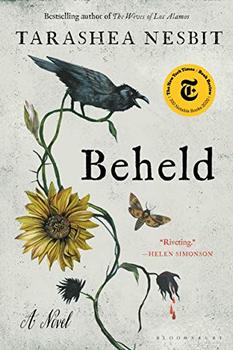
by TaraShea Nesbit
Published 2021
From the bestselling author of The Wives of Los Alamos comes the riveting story of a stranger's arrival in the fledgling colony of Plymouth, Massachusetts - and a crime that shakes the divided community to its core.
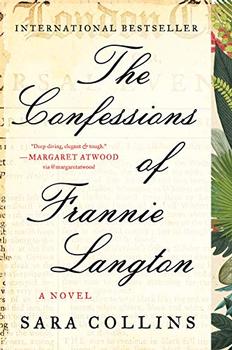
The Confessions of Frannie Langton
by Sara Collins
Published 2020
A servant and former slave is accused of murdering her employer and his wife in this astonishing historical thriller that moves from a Jamaican sugar plantation to the fetid streets of Georgian London.
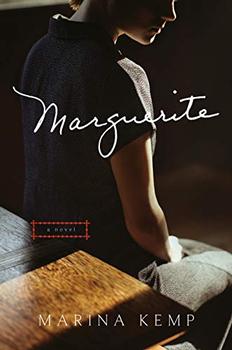
by Marina Kemp
Published 2020
In this haunting novel, a young nurse forms an unlikely connection with the elderly man she cares for, and finds herself confronting the guilt she carries from her past.






Be careful about reading health books. You may die of a misprint.
Click Here to find out who said this, as well as discovering other famous literary quotes!

Can you name the title?
Test your book knowledge with our daily trivia challenge!
Your guide toexceptional books
BookBrowse seeks out and recommends the best in contemporary fiction and nonfiction—books that not only engage and entertain but also deepen our understanding of ourselves and the world around us.
