
-
Your next favorite book
is waiting.
Summary | Excerpt | Reading Guide | Reviews | Beyond the Book | Readalikes | Genres & Themes | Author Bio

 Book Reviewed by:
"So what?" I said.
"I just thought you'd like to know I can read. You got anything needs readin' I can do it... ."
"How old are you," asked Jem, "four-and-a-half?"
"Goin' on seven."
"Shoot no wonder, then," said Jem, jerking his thumb at me. "Scout yonder's been readin' ever since she was born, and she ain't even started to school yet. You look right puny for goin' on seven."
"I'm little but I'm old," he said.
Jem brushed his hair back to get a better look. "Why don't you come over, Charles Baker Harris?" he said. "Lord, what a name."
"'s not any funnier'n yours. Aunt Rachel says your name's Jeremy Atticus Finch."
Jem scowled. "I'm big enough to fit mine," he said. "Your name's longer'n you are. Bet it's a foot longer."
"Folks call me Dill," said Dill, struggling under the fence.
"Do better if you go over it instead of under it," I said. "Where'd you come from?"
Dill was from Meridian, Mississippi, was spending the summer with his aunt, Miss Rachel, and would be spending every summer in Maycomb from now on. His family was from Maycomb County originally, his mother worked for a photographer in Meridian, had entered his picture in a Beautiful Child contest and won five dollars. She gave the money to Dill, who went to the picture show twenty times on it.
"Don't have any picture shows here, except Jesus ones in the courthouse sometimes," said Jem. "Ever see anything good?"
Dill had seen Dracula, a revelation that moved Jem to eye him with the beginning of respect. "Tell it to us," he said.
Dill was a curiosity. He wore blue linen shorts that buttoned to his shirt, his hair was snow white and stuck to his head like duck-fluff; he was a year my senior but I towered over him. As he told us the old tale his blue eyes would lighten and darken; his laugh was sudden and happy; he habitually pulled at a cowlick in the center of his forehead.
When Dill reduced Dracula to dust, and Jem said the show sounded better than the book, I asked Dill where his father was: "You ain't said anything about him."
"I haven't got one."
"Is he dead?"
"No ..."
"Then if he's not dead you've got one, haven't you?"
Dill blushed and Jem told me to hush, a sure sign that Dill had been studied and found acceptable. Thereafter the summer passed in routine contentment. Routine contentment was: improving our treehouse that rested between giant twin chinaberry trees in the back yard, fussing, running through our list of dramas based on the works of Oliver Optic, Victor Appleton, and Edgar Rice Burroughs. In this matter we were lucky to have Dill. He played the character parts formerly thrust upon me—the ape in Tarzan, Mr. Crabtree in The Rover Boys, Mr. Damon in Tom Swift. Thus we came to know Dill as a pocket Merlin, whose head teemed with eccentric plans, strange longings, and quaint fancies.
But by the end of August our repertoire was vapid from countless reproductions, and it was then that Dill gave us the idea of making Boo Radley come out.
The Radley Place fascinated Dill. In spite of our warnings and explanations it drew him as the moon draws water, but drew him no nearer than the light-pole on the corner, a safe distance from the Radley gate. There he would stand, his arm around the fat pole, staring and wondering.
The Radley Place jutted into a sharp curve beyond our house. Walking south, one faced its porch; the sidewalk turned and ran beside the lot. The house was low, was once white with a deep front porch and green shutters, but had long ago darkened to the color of the slate-gray yard around it. Rain-rotted shingles drooped over the eaves of the veranda; oak trees kept the sun away. The remains of a picket drunkenly guarded the front yard—a "swept" yard that was never swept—where johnson grass and rabbit-tobacco grew in abundance.
Inside the house lived a malevolent phantom. People said he existed, but Jem and I had never seen him. People said he went out at night when the moon was down, and peeped in windows. When people's azaleas froze in a cold snap, it was because he had breathed on them. Any stealthy small crimes committed in Maycomb were his work. Once the town was terrorized by a series of morbid nocturnal events: people's chickens and household pets were found mutilated; although the culprit was Crazy Addie, who eventually drowned himself in Barker's Eddy, people still looked at the Radley Place, unwilling to discard their initial suspicions. A Negro would not pass the Radley Place at night, he would cut across to the sidewalk opposite and whistle as he walked. The Maycomb school grounds adjoined the back of the Radley lot; from the Radley chickenyard tall pecan trees shook their fruit into the schoolyard, but the nuts lay untouched by the children: Radley pecans would kill you. A baseball hit into the Radley yard was a lost ball and no questions asked.
Excerpted from To Kill a Mockingbird by Harper Lee. Copyright © 1960 by Harper Lee. Excerpted by permission of Harper. All rights reserved. No part of this excerpt may be reproduced or reprinted without permission in writing from the publisher.
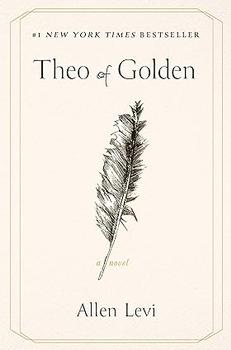
Theo of Golden by Allen Levi
One spring morning, a stranger arrives in the small southern city of Golden. No one knows where he has come from…or why…




Your guide toexceptional books
BookBrowse seeks out and recommends the best in contemporary fiction and nonfiction—books that not only engage and entertain but also deepen our understanding of ourselves and the world around us.


