
-
Your next favorite book
is waiting.
Summary | Excerpt | Reading Guide | Reviews | Beyond the book | Read-Alikes | Genres & Themes | Author Bio

 Book Reviewed by:
What can be said of To Kill a Mockingbird that hasn't been said before? I first read it at the age of thirteen, unaware of its fame or cultural context. My perspective was as fresh as that of its protagonist and narrator, Jean Louise "Scout" Finch. It was my first "adult" read and my first favorite novel (beyond The Tiara Club series). I remember discussing it with a friend and saying, "So far, it's just some kids trying to get their neighbor to come out of his house." Scout, who is only six when the story starts, spends her summers running around with her brother Jem (age ten) and their friend Dill (age seven), trying to make their mysterious neighbor Boo Radley come outside. And yes, for much of the beginning, it seems to be just that.
Yet beneath that childlike simplicity lies a complex portrait of the United States, filled with remarkable characters: Atticus Finch, the embodiment of integrity; Miss Maudie, wise and independent, offering Scout a different model of womanhood than the norm; Calpurnia, the family's Black cook, disciplinary and warm, bridging the two irreconcilable worlds of Black and white; the poor farmers and ordinary men like Mr. Cunningham that sustain unjust systems out of habit; Mr. Ewell, the ignorant face of hatred itself; and many others form the landscape the children must learn to navigate: "This is their home, sister. We've made it this way for them, they might as well learn to cope with it," says Atticus.
Rereading it years later, I found I still remembered the story's most vivid moments: Boo Radley and the tree where he leaves gifts for the siblings; Aunt Alexandra and her determination to make a lady out of Scout; Tom Robinson's crippled arm; Atticus's trial speech; the attack on a little girl dressed as a ham. All those elements, perhaps reinforced by the 1962 film adaptation, remain indelible. But what truly sustains the novel is the heart, humor, and intelligence with which Harper Lee weaves it all together with apparent ease, as if telling a story to a child—except here, it is the child who tells it to you.
Over the years, attempts have been made to discredit Lee's authorship of To Kill a Mockingbird (attributing it instead to Truman Capote), it has been banned in some schools and otherwise criticized for how it deals with race (while it was revolutionary for its time in denouncing racism, it also contains racial stereotypes and has been critiqued for its "white savior" elements), and it has been questioned whether Lee really agreed to the publication of Go Set a Watchman (2015, see Beyond the Book), an original draft it is suspected that she never meant to publish. It is interesting to view these events in the context of a novel that deals, in large part, with who gets to speak—whose voice counts.
At the heart of the novel lies the trial of Tom Robinson, a Black man accused of raping and assaulting a white woman. In his closing argument, Atticus appeals: "In the name of God, do your duty. In the name of God, believe him." The jury is composed entirely of white men from the rural countryside. There are no women, Black citizens, or townspeople represented. Jem asks: "Atticus, why don't people like us or Miss Maudie ever sit on juries?" The novel thus exposes, without moralizing, the structures and prejudices that sustain injustice.
Lee does not present racism as something newly discovered by her, nor does she attempt to resolve it. She simply holds up a mirror to American society, planting, like Atticus with the jury (however briefly and unsuccessfully), the seed of doubt, and does so through the innocent eyes of children who still believe in justice. When the unjust verdict is delivered, only they—Scout, Jem, and Dill—cry. "They've done it before and they did it tonight and they'll do it again and when they do it—seems that only children weep." As Atticus says, so far nothing in their life has interfered with the children's reasoning process.
Atticus has failed, but his failure is also a kind of victory: he has opened a small space for doubt. As their neighbour, Miss Maudie, tells the children in an attempt to console them, while Atticus couldn't win, it was impressive that he could "keep a jury out so long in a case like that." It's a step, even if a baby one. The Black townspeople, crowded into the "colored balcony," rise to honor him as he leaves the courthouse. Scout, hidden among them, witnesses everything. She watches, listens, asks questions, and concludes that "there's just one kind of folks. Folks."
But Jem, who is now turning thirteen, is not so sure: "That's what I thought, too, when I was your age. If there's just one kind of folks, why can't they get along with each other [...] I think I'm beginning to understand why Boo Radley's stayed shut up in the house all this time ... it's because he wants to stay inside." Through this brief paragraph, we feel their innocence clash with a world they are only beginning to understand.
Reading To Kill a Mockingbird at thirteen, over Christmas, sprawled on a chaise longue, was comforting. I was about the same age as the children in the novel and understood them on their level. The same thing when, in my mid-twenties, I read Go Set a Watchman—in this book, Scout, now twenty-six, faces another kind of disillusionment: the one we feel when our parents appear before us no longer as idols but flawed humans. Yet To Kill a Mockingbird remains the superior work—more solid, more coherent, more precise. In portraying failure, it achieves success: a deeply human portrait, a story that can still teach us to read, and see, with fresh eyes.
 This review
first ran in the November 5, 2025
issue of BookBrowse Recommends.
This review
first ran in the November 5, 2025
issue of BookBrowse Recommends.

If you liked To Kill a Mockingbird, try these:
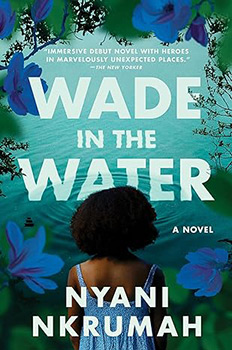
by Nyani Nkrumah
Published 2024
Resonant with the emotional urgency of Alice Walker's classic Meridian and the poignant charm of Sue Monk Kidd's The Secret Life of Bees, a gripping debut novel of female power and vulnerability, race, and class that explores the unlikely friendship between a precocious black girl and a mysterious white woman in a small Mississippi town in the ...
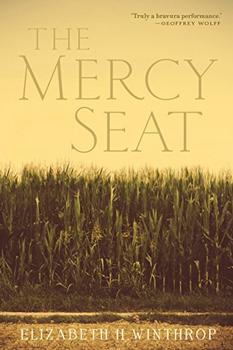
by Elizabeth H. Winthrop
Published 2019
An incisive, meticulously crafted portrait of race, racism, and injustice in the Jim Crow era South that is as intimate and tense as a stage drama, The Mercy Seat is a stunning account of one town's foundering over a trauma in their midst.
by Ayana Mathis
Published 2013
A debut of extraordinary distinction: through the trials of one unforgettable family, Ayana Mathis tells the story of the children of the Great Migration, a story of love and bitterness and the promise of a new America.
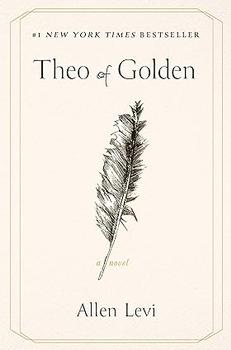
Theo of Golden by Allen Levi
One spring morning, a stranger arrives in the small southern city of Golden. No one knows where he has come from…or why…






Your guide toexceptional books
BookBrowse seeks out and recommends the best in contemporary fiction and nonfiction—books that not only engage and entertain but also deepen our understanding of ourselves and the world around us.

