-
Your next favorite book
is waiting.
Summary | Excerpt | Reviews | Beyond the Book | Readalikes | Genres & Themes | Author Bio

A New Life
by Graham Watson Book Reviewed by:
Chapter 1
1850
The Great Unknown
By August, the summer had squalled to thunderstorms. Lightning struck northern England, hailing sheets of warm rain to drown the great valleys of Lancashire and Yorkshire. Newspapers described torrents of lightning smashing down entire houses. Those who sheltered under trees reported being burned and blinded by showers of 'electric fluid', rain energised by lightning.
Ploughing through the torrential Lake District on a steam train, the novelist Elizabeth Gaskell was denied a late summer sunset, and disembarked in unseasonably early darkness. She had come for the week, on the offer of a friend, to meet the country's most mysterious celebrity, a writer whose true identity was forbidden knowledge. In their holiday home, sheltered by a spinney on a slope above Windermere, she met her hosts Lady Janet Kay-Shuttleworth and her husband Sir James. After hours in the dusk, Elizabeth was momentarily dazzled by the bright oil lamps and firelight. Once it lifted, there was the third figure, the one she had come to see. At last, here was England's great enigma: a lady in black at a table set for tea.
One of Elizabeth's friends encountered her the year before. She repeated what they told her in confidence of how, without even introducing herself, this 'mysterious visitor …a little, very little, bright haired sprite, looking not above fifteen, very unsophisticated' demanded an opinion about the novel scandalising Britain. When told it was first rate, 'the little sprite went red all over with pleasure.'No longer in need of assurances, she stood at once to shake Elizabeth's hand. Finally, Elizabeth could study Currer Bell, the notorious and, until now, invisible author of Jane Eyre.
After introductions, Elizabeth went upstairs to take off her bonnet and refresh. When she came back down, Currer Bell was self-consciously absorbed in needlework. 'But I had time for a good look at her,' she reported to a friend:
She is (as she calls herself ) undeveloped; thin and more than halfa head shorter than I, soft brown hair not so dark as mine; eyes (very good and expressive looking straight and open at you) of the same colour, a reddish face; large mouth and many teeth gone; altogether plain; the forehead square, broad and rather overhanging. She has a very sweet voice, rather hesitates in choosing her expressions, but when chosen they seem without an effort, admirable and just befitting the occasion.
As suspected, Currer Bell was not the man the press made him out to be. Speculation about his sex and class had been a popular by-line for the past three years, since the publication of Jane Eyre in October 1847, when reviewers diluted praise with suspicion. By the standards of the time, the novel's morals were questionable and, suspecting its author's name was bogus, critics sought a sex through which to frame their condemnation. A consensus formed that Bell was a northerner, a man, the dominant voice in a family of hot-tempered brothers who wrote three of the most shocking novels of the day: Jane Eyre, Wuthering Heights and The Tenant of Wildfell Hall. Opinion split into generalisations. Female critics thought Bell had too much insight into women's minds to be male, whereas male critics thought him too coarse, with too much carnal experience, to be female. Set outside the rarefied London squares of popular fiction, without lords or duchesses for heroes, Jane Eyre was disdained by one paper as 'anything but a fashionable novel'. Its reviewer wrote: 'on the contrary, the heroine is cast amongst the thorns and brambles of life; an orphan, without money, without beauty, without friends, thrust into a starving charity school, and fighting her way as a governess with few accomplishments.' Unintentionally, they shone a scrutinising light on its hidden author's life.Excerpted from The Invention of Charlotte Brontë by Graham Watson. Copyright © 2025 by Graham Watson. Excerpted by permission of Pegasus Books. All rights reserved. No part of this excerpt may be reproduced or reprinted without permission in writing from the publisher.
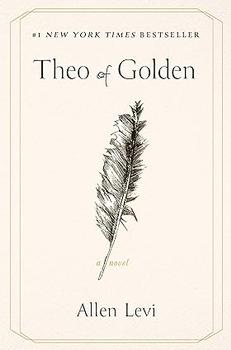
Theo of Golden by Allen Levi
One spring morning, a stranger arrives in the small southern city of Golden. No one knows where he has come from…or why…

Your guide toexceptional books
BookBrowse seeks out and recommends the best in contemporary fiction and nonfiction—books that not only engage and entertain but also deepen our understanding of ourselves and the world around us.