
-
Your next favorite book
is waiting.
Summary | Excerpt | Reviews | Beyond the Book | Read-Alikes | Genres & Themes | Author Bio

A New Life
by Graham Watson Book Reviewed by:
This article relates to The Invention of Charlotte Brontë

 The first biographer of Charlotte Brontë was her fellow novelist and devoted friend, Elizabeth Gaskell. Born in London in 1810, Elizabeth Cleghorn spent her early years living in Cheshire, Stratford-upon-Avon, and northern England until she married the Unitarian minister William Gaskell in 1832. Elizabeth gave birth to four daughters and, in addition to her busy domestic life as a minister's wife, she traveled frequently and wrote.
Her first book, Mary Barton, was published anonymously in 1848 to great commercial success. Focusing on the impoverished state of workers in the industrial section of northern England, the novel's sympathetic treatment of their plight "pricked the conscience of a nation," according to the Gaskell Society. Her novel drew the attention of Charles Dickens, who hired her two years later to write for his periodical Household Words, where she would contribute a variety of short and serialized fiction over the years that would turn into novels and novellas like Ruth; Cranford; North and South; Sylvia's Lovers; and several more.
Gaskell was a pioneering writer, "courageous and progressive in her style and subject matter," whose stories were often critiques of Victorian attitudes (particularly attitudes towards women). One of her distinguishing features as a novelist was her focus on the present. While other novelists like George Eliot and the Brontë sisters set their stories in the past, Elizabeth's early novels were, according to a New Yorker article by Hannah Rosefield, "fiercely and explicitly concerned with the present and its problems." Gaskell's "industrial" novels plumb heady themes not typically associated with women writers in the Victorian era: in choosing her settings among the very poor, Gaskell explores the dire consequences of unfettered capitalism on the majority and the growing antagonism between the haves and have-nots; her novels "show those consequences, and investigate what might best do the fettering: charity, government intervention, unionization."
Gaskell achieved even more fame in 1857 with the publication of The Life of Charlotte Brontë, her biography of her dear friend, who tragically died from severe complications of morning sickness in 1855. After her death, Patrick Brontë requested that Gaskell be the first to write about his daughter's life and literary legacy, but the biography caused a furor when it was considered to contain libelous statements, which were later withdrawn. Gaskell would continue to write short fiction and novels before she died suddenly at age fifty-five in 1865, falling into the arms of her daughter in the middle of a conversation.
Her unfinished serialized novel, Wives and Daughters, was published in 1866. And, not surprisingly, The Life of Charlotte Brontë has never been out of print since 1857.
Image courtesy of Wikimedia Commons.
Filed under Books and Authors
 This "beyond the book article" relates to The Invention of Charlotte Brontë. It originally ran in August 2025 and has been updated for the
August 2025 edition.
Go to magazine.
This "beyond the book article" relates to The Invention of Charlotte Brontë. It originally ran in August 2025 and has been updated for the
August 2025 edition.
Go to magazine.
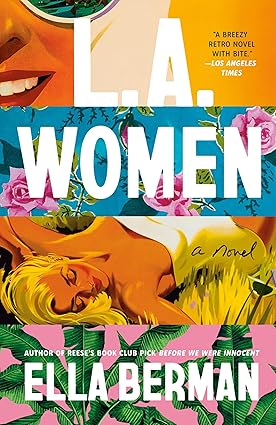
L.A. Women by Ella Berman
Two ambitious writers in 1960s LA face betrayal when one writes a novel based on the other's life.






Your guide toexceptional books
BookBrowse seeks out and recommends the best in contemporary fiction and nonfiction—books that not only engage and entertain but also deepen our understanding of ourselves and the world around us.


