
-
Your next favorite book
is waiting.
Summary | Excerpt | Reviews | Beyond the Book | Readalikes | Genres & Themes | Author Bio
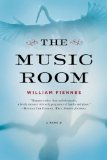
A Memoir
by William Fiennes Book Reviewed by:
I knew what had happened, though no one had told me
directly. I must have pieced it together from different
sources, conversations I'd overheard, my mother or father
describing the event to others: a horse, a road, a car passing.
When people pointed to the photograph and asked me who
it was, I said it was my brother, Thomas, and that I never
knew him, he died two years before I was born. I didn't
understand why they said they were sorry. I knew it was a
loss, but I couldn't feel it as one. He was a presence to me,
not something taken away.
I played in a room at the east end of the house, the moat
immediately outside. On clear mornings light bounced off
the water through the windows, the white ceiling suddenly
unstable with ripples and wind-stir, the surface of the moat
reproduced in sunlight overhead. Our new freezer had just
been delivered, and I'd got the cardboard box to customize
into a secret house, a hatch cut into one side. My father was
at work, dog-eared maps and his battered lunch tin on the
passenger seat, and my mother was showing a group of
history students round the house, so Patsy was here to keep
an eye on me and Richard. I liked the threshold moments
of crawling into or out of the den, the clement burrow
darkness inside the box, the smell of cardboard, the enticing
privacy and warmth. Lying on my back I could look
through a crack in the roof and watch the ceiling's imitation
of water.
Patsy tried to interest Richard in a book but he was
restless, brooding, pacing the room. He noticed a pair of
moorhens paddling close to the window and shouted at
them – 'Shoo!' – as if they'd insulted him, and that eruption
seemed to nudge the whole morning off its rails, because
Rich stood there with both arms held out like a scarecrow's,
his eyes half-closed, lids fluttering, as if there were static
electricity in his eyelashes that made them flicker in and out
of each other. His arms began to jerk; he turned round on
the spot with his arms held out, jolting; the room went
sludgy, as if a spell had swung us out of orbit and everything
was slowing down – as if Patsy and I existed in our own
current of time and were moving past Richard on a raft,
keeping our eyes fixed on him. The spell lasted less than
twenty seconds, and as he came through it he lowered his
arms to his sides and saw both of us looking intently at him.
'What?' he said.
I was four when a local school performed Twelfth Night in
our garden. A tiered, covered stand went up on the back
lawn opposite the yew tree; stagehands rigged up lights and
jammed the door on a writhe of power cables. The moat
that ran along two sides of the lawn was now the sea around
Illyria. Actors emerged from the water and dragged themselves
onto dry land after the shipwreck. A spotlight picked
out Feste standing on the flat roof above the bathroom on
the east stairs. Malvolio's prison was a wooden cage fitted
precisely to my square sandpit.
The drawing room's French windows opened onto an
iron balcony where my father hung the bird-feeders. The
stone that anchored the balcony was crumbling and we
all knew better than to trust our weight to it. The play
started after my bedtime, but the July nights were hot and
my parents had left the windows open: I could hear the
actors' voices, the audience laughing at mix-ups and pretensions;
I slipped out of bed and crept across the landing,
edging on all fours into the windows to watch through the
ironwork.
The following summer the Banbury Cross Players
performed A Midsummer Night's Dream. Each night I lay
awake listening to the applause as Bottom and his crew
approached in the punt and disembarked by the young
copper beech in the corner. I couldn't sleep. I crawled across
the landing and up the two carpeted steps to take my place
at the balcony, a full moon spinning up like a cue-ball as
Oberon and Titania summoned spirits from the shadows.
The rustic players reappeared in the punt, Peter Quince
holding a lantern at the prow.
Excerpted from The Music Room by William Fiennes. Copyright 2009 by William Fiennes. With permission of the publisher, W.W. Norton & Company, Inc.

L.A. Women by Ella Berman
Two ambitious writers in 1960s LA face betrayal when one writes a novel based on the other's life.






Your guide toexceptional books
BookBrowse seeks out and recommends the best in contemporary fiction and nonfiction—books that not only engage and entertain but also deepen our understanding of ourselves and the world around us.


