
-
Your next favorite book
is waiting.
Update Feb 5: Scott Westerfeld's article in the Guardian (UK) summarizes the whole contretemps in one easy to digest article.
Update Feb 4: Truepenny's blog is a great starting point for an update on what's been happening. It includes commentary and links to a follow up letter from Macmillan CEO John Sargent; and an excellent post from Joseph E. Lake Jr. explaining all the people involved in getting one of his books to print and the stages it goes through - which in turn explains why ebooks don't have a much cheaper cost basis than printed books.
Steve Jobs today unveiled the all new iPad tablet which, to quote him, is a "mobile video-watching, book-reading, game-playing, photo-perusing, music-listening, web-surfing, and email-emailing device."
Perhaps the biggest surprise is that its base price starts at $499, which is much lower than the ~$1000 price point industry watchers predicted. At this price it is likely to give dedicated e-readers such as the Kindle and Nook serious competition, and also significantly impact the market for smaller computers known as netbooks.
You will find a thorough description of the new device, as described by Jobs himself here
And for more about the likely pricing and availability of e-books on the iPad click here
Lastly two particularly salient paragraphs lifted from Rik Myslewski's article in theregister.co.uk.....
"And speaking of Amazon's Kindle, Apple clearly is in a gauntlet-throwing mood when it comes to ebooks. But putting aside the epaper-versus-backlit display debate, it's difficult to compare the iPad and the Kindle. The Kindle, for example, can download books from (sorta) anywhere at anytime over Sprint's wireless Whispernet service. To accomplish the same degree of convenience, an iPad owner will not only have to pony up the extra $130 for 3G connectivity, but also pay AT&T $14.99 for 250MB a month or $29.99 for an unlimited data plan.
That said, however, the Kindle is merely a monochrome reader for ebooks (and enewspapers and emagazines and blogs), while the colorful, oleophobic, LED-backlit, 1024-by-768 iPad includes a range of entertainment, creative, and productivity software, plus access to those aforementioned 140,000 iPhone apps. If you're already an iPhone or iPod touch owner, by the way, the iPad will also run all the apps you've purchased for those two handhelds. Another bonus: when docked, the iPad can double as a full-color digital photo frame."
When I worked in publishing just after college, my fellow peons in the editorial department used to play a game where they'd walk into a random bookstore and see who could pull the most books off the shelf that thanked them in their acknowledgments. I never played the game, and I always suspected I would have killed at it. Ever since then, I have always turned to the acknowledgments first when beginning a book, just to see who I can see. And in turn, I've become a huge appreciator of the genre.
My all-time favorite acknowledgments are in one of the best nonfiction books I've ever read, Timothy Tyson's Blood Done Sign My Name. In order to understand the acknowledgments, you've got to understand the book. Tyson, then a professor of Afro-American Studies at the University of Wisconsin-Madison, wrote about the civil rights movement with a muscular, hard-hitting argument: violence, or the threat of violence, played a far more central role in desegregation than we generally would like to admit. But this is no distanced academic treatise. The book opens with a sentence that Tyson's childhood friend uttered to him one spring day when he was ten: "Daddy and Roger and 'em shot 'em a nigger." Tyson grew up in Oxford, North Carolina, where his father was a white Methodist preacher, and his history is also a deeply personal memoir of his family's experience of a racially motivated shooting and the riots and activism it prompted. To understand everything that happened, Tyson would go on to study history at Duke. He would write his masters' thesis on the events in his hometown, and he would eventually rewrite it all from a personal perspective of anguish, outrage, and pride. The making of Blood Done Sign My Name literally drew on every aspect of Tyson's soul, as a child, as a student, as a teacher, writer, and scholar. The acknowledgments burst with heart and passion. They run to eleven pages.
 I hope this post finds everyone well, and enjoying the start of their new year.
As a reader, I've always been interested in how authors come up with ideas for their novels. So, with that thought in mind, I'd like to offer a few thoughts on how my new novel, Dragon House, came to be, as the road to its creation was as circuitous as one could imagine.
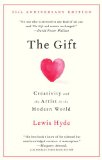 This holiday, in between shopping for presents, I began reading an amazing book, The Gift: Creativity and the Artist in the Modern World by Lewis Hyde. It is, in part, about the cultural meaning of gift exchange, and though my timing in reading it during Christmas was coincidental, the resonances were very welcome. By day, I would buy gifts and experience a familiar twinned pleasure and guilt at all the consumption. By night, I would read The Gift and find myself getting to the source of that dual emotion.
For the last few years, when the vacation and holiday seasons come around and
the news stories start to dry up, I've looked back in time to previous centuries
to find something newsworthy. Today, please join me on a whistle stop tour 300
years back in time to the year 1709 ....
 An usually cold weather front hit Northern Europe on January 6 (believed to be
the coldest period for 500 years). The Great Freeze lasted three months but the
effects were felt all year. The seas around the coast of Britain and Northern
France froze over, crops failed and in Paris alone 24,000 died. In London, the
Thames froze solid and markets took place on the ice. Some suggest that the
freeze was caused by volcanic eruptions of Mount Fuji in Japan and, to a lesser
extent, Santorini and Vesuvius in Europe.
An usually cold weather front hit Northern Europe on January 6 (believed to be
the coldest period for 500 years). The Great Freeze lasted three months but the
effects were felt all year. The seas around the coast of Britain and Northern
France froze over, crops failed and in Paris alone 24,000 died. In London, the
Thames froze solid and markets took place on the ice. Some suggest that the
freeze was caused by volcanic eruptions of Mount Fuji in Japan and, to a lesser
extent, Santorini and Vesuvius in Europe.
 Although
it was a very cold winter it was not entirely out of character – 1709 was one of
the 24 winters between 1408 and 1814 (a period broadly known as the "Little Ice
Age") in which the Thames froze in London. Although the people at the time
probably didn't think much of the weather, music lovers have reason to be
grateful for the Little Ice Age as Antonio Stradivari created his finest
instruments between 1698 and 1725 and it has been proposed that the particularly
cold climate caused the wood used in his violins to be denser than in warmer
periods, contributing to the tone of his instruments.
Although
it was a very cold winter it was not entirely out of character – 1709 was one of
the 24 winters between 1408 and 1814 (a period broadly known as the "Little Ice
Age") in which the Thames froze in London. Although the people at the time
probably didn't think much of the weather, music lovers have reason to be
grateful for the Little Ice Age as Antonio Stradivari created his finest
instruments between 1698 and 1725 and it has been proposed that the particularly
cold climate caused the wood used in his violins to be denser than in warmer
periods, contributing to the tone of his instruments.
