
-
Your next favorite book
is waiting.
Author Biography | Interview | Books by this Author | Read-Alikes

Helen Garner writes novels, stories, screenplays, and works of non-fiction. In 2006 she received the inaugural Melbourne Prize for Literature, and in 2016 she won the prestigious Windham–Campbell Literature Prize for Non-fiction. In 2019 she was honoured with the Australia Council Award for Lifetime Achievement in Literature. Her books include Monkey Grip, The Children's Bach, Cosmo Cosmolino, The Spare Room, The First Stone, This House of Grief, Everywhere I Look, and her diaries Yellow Notebook, One Day I'll Remember This, and How to End a Story.
This bio was last updated on 02/24/2026. In a perfect world, we would like to keep all of BookBrowse's biographies up to date, but with many thousands of lives to keep track of it's simply impossible to do. So, if the date of this bio is not recent, you may wish to do an internet search for a more current source, such as the author's website or social media presence. If you are the author or publisher and would like us to update this biography, send the complete text and we will replace the old with the new.
The Spare Room is your first novel for 15 years. Why did you decide to write it now and why this subject?
I had been publishing fiction, and making a living between books by writing feature journalism, since 1977, and thought of myself as both a novelist and a journalist. In the early 1990s I published a book called The First Stone, about a Melbourne University sexual harassment case; it took issue with a certain kind of victim feminism of the time, and to my great surprise (and a lot of people’s severe annoyance) it stayed on the best-seller list for months. Then I published Joe Cinque’s Consolation, an account of two Canberra murder trials, which was also well received. By then I thought I’d found my metier, and wondered if I would ever get back across the border into fiction. But then a friend I loved died of cancer. I needed to write about it. I didn’t want to write memoir or non-fiction: I wanted to go back to the freedom of fiction, where you can claim ownership of the material, and handle it in any way that enables you to create a larger, deeper truth.
The narrator, like you, is named Helen. Why did you call her that?
I called her Helen because, although the book is a novel (see above), I didn&#...

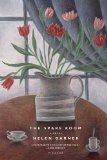

Emily Chenoweth is a former fiction editor of Publishers Weekly. Her work has appeared in Tin House, Bookforum, and People, among other publications. She lives in Portland, Oregon. (more)
If you enjoyed:
The Spare Room
Try:
Hello Goodbye
by Emily Chenoweth
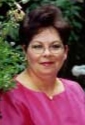
Nancy Hassett Dahm is a registered nurse who specializes in cancer care. Her experience in caring for over 400 cancer patients, since 1991, is the basis of knowledge for this book. Over the years, she has developed ... (more)
If you enjoyed:
The Spare Room
Try:
Mind, Body and Soul
by Nancy H. Dahm
We recommend 14 similar authors
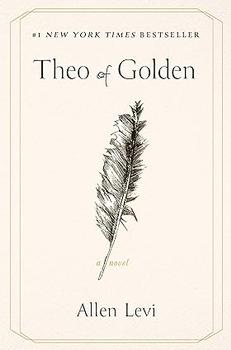
Theo of Golden by Allen Levi
One spring morning, a stranger arrives in the small southern city of Golden. No one knows where he has come from…or why…

Your guide toexceptional books
BookBrowse seeks out and recommends the best in contemporary fiction and nonfiction—books that not only engage and entertain but also deepen our understanding of ourselves and the world around us.


