
-
Your next favorite book
is waiting.
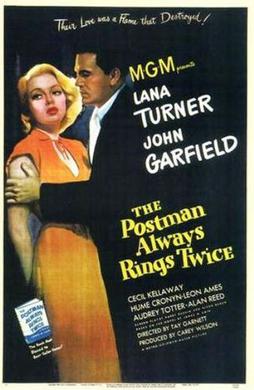
by James M. Cain
The bestselling sensation—and one of the most outstanding crime novels of the 20th century—that was banned in Boston for its explosive mixture of violence and eroticism, and acknowledged by Albert Camus as the model for The Stranger. The basis for the acclaimed 1946 film.
An amoral young tramp. A beautiful, sullen woman with an inconvenient husband. A problem that has only one grisly solution—a solution that only creates other problems that no one can ever solve.
First published in 1934, The Postman Always Rings Twice is a classic of the roman noir. It established James M. Cain as a major novelist with an unsparing vision of America's bleak underside and was acknowledged by Albert Camus as the model for The Stranger.
"A good, swift, violent story." —Dashiell Hammett
"A poet of the tabloid murder." —Edmund Wilson
This information about The Postman Always Rings Twice was first featured
in "The BookBrowse Review" - BookBrowse's membership magazine, and in our weekly "Publishing This Week" newsletter. Publication information is for the USA, and (unless stated otherwise) represents the first print edition. The reviews are necessarily limited to those that were available to us ahead of publication. If you are the publisher or author and feel that they do not properly reflect the range of media opinion now available, send us a message with the mainstream reviews that you would like to see added.
Any "Author Information" displayed below reflects the author's biography at the time this particular book was published.
James Mallahan Cain (1892-1977) was a first-rate writer of American hard-boiled crime fiction. Born in Baltimore, the son of the president of Washington College, Cain began his career as a reporter, serving in the American Expeditionary Force in World War I and writing for The Cross of Lorraine, the newspaper of the 79th Division. He returned from the war to embark on a literay career that included a professorship at St. John's College in Annapolis and a stint at The New Yorker as managing editor before he went to Hollywood as a script writer. Cain's famous first novel, The Postman Always Rings Twice, was published in 1934 when he was forty-two, and became an instant sensation. It was tried for obscenity in Boston and was said by Albert Camus to have inspired his own book, The Stranger. The infamous novel was staged in 1936, and filmed in 1946 and 1981. The story of a young hobo who has an affair with a married woman and plots with her to murder her husband and collect his insurance, The Postman Always Rings Twice is a benchmark of classic crime fiction and film noir. Two of Cain's other novels, Mildred Pierce (1941) and Double Indemnity (1943), were also made into film noir classics. In 1974, James M. Cain was awarded the Grand Master Award by the Mystery Writers of America. Cain published eighteen books in all and was working on his autobiography at the time of his death.

If you liked The Postman Always Rings Twice, try these:

by Tony Tulathimutte
Published 2025
From the Whiting and O. Henry–winning author of Private Citizens ("the first great millennial novel," New York Magazine), an electrifying novel-in-stories that follows a cast of intricately linked characters as rejection throws their lives and relationships into chaos.

by Amor Towles
Published 2025
From the bestselling author of The Lincoln Highway, A Gentleman in Moscow, and Rules of Civility, a richly detailed and sharply drawn collection of stories, including a novella featuring one of his most beloved characters
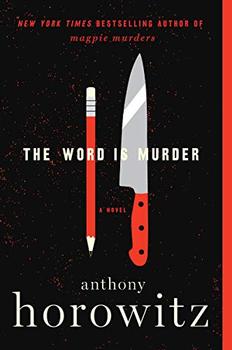
by Anthony Horowitz
Published 2019
Anthony Horowitz has yet again brilliantly reinvented the classic crime novel, this time writing a fictional version of himself as the Watson to a modern-day Holmes.
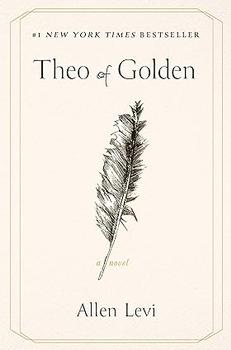
Theo of Golden by Allen Levi
One spring morning, a stranger arrives in the small southern city of Golden. No one knows where he has come from…or why…






Your guide toexceptional books
BookBrowse seeks out and recommends the best in contemporary fiction and nonfiction—books that not only engage and entertain but also deepen our understanding of ourselves and the world around us.

