
-
Your next favorite book
is waiting.
Summary | Excerpt | Reviews | Beyond the book | Read-Alikes | Genres & Themes | Author Bio

A Novel
by Jennifer N. Brown Book Reviewed by:
A dual-timeline murder mystery set in an English country manor, when an ambitious professor discovers the long-lost manuscript of a Reformation-era prophetess.
Historian Alison Sage has made a groundbreaking archival discovery―she found a manuscript containing the prophecies of a 16th century nun, Elizabeth Barton. Barton's prophecy condemning Henry VIII and Anne Boleyn led to her execution and the destruction of all copies of her prophecies―or so the world believed.
With Alison's discovery, she is catapulted to academic superstardom and scores an invitation to the exclusive Codex Consortium, a week of research among a select handful of fellow historians at a crumbling manor in England, located next to the ruins of the priory where Elizabeth herself once lived.
What begins as a promising conference turns into a nightmare as the eerie house becomes the site of a murder. Suddenly, everyone is a suspect, and it seems that answers lie at the root of a local legend about centuries-old hidden treasure. Alison's research makes her best-suited to solve the mystery―but when old feelings resurface for a former colleague, and the stakes of the search skyrocket, everyone's motives become murky.
Alison's cutthroat world of academia is almost as dangerous as Elizabeth Barton's sixteenth-century England, where heretics are beheaded, visions can kill, and knowing who to trust is a deadly art. The Lost Book of Elizabeth Barton is a thrilling novel, crackling with the voices of the past and propelled by a mystery that will leave readers in suspense until the very last page.
Prologue
Tyburn, 1534
Elizabeth was at first unafraid at the Tree. Even through her exhausted, muddled mind, the searing pain in her shoulders and head, she believed that God would save her. When they first placed the chafing rope around her neck, she welcomed it.
Death would not yet come for her like it had for others. It may at last be her hour, but her bridegroom was waiting for her in heaven.
There were already corpses swinging and awaiting company, hanged earlier that day. Birds voraciously picked at the flesh despite the roar of the crowd.
The people gathered there were shouting and cheering for this ceremony of death. Her eyes fixed on a family up front, a small child on the shoulders of a man. A day out. To watch them hang.
She moved her gaze, for her head would no longer move as she willed it, to the hangmen who climbed onto the cart, making sure the nooses around their necks were secure. There were six of them waiting to die, but the crowd was there only for her.
"The Mad Maid of ...
Brown's descriptions of the English countryside, both in the 1500s and today, are beautiful, and the book's scenes of academic life are perfectly, specifically rendered... But perhaps the most masterful aspect of the novel is Brown's breadcrumbing of clues. Even the most astute readers, however, will gasp more than once through this twist-filled plot...continued
Full Review
 (809 words)
(Reviewed by Maria Katsulos).
 Bruce Holsinger, nationally bestselling author of Culpability and The Gifted School
Combining a historical thriller with a suspenseful contemporary narrative of archival discovery, [this] is an utterly mesmerizing read, lavish and erudite yet unputdownable... A riveting, brilliantly bookish debut. Karin Tanabe, author of A Woman of Intelligence
The Lost Book of Elizabeth Barton hits the sweet spot of historical fiction: whip-smart yet accessible, and propulsive from start to finish. A masterclass on the power of a dual-timeline story, Brown's fiction debut will tug on your heartstrings with the emotional impact that brave women of the past have on brilliant women of the present.
Bruce Holsinger, nationally bestselling author of Culpability and The Gifted School
Combining a historical thriller with a suspenseful contemporary narrative of archival discovery, [this] is an utterly mesmerizing read, lavish and erudite yet unputdownable... A riveting, brilliantly bookish debut. Karin Tanabe, author of A Woman of Intelligence
The Lost Book of Elizabeth Barton hits the sweet spot of historical fiction: whip-smart yet accessible, and propulsive from start to finish. A masterclass on the power of a dual-timeline story, Brown's fiction debut will tug on your heartstrings with the emotional impact that brave women of the past have on brilliant women of the present.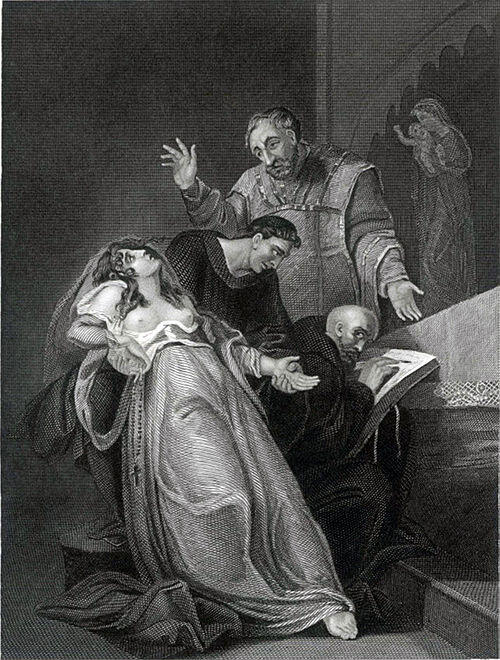 Born in the early 1500s in Kent, England, Elizabeth Barton was known throughout her short life by various sobriquets: while her supporters called her the "Nun of Kent" and the "Holy Maid of Kent" both during and after her life, her detractors labeled her the "Mad Maid of Kent" after she confessed to having fabricated her visions. But what were these visions, exactly? And why was her punishment—execution by hanging, followed by the removal of her head, which would be displayed on a pike at the London Bridge as a warning against treason—so severe, particularly for a sixteenth-century woman?
Barton's visions began in 1525, when she was around twenty years old and fell so ill that she could not eat or drink properly for ...
If you liked The Lost Book of Elizabeth Barton, try these:

by Anna North
Published 2026
From the author of the New York Times bestseller Outlawed, the gripping story of an anthropologist's monumental discovery and the clash of civilizations it sets off over the fate of the land that holds us.
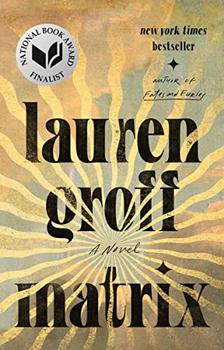
by Lauren Groff
Published 2022
Cast out of the royal court by Eleanor of Aquitaine, deemed too coarse and rough-hewn for marriage or courtly life, seventeen-year-old Marie de France is sent to England to be the new prioress of an impoverished abbey, its nuns on the brink of starvation and beset by disease.
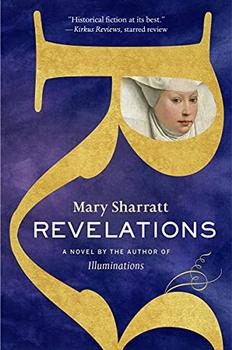
by Mary Sharratt
Published 2022
A fifteenth-century Eat, Pray, Love, Revelations illuminates the intersecting lives of two female mystics who changed history - Margery Kempe and Julian of Norwich.

L.A. Women by Ella Berman
Two ambitious writers in 1960s LA face betrayal when one writes a novel based on the other's life.







