
-
Your next favorite book
is waiting.
Summary | Excerpt | Reviews | Beyond the Book | Read-Alikes | Genres & Themes | Author Bio

A Novel
by Jennifer N. Brown Book Reviewed by:
This article relates to The Lost Book of Elizabeth Barton

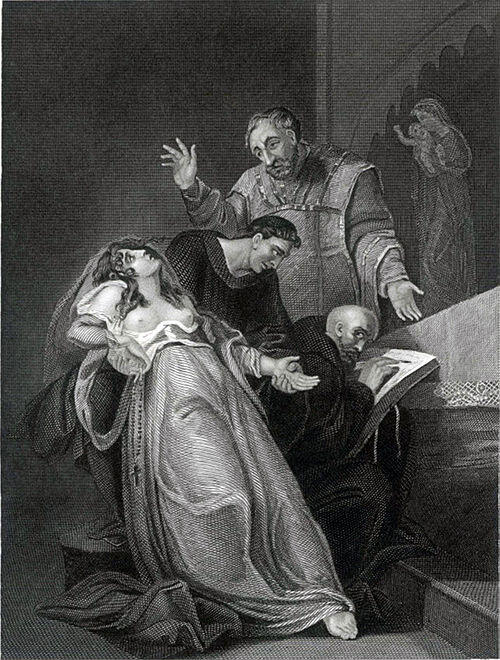 Born in the early 1500s in Kent, England, Elizabeth Barton was known throughout her short life by various sobriquets: while her supporters called her the "Nun of Kent" and the "Holy Maid of Kent" both during and after her life, her detractors labeled her the "Mad Maid of Kent" after she confessed to having fabricated her visions. But what were these visions, exactly? And why was her punishment—execution by hanging, followed by the removal of her head, which would be displayed on a pike at the London Bridge as a warning against treason—so severe, particularly for a sixteenth-century woman?
Barton's visions began in 1525, when she was around twenty years old and fell so ill that she could not eat or drink properly for several months and was sometimes afflicted with seizures and paralysis. She was a poor, illiterate servant, without the traditional education that would have given her the kind of knowledge she espoused during her violent illness. During these episodes, she spoke at length about different religious matters, emphasizing the importance of traditional Catholic ritual like mass, pilgrimage, confession, and the veneration of saints and the Virgin Mary. Once she was recovered enough to travel, Elizabeth became a nun at the Benedictine priory of St. Sepulchre, and she continued to have various visions during her time there.
In a similar vein to other visionaries, like St. Bridget of Sweden and St. Catherine of Siena, Elizabeth's visions became increasingly political over the years. Through her trance-like visions, Elizabeth seemed to convey God's wishes for Henry VIII to remain loyal to the Roman Catholic Church, rather than break away in order to divorce Katharine of Aragon and marry Anne Boleyn. Soon, Elizabeth began naming specific individuals who she had seen in purgatory or hell, paying for their sins while alive. She met with increasingly powerful men—John Fisher, the Bishop of Rochester; Thomas Wolsey, the Cardinal-Chancellor of England; Thomas More, Chancellor of England; Thomas Cromwell, chief minister to Henry VIII; and finally the king himself. Despite the absolute power of these men—especially Henry VIII—Elizabeth boldly continued to preach against the Boleyn marriage, even going so far as to predict that Henry would die within seven months if he married Anne and put Katharine aside.
Thus, Elizabeth's visions went from exclusively religious to more overtly political, and it became clear that her life was in danger by 1533. Rather than considering her visions to be true messages from God, Henry VIII saw her statements as treasonous threats against the king's life. Cromwell had her and her supporters sent to the Tower of London, while they were "interrogated" (but most likely physically tortured) until they confessed that Elizabeth was no true visionary and that she had made up her prophecies.
Elizabeth was indicted of high treason and sentenced to a grisly death, presumably to scare off others from trying to model themselves on her. On April 20, 1534, she and her supporters were publicly executed by hanging. After death, the executioners removed her head and displayed it at London Bridge as a warning; Elizabeth remains the only woman to suffer this fate. While the propaganda spread by Henry that Elizabeth was a liar and a false visionary remains one way to interpret Elizabeth's life, she has also been considered an early martyr in the service of English Catholicism. The severe reaction to her visions, particularly with their political ramifications, is also key to understanding the extremely high stakes of the turbulent transition from Roman Catholicism to English Protestantism (Anglicanism) during the reigns of the Tudor monarchs, and Elizabeth's life demonstrates the huge impact a servant girl could have on the most powerful people in the land.
An engraving of Elizabeth Barton based on a painting by Henry Tresham
Image courtesy of Wikimedia Commons
Filed under People, Eras & Events
 This article relates to The Lost Book of Elizabeth Barton.
It first ran in the June 10, 2026
issue of BookBrowse Recommends.
This article relates to The Lost Book of Elizabeth Barton.
It first ran in the June 10, 2026
issue of BookBrowse Recommends.

L.A. Women by Ella Berman
Two ambitious writers in 1960s LA face betrayal when one writes a novel based on the other's life.

Your guide toexceptional books
BookBrowse seeks out and recommends the best in contemporary fiction and nonfiction—books that not only engage and entertain but also deepen our understanding of ourselves and the world around us.


