
-
Your next favorite book
is waiting.
Summary | Excerpt | Reviews | Beyond the book | Read-Alikes | Genres & Themes | Author Bio

A Novel
by Jennifer N. Brown Book Reviewed by:
From the very beginning of The Lost Book of Elizabeth Barton, the two heroines—the titular Elizabeth and Dr. Alison Sage, a modern-day historian who studies Elizabeth's life as a mystic—both face imminent death, albeit in two entirely different situations. Elizabeth's (historically accurate) story ends with her public hanging after being forced to confess the falsity of her spiritual predictions, which she maintains were visions sent from God; Alison is stuck in some small, airless space, panic rapidly settling in as she searches for a way out. To learn why she has been trapped, readers must go back a week in time.
On the surface, the two women could not have lived more dissimilar lives: Elizabeth lived in England in the early sixteenth century, a time of religious and political turmoil as King Henry VIII looked to break away from the Roman Catholic Church and the Pope's oversight in order to marry his second wife, Anne Boleyn. Before her mystical dreams began, Elizabeth was an illiterate servant; even as a nun, she never learned to read. Alison, meanwhile, is a modern-day historian, a professor whose life revolves around reading and writing about late-medieval women like Elizabeth—and unlike Elizabeth, who remained unmarried as a nun, Alison is still reeling from her recent divorce. When she throws herself into her research with renewed vigor and tracks down a printed copy of Elizabeth's revelations (all other copies were seemingly burnt by supporters of Henry VIII), she thinks this is her scholarly big break—the impossible discovery that will finally put her on the academic map.
Initially, it seems that she is successful, and she's invited to a hyper-exclusive consortium in the English countryside, just a stone's throw away from the ruins of Elizabeth's former convent. Alison jumps at the chance to do more hands-on research and work with the six other, better-established historians at the consortium—one of whom turns out to be an old flame, Westley Charney, for whom Alison quickly redevelops feelings, despite his somewhat suspicious motives for attendance; the reader can't help but root for Alison to bounce back after her divorce. The other professors are enthralling characters, running the gamut from merely eccentric to professionally inspirational (at least for those readers who, like me, are also academics).
Together, Alison, Westley, and the rest of the group study centuries-old documents, portraits, and tombs. In addition to more information about Elizabeth, Alison also finds details about two of the most important women in Elizabeth's life: the prioress of her convent, Philippa, and the lady of the manor, Lady Vale, whose donations to the convent tied her family to the holy sisters for decades. The novel alternates modern-day chapters with medieval ones, most of which are from Elizabeth's perspective, but Philippa and Lady Vale both get their turns to add their points of view. It is fascinating to get to "meet" historical figures like Henry VIII and his advisors through Elizabeth's eyes, and Brown's descriptive language is particularly strong during Elizabeth's visions.
However, before the consortium's week is up, there is a rash of stolen research notes, interpersonal secrets and lies, and finally a grisly murder on the manor grounds. Everything seems to come back to Elizabeth Barton, the lost book of her prophecies, and the legendary treasure associated with it—the murder victim was another treasure-hunter, searching in spaces like Elizabeth's former church and following clues from local legends about her—and so it is up to Alison to use her historical expertise to piece the clues together. Whether the legendary treasure is long-forgotten knowledge or, as the other members of the consortium seem to believe, priceless jewels, Alison is on the clock to discover the truth and to exonerate the scholarly memory of Elizabeth Barton. Was she, as Alison initially thought, just a misguided girl whose fever dreams were spun into politically dangerous rhetoric by the powerful men who manipulated her? Or was there some truth to Elizabeth's godly visions? And what did Elizabeth predict that was so frightening that Lady Vale and Prioress Philippa needed to destroy the few remaining copies of her final revelation?
Brown's descriptions of the English countryside, both in the 1500s and today, are beautiful, and the book's scenes of academic life are perfectly, specifically rendered (when Alison's panel is delayed at a conference, I started sweating on her behalf—I know that anxiety all too well!). But perhaps the most masterful aspect of the novel is Brown's breadcrumbing—without ever laying it on too thickly or obviously, Brown drops clues throughout Alison's week at the consortium that I found myself flagging just in case they became important later. Even the most astute readers, however, will gasp more than once through this twist-filled plot, and fans of historical fiction will certainly learn some things about this late medieval mystic and the ways her legacy has been shaped, reshaped, suppressed, and finally reinvigorated.
 This review
first ran in the June 10, 2026
issue of BookBrowse Recommends.
This review
first ran in the June 10, 2026
issue of BookBrowse Recommends.

If you liked The Lost Book of Elizabeth Barton, try these:

by Anna North
Published 2026
From the author of the New York Times bestseller Outlawed, the gripping story of an anthropologist's monumental discovery and the clash of civilizations it sets off over the fate of the land that holds us.
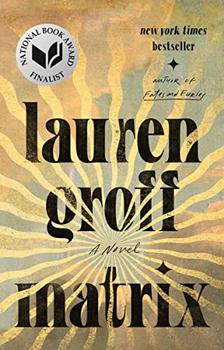
by Lauren Groff
Published 2022
Cast out of the royal court by Eleanor of Aquitaine, deemed too coarse and rough-hewn for marriage or courtly life, seventeen-year-old Marie de France is sent to England to be the new prioress of an impoverished abbey, its nuns on the brink of starvation and beset by disease.
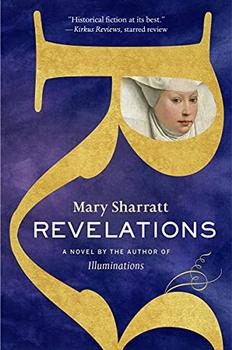
by Mary Sharratt
Published 2022
A fifteenth-century Eat, Pray, Love, Revelations illuminates the intersecting lives of two female mystics who changed history - Margery Kempe and Julian of Norwich.
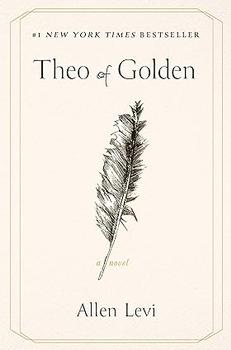
Theo of Golden by Allen Levi
One spring morning, a stranger arrives in the small southern city of Golden. No one knows where he has come from…or why…






Your guide toexceptional books
BookBrowse seeks out and recommends the best in contemporary fiction and nonfiction—books that not only engage and entertain but also deepen our understanding of ourselves and the world around us.

