-
Your next favorite book
is waiting.
Summary | Excerpt | Reviews | Beyond the book | Read-Alikes | Genres & Themes | Author Bio

Prediction, Power, and the Fight for the Future, from Ancient Oracles to AI
by Carissa Véliz Book Reviewed by:
From an award-winning University of Oxford professor comes a brilliant, urgent new look at prophecies—the predictions that determine our lives, from our personal finances and the quality of our healthcare to the news and social media we consume and the produces foisted upon us.
Today's computer scientists play the same role as the oracles of the ancient world and the astrologers of the Middle Ages. Modern predictions not only advise on war, crop output, and marriages, but algorithms and statisticians also now determine whether we can get a loan, a job, an apartment, or an organ transplant. And when we cede ground to these predictions, we lose control of our own lives.
In this powerful, refreshing new look at the many ways prediction shapes our everyday lives, University of Oxford professor Carissa Véliz explains how putting too much stock in others' predictions makes us vulnerable to charlatans, con artists, dubious technology, and self-deception. Examining a wide range of subjects both personal and societal, including medicine, climate, technology, society, and others, Véliz uncovers a number of insights: predictions about humans tend to be self-fulfilling; more data doesn't guarantee better outcomes; AI is more likely to increase risk than decrease it; and a free and robust society requires not more prediction, but better preparation.
Véliz argues in this incisive and bracingly original book that the main promise of prediction is not knowledge of the future, but rather power over others. Prophecy is an invitation to defy those orders and live life on our own terms.
Excerpt
Prophecy
Divination is not just good for business; it's a good business in itself. Prophets are merchants of prediction. The Delphic Oracle sat on Mount Parnassus, on the northern coast of the Gulf of Corinth, around ninety miles northwest of Athens, near the port of Crisa. We first hear about the Oracle in the Odyssey, although Plutarch, who served as a priest at the sanctuary, is a more informative source.
To get to the Oracle, you had to ascend the Sacred Way to Apollo's temple, your sandaled feet treading worn limestone steps that countless pilgrims had climbed before you. The mountain air grows thinner and sweeter as you rise, carrying the smoked scent of burning laurel leaves and the earthy perfume of wild thyme that grows between the cracks of the ancient stones.
Below are the twin cliffs of the Phaedriades tower, like guardian giants, their red-gold faces catching the morning sun. The sound of trickling water from the Castalian Spring, where you stopped to wash yourself and...
Prophecy's scope is wide; it is simultaneously a book about technology, business, politics, history, philosophy, and personal development. In the hands of a less skilled teacher, it might become a "Book of Everything", and thereby nothing, but Véliz is an engaging professor, who knows how to introduce multiple sides of a complicated debate without losing her audience...continued
Full Review
 (997 words)
(Reviewed by Margaret Belford).
 Karen Hao, New York Times bestselling author of Empire of AI
Carissa Véliz so cleverly deflates the hype that spouts from the prophets of Silicon Valley—and in the process, offers a sharp new way to examine how people exercise power in our world. Roger McNamee, New York Times bestselling author of Zucked
A masterpiece. Prophecy exposes the biggest trick powerful people use to get what they want—and they've been pulling it off for the longest time. Big tech's AI predictions are the power plays in disguise of the ancient oracles and medieval astrologers. Delightfully written, refreshingly original, and masterfully argued for, Prophecy lifts the veil on our forecasting practices. Prophecy is the most important book you will read for years.
Karen Hao, New York Times bestselling author of Empire of AI
Carissa Véliz so cleverly deflates the hype that spouts from the prophets of Silicon Valley—and in the process, offers a sharp new way to examine how people exercise power in our world. Roger McNamee, New York Times bestselling author of Zucked
A masterpiece. Prophecy exposes the biggest trick powerful people use to get what they want—and they've been pulling it off for the longest time. Big tech's AI predictions are the power plays in disguise of the ancient oracles and medieval astrologers. Delightfully written, refreshingly original, and masterfully argued for, Prophecy lifts the veil on our forecasting practices. Prophecy is the most important book you will read for years.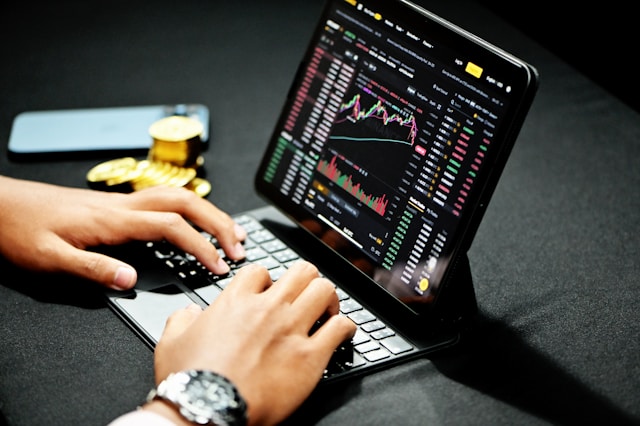 Perhaps no current event better embodies Prophecy's concerns about prediction, Big Tech, and ethics than the rise of prediction markets. Platforms like Polymarket and Kalshi have raked in billions of dollars with the idea of placing bets on the future, from the outcome of football matches to the front lines of war. What are they, and how might the ethical lens of Prophecy apply?
Prediction markets are, broadly, online spaces for people to put money on the outcome of future events. That includes everything from sports matches to natural disasters to Russian troop movements in Ukraine. They leapt into the mainstream in 2024 when Polymarket correctly predicted, via the aggregation of its users' bets, the results of the U.S. presidential...
If you liked Prophecy, try these:

by Mustafa Suleyman
Published 2025
An urgent warning of the unprecedented risks that AI and other fast-developing technologies pose to global order, and how we might contain them while we have the chance—from a co-founder of the pioneering artificial intelligence company DeepMind
by Masha Gessen
Published 2021
A bestselling, National Book Award–winning journalist's bracing elucidation of our tumultuous times.

by Philip E. Tetlock
Published 2016
Everyone would benefit from seeing further into the future, whether buying stocks, crafting policy, launching a new product, or simply planning the week's meals. Unfortunately, people tend to be terrible forecasters.
L.A. Women by Ella Berman
Two ambitious writers in 1960s LA face betrayal when one writes a novel based on the other's life.