
-
Your next favorite book
is waiting.
Summary | Excerpt | Reviews | Beyond the Book | Read-Alikes | Genres & Themes | Author Bio

Prediction, Power, and the Fight for the Future, from Ancient Oracles to AI
by Carissa Véliz Book Reviewed by:
This article relates to Prophecy

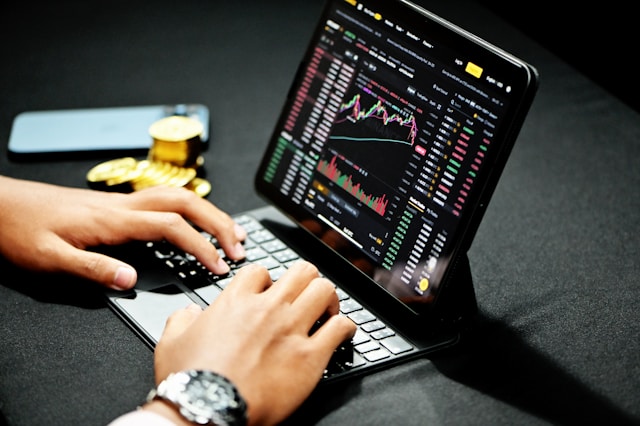 Perhaps no current event better embodies Prophecy's concerns about prediction, Big Tech, and ethics than the rise of prediction markets. Platforms like Polymarket and Kalshi have raked in billions of dollars with the idea of placing bets on the future, from the outcome of football matches to the front lines of war. What are they, and how might the ethical lens of Prophecy apply?
Prediction markets are, broadly, online spaces for people to put money on the outcome of future events. That includes everything from sports matches to natural disasters to Russian troop movements in Ukraine. They leapt into the mainstream in 2024 when Polymarket correctly predicted, via the aggregation of its users' bets, the results of the U.S. presidential election much better than polls and pundits did.
The root of modern prediction markets is often traced to three University of Iowa economists, who created the Iowa Electronic Markets in 1988 as a solution to inaccurate elections polling. Their exchange recruited students and faculty to place bets on the upcoming Dukakis-Bush presidential election, utilizing student computer labs, in an age before personal laptops. The market was shockingly accurate, and continues to operate today for research and teaching purposes. These kinds of markets were confined to universities in the U.S., however—the only place legal to trade on election results at that time—and their overseas equivalents never scaled.
Ironically, commentators did not predict the success of prediction markets in the U.S. For years, gamblers were mostly uninterested in making bets on niche political topics, and few investors wanted to contribute to a market without a profit advantage over traditional markets, meaning that there was a lack of liquidity. Also, their legality was questionable—in 2022, Polymarket was forced to shut down in the U.S. for operating as an unlicensed betting site, setting up its headquarters with a P.O. box in Panama, and only recently had their federal investigation dropped by the predication market-friendly Trump administration. In Prophecy, Véliz points out how public trust in statistics and probabilistic thinking have risen at the same time that faith in institutions and bureaucracy has declined. That same trend may at least explain the recent explosion in prediction markets: today, more than two billion dollars are traded weekly on Kalshi, and Polymarket is valued at $15 billion.
Prediction markets should, in theory, combine the wisdom of the crowd with the price mechanism of markets to give policymakers and the public an outline of the future, as the Iowa Electronic Markets did. But they also give incredible incentive to engage in insider trading—like the U.S. soldier charged with using classified information to make over $400,000 on Nicolas Maduro's arrest—or to place highly visible bets to influence the outcome of events they predict. In 2025, the CEO of Coinbase raised eyebrows at the end of an earnings call by listing off five buzzwords, each with bets on Kalshi and Polymarket predicting whether they would be said at that meeting.
Market advocates tend to adopt a "Let's make a market on everything" mentality. The more data, the more exercise of market forces, and the more accurate the prediction. But cases like these call to mind Véliz's declaration of quantification, paraphrasing Max Weber, as an "iron cage of rationality"—just because we can bet on everything, should we?
A person sits at a laptop as the screen shows a currency trading market
Image courtesy of NIKON CORPORATION, NIKON D780.
Filed under Medicine, Science and Tech
 This article relates to Prophecy.
It first ran in the June 10, 2026
issue of BookBrowse Recommends.
This article relates to Prophecy.
It first ran in the June 10, 2026
issue of BookBrowse Recommends.

L.A. Women by Ella Berman
Two ambitious writers in 1960s LA face betrayal when one writes a novel based on the other's life.







Your guide toexceptional books
BookBrowse seeks out and recommends the best in contemporary fiction and nonfiction—books that not only engage and entertain but also deepen our understanding of ourselves and the world around us.

