
-
Your next favorite book
is waiting.
Summary | Excerpt | Reviews | Beyond the book | Read-Alikes | Genres & Themes | Author Bio

Prediction, Power, and the Fight for the Future, from Ancient Oracles to AI
by Carissa Véliz Book Reviewed by:
It's difficult to overstate how much of our daily life is shaped by prediction. From the mundane (checking the weather before getting dressed; deciding which route to take to work to avoid traffic) to the massive (credit scores; election polling) much of modern existence is built on claims about the future. But how often do we pause and consider the ethics behind those predictions? Not often enough, philosopher Carissa Véliz successfully argues in her new book, Prophecy.
Knowledge is power, and from antiquity to the present, simply claiming to have knowledge of the future has been its own form of influence. The Oracle at Delphi and Sam Altman alike position themselves in the halls of power, informing policymaking and making grand promises that tend to manifest the future they foresee. When King Louis XI's court astrologer predicts that he will die three days before the King himself, Louis decides against executing him. When Altman asserts that widespread adoption of artificial intelligence is inevitable—and when every sector of society caves to FOMO and begins adopting it—OpenAI's stock rises.
Véliz's goal is not to provide a solution to one's AI anxieties, whether you're more worried about mass unemployment or the implosion of Google's search function. Rather, she aims to spark public debate on the ethics of prediction itself. As she puts it: "What exactly are predictions, what are their effects, who has the authority to make them, and when is it appropriate to use them?" These questions have been missing from current discussions on artificial intelligence, possibly because the term "AI" has become so vague and overextended, used for everything from machine learning models to Studio Ghibli filters, obfuscating the fact that it is simply a glorified predictor that uses massive amounts of data to predict likely responses.
Predictions express an idea about the future. That expression can become a self-fulfilling prophecy, like how pre-election polling can convince discouraged candidates to drop out early or reshape fundraising and donor decisions. Some predictions have fairly clear-cut, evidence-backed visions of the future, like weather forecasts. Other predictions, while their predictors may claim that same level of scientific rigor, use algorithms that simply launder the human biases behind them—for example, the documented way that AI disproportionately approves mortgage loans for white families over families of color. Your data is not and should not be your destiny, Véliz argues.
Véliz brings the same depth of analysis to Prophecy that she showcased in Privacy Is Power, her treatise on creating a culture of privacy over disclosure in the modern world. Several arguments carry over from that work—for example, how AI companies' incentive to scrape all the data they can from users presents a clear threat to privacy rights—but Prophecy's scope is wider; it is simultaneously a book about technology, business, politics, history, philosophy, and personal development. In the hands of a less skilled teacher, it might become a "Book of Everything," and thereby nothing, but Véliz is an engaging professor, who knows how to introduce multiple sides of a complicated debate without losing her audience.
Take the early chapters on historical prediction, which explore multiple cases of the social and political power of oracles. I've been overexposed to Foreign Affairs' weekly citations of Thucydides and tend to roll my eyes when a writer starts drawing threads from the U.S. to Ancient Greece, but Véliz provides enough substantive analysis to justify all this context, and it's an enjoyable exercise to infer one's own parallels to our modern world. For example, she uses Alexander the Paphlagonian's scheme to make a snake appear as a divine oracle as an example of the risk of scamming; we can also connect the scheme, in which he provides a voice to the snake from afar, to modern companies outsourcing the driving of autonomous vehicles to human operators, or the revelation of Builder.AI's $1.5 billion valuation being driven by staff pretending to be sophisticated bots. In Véliz's telling, the role of medieval fortunetellers is increasingly played by tech executives.
Prophecy could be interpreted by critics as a book against technology and measurement, but to read Véliz's case as a Luddite reaction to AI would be disingenuous. She takes issue more with the growing over-quantification of the human experience. Her ethical and aesthetic arguments are convincing: Yes, it should be shocking to us that companies want to automate creativity, that creating art is being framed as a kind of chore. Yes, there are some contexts that prediction should play no part in. Theoretically, predictive algorithms could analyze vast amounts of data to determine an individual's likelihood of committing a crime. But it would be antithetical to the values of justice systems around the world—fairness, impartiality—to judge people by their probability, even if there were a potential benefit to society's safety. A low-stakes example: "You might be sure that your colleague will leave his dirty coffee cup behind, but it would be inappropriate to send him an angry email about it until he does. So why are we denying people loans, jobs, apartments, bail, and other opportunities on the basis of merely predictive evidence?"
Near the conclusion, Véliz describes hosting discussions with students at Oxford, pushing them to analyze and reflect more deeply, asking probing questions on the "why" behind their deepest-held beliefs. Those discussions are heavy; the pages are dense with citations. With such a good guide, though, this burden is manageable, and lifting it makes you strong. Prophecy feels like one of those office hours: in a few hundred pages of research, Véliz managed to guide me through one of the most complicated, mis- and disinformation-laden topics of our time with a gentle hand and an invitation to think more critically about my assumptions. She may not give readers the perfect way forward in Prophecy, but she gives us the space and several considerations with which to figure out our next steps. Whichever future you choose, just make sure you're the one choosing it—not an algorithm, not an oracle, but your own mind.
 This review
first ran in the June 10, 2026
issue of BookBrowse Recommends.
This review
first ran in the June 10, 2026
issue of BookBrowse Recommends.

If you liked Prophecy, try these:

by Mustafa Suleyman
Published 2025
An urgent warning of the unprecedented risks that AI and other fast-developing technologies pose to global order, and how we might contain them while we have the chance—from a co-founder of the pioneering artificial intelligence company DeepMind
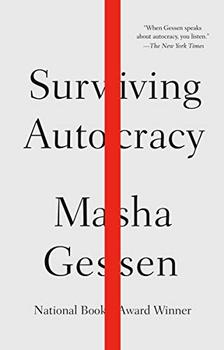
by Masha Gessen
Published 2021
A bestselling, National Book Award–winning journalist's bracing elucidation of our tumultuous times.

by Philip E. Tetlock
Published 2016
Everyone would benefit from seeing further into the future, whether buying stocks, crafting policy, launching a new product, or simply planning the week's meals. Unfortunately, people tend to be terrible forecasters.

L.A. Women by Ella Berman
Two ambitious writers in 1960s LA face betrayal when one writes a novel based on the other's life.






Your guide toexceptional books
BookBrowse seeks out and recommends the best in contemporary fiction and nonfiction—books that not only engage and entertain but also deepen our understanding of ourselves and the world around us.

