Book Club Discussion Questions
For supplemental discussion material see our Beyond the Book article, A Short History of Kenya and our BookBrowse Review of Unbowed.
Please be aware that this discussion guide will contain spoilers!
About This Guide
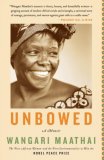
"Wangari Maathai's memoir is direct, honest, and beautifully written—a gripping
account of modern Africa's trials and triumphs, a universal story of courage,
persistence, and success against great odds in a noble cause." —Bill Clinton.
The introduction, discussion questions, suggestions for further reading, and
author biography that follow are intended to enhance your group's conversation
about Wangari Maathai's
Unbowed, an autobiography that offers a message
of hope and inspiration through one woman's achievements on behalf of women, the
environment, and democracy in Kenya.
About This Book
In this deeply affecting and inspiring memoir, Wangari Maathai, the winner
of the 2004 Nobel Peace Prize and a divorced mother of three, recounts her
extraordinary life as a political activist, feminist, and environmentalist in
Kenya.
Born in a rural village in 1940, Wangari Maathai departed from the usual path of
Kenyan girlhood when she left her village to be educated in boarding schools run
by Catholic missionaries. From there she went on to higher education in the
United States, earning both bachelor's and master's degrees in biological
sciences. Returning to Kenya, she became the first woman to earn a Ph.D. in East
and Central Africa and headed the department of veterinary medicine at the
University of Nairobi. Because of her engagement in a variety of progressive
political causes, she increasingly found herself the target of harassment by
then Kenyan president Daniel arap Moi's brutal regime.
She was jailed several times, and wounded in attacks by the police.
In
Unbowed, she recounts the political and personal beliefs that led her,
in 1977, to establish the Green Belt Movement, which spread from Kenya across
Africa helping to restore indigenous forests while mobilizing rural communities,
particularly women, by offering them a small compensation to plant trees in
their villages. Over the course of many years, Maathai's extraordinary courage
and determination helped transform Kenya's government into the real democracy it
is today and in which she has served as assistant minister for the environment
and continues to serve as a member of Parliament. In 2004 she was awarded the
Nobel Peace Prize in recognition of her "contribution to sustainable
development, human rights, and peace."
Reader's Guide
- In her first chapter, "Beginnings," Maathai describes the natural
environment of her family's village and the effects of colonial settlement,
Christianity, and literacy on the native culture of Kenya. How did the coming of
white settlers change the native way of life, particularly in terms of families'
relations to the land, a traditional economy, and education?
- What aspects of her family life and her mother's approach to childrearing,
as described in "Beginnings," might have nurtured Wangari's strong, forthright,
and optimistic character? How powerful was the effect of cultivating the soil on
her imagination as a child?
- Because her education was in English (and later provided her entry to the
Kenyan professional elite) it had the potential to separate her from people who
spoke the native languages of Kenya, and to be seen as "a white woman in a black
skin" [p. 110]. How does she feel about this problem, and how did she address
the issue of language in the Green Belt Movement [pp. 60, 72]?
📖
Get the full reading guide
Join BookBrowse free to unlock all 18 discussion questions, author background, themes, and more for Unbowed.
Join free — it takes 30 seconds
Already a member? Log in →
- How does the author develop themes of identity and belonging throughout the narrative?
- What role does the setting play in shaping the characters' decisions and relationships?
- Discuss how the ending reframes the events of the story. Were you surprised?
Unless otherwise stated, this discussion guide is reprinted with the permission of Anchor Books.
Any page references refer to a USA edition of the book, usually the trade paperback version, and may vary in other editions.

 Book Reviewed by: