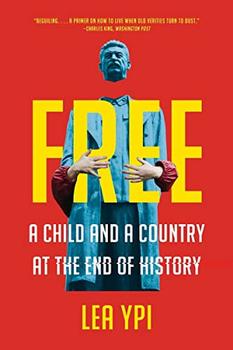
Free: A Child and a Country at the End of History
by Lea Ypi
Search for Utopia (11/18/2021)
Some time ago, during an extended stay on a remote beach, a few friends and I tried to imagine the perfect society. We were different ages, and came from opposite ends of the earth. After a few drinks and multiple attempts at creating this ideal nation, ultimately someone would say: "But for that to work some people would have to die!" Then with a resigned sigh of agreement we would go back to the drawing board.
In Free: A Child and a Country at the End of History, the author Lea Ypi recounts her experience as a young child in Marxist-Leninist Albania, and as a teen during the messy transition to a Socialist democracy just as the Soviet Union began to collapse. She pointedly recalls advocates of both systems regaling how free she and her friends and family would be once their goals were reached. Yet, as my friends surmised and Ypi remembers, freedom can have many interpretations, limits and degrees.
Born into a family with a "biography" of "liberals and liberalism" Ypi continually wondered why her parents didn't have pictures of the Party leaders prominently displayed in their home. The author's early teacher was Nora, a strict Party representative, who succinctly answered questions with sanctioned responses assuring the receptive students of the freedom that the Party promised. While her family didn't directly dispute Nora they did not readily agree. During her early teens she experienced the nuances of her family "biography" as she navigated high school and social activities. Only later upon reflection did she realize that the family had communicated with a kind of code to describe their history and that much of what she thought she knew was actually quite the opposite.
Free is readable and refreshing while providing an in-depth understanding of "foreign" culture and governments as experienced by those being governed. Ypi would have been welcomed as a seasoned voice in those long ago campfire summits. Highly recommended.
How to Find Your Way Home
by Katy Regan
Not a map to finding a home... (10/6/2021)
Finding the way home when homeless is, for many, hard to understand. Regan's book is a story about Emily Nelson and her big brother, Stephen and the rather selfish adults responsible for them. The actions of all culminate in a very unfortunate event producing catastrophic consequences that have negatively affect everyone for fifteen years. The story is told from the perspectives of both Emily and Stephen, as they remember their past and analysis the present. There are obvious clues as to the how and why of the family disintegration that has resulted in Stephen being homeless making the end quite predictable.
How to Find Your Way Home should be considered a single story about someone who, because of past events, lack of forgiveness and dysfunctional family dynamics is living on the street. There are many reasons and circumstances that lead to, support and enable homelessness, not the least of which is the wish of those who experience the condition. Understanding and respecting each individual's situation is the first step towards assisting that person to a safe place both mentally and physically that may or may not include a key to a home.
How to Find Your Way Home is recommended as a predictable story about a dysfunctional family and not necessarily a roadmap to ending homelessness.
Flesh & Blood: Reflections on Infertility, Family, and Creating a Bountiful Life: A Memoir
by N. West Moss
What matters? (8/6/2021)
As a mother of three with a rather textbook experience with childbirth and women's health, it was humbling to read of Moss's adverse experiences and their emotional toll. Her descriptions of each part of the journey were open, vivid and introspective.
Moss not only details her physical health issues, she analyzes her emotional response to those problems as well. She writes frequently of her maternal grandmother, whom she only knew for a short time as a child. She has very fond memories of that relationship and ponders Grandma Hasting's life's struggles as she faces those of her own. Moss asks herself why this seems so important. "Legacy is such an amorphous concept. Why should I care if her stories die with me?...It is such narcissism to think our stories matter in the grand scheme of things but it feels like a biological imperative." Pondering life's meaning while undergoing a struggle to stay alive is an age old question. The author makes a good attempt to answer it.
Moss's memoir is recommended for those who may be experiencing similar circumstances and need validation for their actions and emotions. It is an education for everyone else.
Everybody: A Book about Freedom
by Olivia Laing
Freedom's Struggle (5/26/2021)
Everybody: A book about freedom by Olivia Laing, while difficult to define, is a fascinating read.
Laing states her book is about "...bodies in peril and bodies as a force for change." She uses Wilhelm Reich, "...one of the strangest and most prescient thinkers of the twentieth century…who dedicated his life to understanding the vexed relationship between bodies and freedom..." to illustrate the extent to which bodily freedoms or the lack thereof have shaped our current reality. This thread is woven into the fabric of the sexual revolutions and freedom movements of the last century and the rise of incarceration as a tool of suppression today.
Within the weaving are multiple personal histories of artists, musicians and activists, some notable and others not so, who are associated with efforts to define and achieve freedom. Ana Mendieta's performance art to combat violence to women, Nina Simone's evolution into a civil rights activist, Freud's acquiescence to Hitler and much more are the central draw of the book. These anecdotes entertain as well as educate, creating an insatiable need to know more.
One such story was of Reich's orgone accumulators, essentially a box in which patients would sit, shutting out all stimulation, as a way to achieve bodily freedom. The author doesn't miss the irony of comparing the box to the use of solitary confinement in prisons. Aptly, Laing uses a photo of Reich's orgone box, increasingly dimmed, for each chapter, as she journeys through the history of oppression and the fight for freedom, both individual and collective.
Laing may have woven a lot into her work yet she has created much food for thought. What more can be asked of a book? Highly recommended.
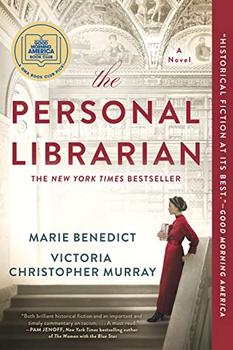
The Personal Librarian
by Marie Benedict, Victoria Christopher Murray
Personal Librarian (1/31/2021)
As a retired public librarian, I was drawn to this title for obvious reasons. Yet I was unprepared for the non-stereotypic, incredible story of Belle de Costa Greene, personal librarian to J.P. Morgan. This fictional account of Belle Marion Greener, who became de Costa Greene in order to hide her racial heritage is a history lesson both fascinating and humbling.
While "passing" is a fundamental theme in the story, the world of the rich and famous during the early 20th century is also central. A young Greene, working as a librarian at Princeton, was introduced to J.P. Morgan by his nephew, a friend of Miss Greene. The introduction was fueled by the younger Morgan's knowledge of Greene's intelligence, passion for knowledge and work ethic. These qualities were so evident to the venerable J.P. Morgan, that he almost immediately entrusted her with acquiring some of the world's most valued art and literary antiquities for his personal library. A relationship that began a lifetime career for Greene and resulted in the respected Morgan Library and Museum of today.
Bennett and Murray have done a credible job of turning Greene's story into a real-life drama. Never a shushing bespectacled matron dusting shelves, Greene was known for her clever negotiation savvy and vibrant style. The many rumors about her non-library life are teased out to reveal how the mores of the time were navigated by this consequential woman of history. This portrayal of the diminutive (in stature only) Greene and her ability to navigate a purely (white) man's world with her wit, tenacity and intelligence is unforgettable.
Recommended for those who crave learning about the courageous women of the past who were fearless in pursuit of their dreams.
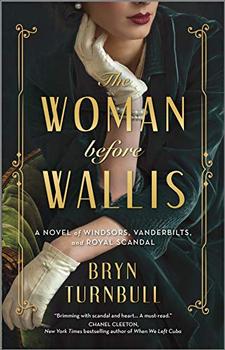
The Woman Before Wallis: A Novel of Windsors, Vanderbilts, and Royal Scandal
by Bryn Turnbull
A Royal Backstory (7/15/2020)
Consuming the tabloid headlines and pictures of the British Royals is an indulgent pastime for many. The pomp and circumstance, designer clothes and fantastic hats create images of beautiful people in their beautiful world while the stories are rife with indiscretion, betrayal and scandal. Historical fiction,The Woman Before Wallis by Bryn Turnbull is the story of Viscount Furness, wife of one of the richest men in the world in the late 20s. Thelma, her common name, is the twin sister of Gloria Vanderbilt. Twin daughters of an American diplomat, they imbibe in the upper-class worlds of both the US and Great Britain. As the book title suggests, Thelma was Prince Edward's mistress before Wallis Simpson, the American woman for whom he abdicated the British throne in 1936. The exploits of Thelma, Gloria and their privileged peers lead to trysts, marriages, divorces and romances eventually culminating in an epic trial. Seems domestic dysfunction and turmoil are constants for the Royal family and those who play with them.
While the saga is predictable, Turnbull successfully fleshes out these historical characters as real people who try to navigate an existence that is not always so beautiful. In most cases they succumb to the excess of the moment and have to deal with the consequences, much like most of us, but on a far bigger stage in front of a voracious audience.
This book is recommended for those who seek a little substance to support their tabloid habit.
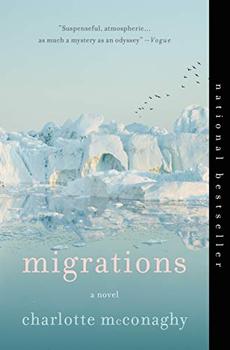
Migrations: A Novel
by Charlotte McConaghy
Uncomfortable yet satisfying... (4/13/2020)
Early on in Migrations, Franny, trying to find a commercial fishing boat captain thinks: "The thought of being aboard one of these merciless vessels with people who lay waste to the ocean makes my skin crawl…." As the member of a family who has fished commercially for the last 35 years reading this line made me pause for a moment. Luckily, I didn't stop.
Franny, it turns out, is a very complicated person engaged in an equally complicated mission that requires the complete buy-in of the captain and crew of "one of these merciless vessels." The story migrates through Franny's past and into her present, revealing vague details of abandonment at a young age, incarceration for murder and a romance that appears simultaneously supportive and destructive for both she and her husband Niall. All of this is wrapped around the imminent collapse of the natural world as we know it. McConaghy's characters are memorable even if their actions, at times improbable.
Migrations challenges common generalizations such as "people who lay waste to the ocean" while presenting a possible future scenario that we all should be concerned with and working to prevent now. Migrations is a very satisfying read.
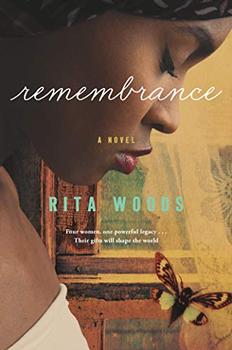
Remembrance
by Rita Woods
Remembrance: place and time (11/6/2019)
Remembrance is both a place and a remembrance of time passed. Bouncing between the mid 1800's to the present, Remembrance, the book, is the voice of slaves and their heirs, as they live their lives within the confines of slavery and what has become for many a similarly oppressive environment in today's world. The place is a safe haven for slaves where they can live unfettered by the "blancs" who harass, intimidate and brutalize them in every other time and place. Remembrance is a place where life is lived as it should be. To get there is a mystery that includes the good fortune to meet a few trusted souls and then be led on the Underground Railroad to peace and tranquility…or is it a destiny? Woods creates real characters who are believable even as they preform magical feats that serve to allow Remembrance to be accepted as a safe haven. There are even a few humorous exchanges in dialog that lighten the atmosphere and make the characters human.
This book is recommended for those who wish to gain a greater understanding of slavery and the open wound that continues to fester for many. Slightly wordy but worth the effort.
You Were There Too
by Colleen Oakley
The reality of dreaming... (8/7/2019)
You Were There Too, while essentially about dreams, their meanings and effect on us, takes place under the omnipresent cloud of what may have become a new normal, mass shootings. That overtone coupled with issues of miscarriage, marriage fidelity and uncertain relationships means Oakley’s story while at times romantic and endearing easily turns to messy and complicated.
Mia and Harrison are living what many would consider an idyllic existence. He’s a doctor, she is an artist. At the outset they seem to be handling the vagaries of their careers successfully. Except that Mia has recurring dreams, not always idyllic yet frequently pleasantly sensual. And the main character in these dreams is a beautiful man who is not Harrison. In their waking hours, she and Harrison have experienced multiple miscarriages in their attempt to have a child which is fraying their relationship.
The emotional toll that these issues begin to take on the couple is exacerbated when Mia sees the man of her dreams in the local grocery store. Serendipitously, they become friends and confidants. Thus, begins a journey part déjà vu part Sherlock Holmes as Mia and Oliver try to find the puzzle piece that will fill in the picture.
Oakley has done a great job explaining dream research through storytelling. You Were There Too is a fast read, informative and timely. Recommended for those who seek a fascinating story that will linger long after the last page is read.
The Shadow King: A Novel
by Maaza Mengiste
Women of War (7/2/2019)
A Google search of Ethiopian women warriors turns up the little-known history of many strong African queens and women warriors throughout time. Mengiste states "The story of war has always been a masculine story, but this was not true for Ethiopia and it has never been that way in any form of struggle…" The Shadow King is a her fictionalized account of these female leaders in Ethiopia's fight against two Italian invasions and ultimate occupation of their homeland.
In 1896, "Ethiopia's military victory over Italy secured it the distinction of being the only African nation to resist European colonialism with a decisive show of force." To avoid a second defeat, in 1935 El Duce sent tanks, planes and mustard gas. The bloody invasion is considered the first real conflict of World War II. During both fights Ethiopian women were integral in both fighting and support roles.
War is a grizzly topic at best. The Shadow King is no exception. There are many dirty deeds perpetrated over the weak and innocent by the strong and powerful, received and given by both genders. Forced weddings, prisoners tortured, female spies, coercion and deception of the whole kingdom are just a few of the scenarios wrapped into the story. Mengiste's characters are undeniably human as even the evilest among them have moments of lucidity when they question their motives, actions and consequences making them and the story they tell unforgettable.
Mengiste has given us a more earthy and unrestrained view of the history of women in combat than any Google search can. Worth reading.
Sounds Like Titanic: A Memoir
by Jessica Chiccehitto Hindman
Are we sinking yet? (12/22/2018)
My interest in Sounds Like Titanic, by Jessica Hindman began as a fellow violinist's kinship but was quickly peaked by the no nonsense perspective with which she interprets her life journey. Hindman's memoir is written in second person where she is you instead of I, enabling the reader to feel a hint of responsibility for the narrative and its truths amidst the fakery.
What fakery you ask? During Hindman's college years she was forced to work as hard at paying for her education as she did getting it. So when the opportunity to play professionally, on tour even, presented itself she happily accepted. Who would have guessed that the music the ensemble played, to entice cd buyers, sounding very much like that of the soundtrack from Titanic, was actually emitted from a cd player attached to a large sound system. The smiling musicians essentially mimes with large smiles. Because the gig was better than selling her eggs for IVF, Hindman played on and on…
Realizing there wouldn't be a career in music, Hindman studies to be a Middle Eastern expert/journalist. Through study and travel she becomes fluent in the language and customs, yet can't secure a position in which she can help others understand the nuances of the Mid East. Her thoughts lead to how America became entwined in the current debacle. "For when your grandchildren ask you, "What were you doing when the snake was slithering toward them?" you have an answer for you saw them, thousands of Americans…listening to music….hypnotized soothed. Couldn't get enough of it. Bought twelve CDs at a time. Millions of albums. Music that sounded just like a movie about an entire society - rich on the top deck, poor on the bottom---headed for disaster."
Hindman's experiences and lessons learned dispel many of the philanthropic notions of the "fortunate" souls who grow up in rural America, are "granted" an Ivy League education and gratuitously launched as an adult into another level of American society. She sees much of what others do not. Or are they/we just not believing it?
This book is recommended for everyone but especially those who need a reality check on life's expectations.
Listen to the Marriage
by John Jay Osborn
Listen to the Marriage (6/6/2018)
John Jay Osborn states in the preface of Listen to the Marriage that his wife found "an amazing marriage counselor…" when their marriage was falling apart. Together they put the marriage back together. His novel is intended to help others save their marriages with counseling.
The book is set entirely in the counselor's office. Sandy, the shrink, narrates while Steve and Gretchen reveal their indiscretions, which of course includes sleeping with other people; multiple people on multiple occasions. Osborn's characters are selfish, childish and shallow and the story is so predictable. While it may have been a noble idea to want to enshrine talented marriage counselors, Osborn got buried in the couple's stale miseries instead. Perhaps non-fiction would have been a better vehicle convey how professional therapists use couch confessions to heal marriages.
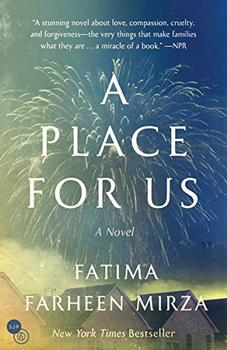
A Place for Us
by Fatima Farheen Mirza
A Place for All of Us (3/26/2018)
A Muslim man immigrates to the United States, arranges a marriage, has a family and settles into life in California. Rafiq and Layla are very traditional parents fully embraced by their religion and way of life it demands. Their children, Hadia, Huma and Amar must feel their way into adulthood navigating the safe yet complex practice of their religion while testing the free will of American life. As can be expected it is a bumpy at times treacherous road.
Author Mirza's prose is littered with descriptive sentences that provide a vivid image but may or may not be germane to the action. Mirza also spends much time inside the head of her characters, switching people and time periods with little warning. These methods drag down an already slow moving novel to a snail's pace.
That being said there is a lot to like about A Place for Us. The dictates of the Muslim religion are detailed and enlightening. The all too common parental angst about raising children into successful adults are touching and heart felt. A Place for Us makes clear there is no one manual with all the answers to how to live life, regardless of religion.
Recommended for those who have the time to wade through what at times seems tedious melodrama to harvest some common ground between religions, parents and children.
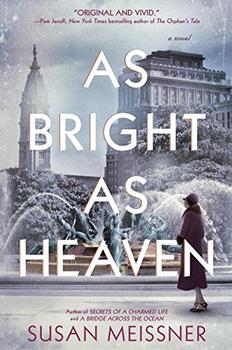
As Bright as Heaven
by Susan Meissner
True Endurance (10/14/2017)
"The Spanish flu pandemic of 1918-19 was the deadliest disease in history...Fifty million people worldwide are estimated to have died from Spanish Flu." acknowledges author Susan Meissner. Her novel As Bright As Heaven chronicles the disease through one family's experiences. Pauline and Thomas are moving to Philadelphia to take over Uncle Fred's undertaking business. No longer do families care for the deceased in their own homes. Now they deliver the body to the undertaker, allow him to do all the preparation and funeral planning. What is thought to be a new beginning for them and their three daughters begins to unravel as friends and family begin to fall ill. The story unfolds slowly at first but each character is well known by the time the unraveling begins.
I found this book fascinating and difficult to put down. While we generally remember 1918-19 as the time period of the Great War, which also figures prominently in the novel, the Spanish Flu is usually a mere footnote to the time. This novel puts these events in grisly perspective with the intimate telling of one family's story and leaves one to wonder how others, possibly those close, were similarly impacted. Highly recommended to gain a most humbling respect for those who endured the era.
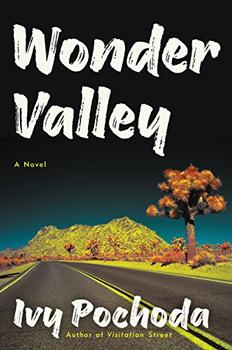
Wonder Valley
by Ivy Pochoda
Exit for a closer view... (7/10/2017)
A naked young man is running against traffic on the Pacific Coast Highway, weaving through cars that have reluctantly stopped to avoid hitting him. Tony, a commuter, is uncontrollably compelled to chase him. In Wonder Valley, author Ivy Pochoda slowly unravels the tale that brought the young man to the freeway through Tony, Blake, Britt, Ren and James uncovering the chaos that is life for those unfortunates living in the underbelly of California.
Wonder Valley is the location of a farm where "lost kids pretend to find themselves in the middle of nowhere…" James, whose parents run the farm, has yet to find himself. Britt is running from secrets while Blake is seeking revenge in all the wrong places. Ren is looking for his mother and redemption for a mistake made when he was twelve.
The plot of Wonder Valley is really secondary to Pochoda's description of life on the streets of California. "…the sound of semis booming up Sixth and the slow roll of garbage trucks kicking up an even worse stench than what already hung in the air. The streets were up early, banging with the rattle and clatter of shopping carts being loaded and pushed away before the cops or the red shirts came." Tony, whose LA is "…palm tree lined streets and houses covered in bougainvillea" finds himself on Skid Row. "…what he should do is go home. Get a coffee on the way and maybe some hand sanitizer."
There is a lot to keep straight in this novel. At times it feels like speeding down the freeway trying to find an exit, any exit. But isn't that what California is all about? Recommended for those who seek a more intimate view of the not so beautiful people in the Golden State.
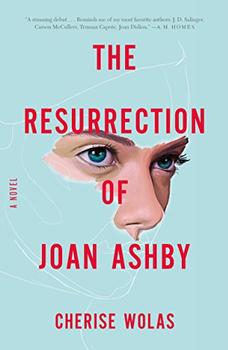
The Resurrection of Joan Ashby
by Cherise Wolas
Resurrection, but why? (6/6/2017)
Whatever happened to Joan Ashby? Cherise Wolas's character Joan Ashby is an author who achieved the ultimate literary success at an early age. "Enthralling, riveting, often shocking, her stories are as undeniable as her talent." touts the opening review of Joan Ashby in the fictional Literature Magazine. Wolas then inserts a few of Joan's early stories as proof, a risky technique at best.
Interrupting the main story is at first tolerable then bothersome and later, as it was employed numerous times, absolutely off putting. Also tedious were detailed descriptions of mundane scenes that have little bearing on the story such as listing all possible genres in a book store or a two page depiction of boarding an airplane in which Joan worries "She should have flown first class. Business class at least." One wonders that Joan even knows about coach. Her early notoriety coupled with her husband's lucrative skill as an eye surgeon leave her wanting for little, except a return to her life pre husband and children.
While Joan Ashby is resurrected in this novel there is no redemption. Even after she finally makes her move to get back her life, she blames "…the steep price she paid" on "…a man who breached his promise about having no children; an unexpected child who made motherhood precious; and an expected child who destroyed years of her life…what she had tried desperately to prevent had happened anyway—the stirring and mixing and coalescing of motherhood and life and writing." Ashby is selfish and needy, not an endearing character and definitely not deserving of the end that Wolas pens. This book is only recommended for those who have the time to wade, mostly aimlessly, through 500 plus pages seeking some overall rational for this story and be disappointed.
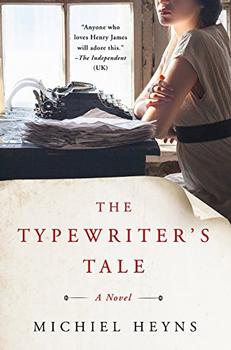
The Typewriter's Tale
by Michiel Heyns
The Typewriter Spews (1/9/2017)
"…nothing inhibited Mr. James as painfully as the need for conciseness…" laments his typewriter, 23 year old Frieda Wroth. In 1908 rural England, Frieda is employed by Mr. James to transform his dictation to written word by means of the new invention by Remington, typewriter referring to the person who uses the mechanism rather than the modern application of the word to define the machine itself. Frieda, being the person most qualified to comment on Mr. James penchant for wordiness due to the nature of her position.
Heyns, a South African English professor and James expert, has written a novel from the perspective of the typewriter, who Mr. James assumes to be a tool to make his writing task more efficient. Yet, the typewriter is privy to all comings and goings in the rustic abode and gets caught up in the trite intrigues that appear to have occupied Mr. James and his literary colleagues when not attending to their creative profession.
The best, though for some quite possibly the worst, aspect of The Typewriters Tale is the verbose nature of the prose. "These great cosmopolitan caravanserais combine in the most absorbing way in the world an air of cynical lawlessness and extreme fastidiousness; one feels they would countenance everything except one's being late for breakfast." is but one example. Heyns has considerable depth of knowledge about Henry James and utilizes it to craft a rather ordinary story. But his understanding of James artistic talent of molding the English language into feasts of words is coveted. This book is recommended for those who enjoy gorging on the language used to create the story as opposed to supping on the tale.
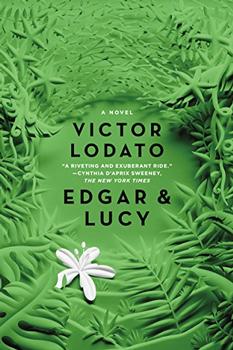
Edgar and Lucy
by Victor Lodato
Edgar and Lucy (11/27/2016)
Victor Lodato begins his tale of eight year old Edgar and his mother Lucy with a recounting of Edgar's birth. "Size of a dinner roll…And so white, I thought you were a friggin' ghost." Lucy's son is albino and she's a young widow reeling from her husband Frank's apparent suicide. The two live with Florence, Edgar's paternal grandmother. Deeply religious, Florence provides a stability for Edgar and Lucy that is safe yet stifling, especially for Lucy who rebels by hooking up with anyone available. All three huddle under the cloud of Frank's mental illness and subsequent death. And when Florence passes away suddenly Edgar and Lucy are left to figure it all out on their own.
Lodato's characters have qualities and foibles that make the course of the story inevitable. Edgar is both innocent and wise yet angry and curious. Lucy, impetuous and deeply wounded by the loss of Frank can't shake her past. And Conrad, who may or may not be Frank in purgatory, tries to mend his broken heart by breaking those of others. Not all is dark however. Ron, the butcher, whose delivery truck sign reads "Let us MEAT your needs!" is fairly normal except for his choice of lovers. The dry goods store owners, Netty and Henry Schlip and the neighbor's mentally challenged daughter Toni Ann who is in love with Edgar, are in and out of the lives of Edgar and Lucy but provide a thin but strong glue that hold Edgar and Lucy together even as they appear to be bursting apart.
Reading Edgar and Lucy is a descriptive treat. A delicious example includes: "The little party of five was sitting in the dining room—a narrow, ill-lit rectangle with a faux-candle chandelier that offered the greater part of its light to the ceiling, while leaving the under-gatherers in a cloud of luminous neglect." However, early in the book Edgar thinks "Love is so exhausting." This quote precisely describes not only the plot but the feeling that one gets while navigating the five hundred plus pages that comprise the novel—exhausted. Recommended for those who have the time to appreciate an exhaustive yet very imaginative creation.

Lillian Boxfish Takes a Walk
by Kathleen Rooney
Yawning but still awake... (10/1/2016)
It's New Year's Eve, 1984 and Lillian Boxfish, 84, is walking to her dinner reservation while reminiscing about her life. Since the early 1920's she has lived and worked in the heart of New York City as both a copy editor and contemporary poet, remaining at the same address for the last fifty years. At the height of her career she was known not only for her witty poems, volumes of which were best sellers when people actually bought and read poetry but also as the most highly paid copy editor in advertising for R.H. Macy. Quite a feat for a woman of that time. As can be expected her fame and fortune came at great personal cost, especially considering the social norms and bias of the day. The story moves through the evening as the narrative weaves through Lillian's life. At most street corners there is a memory recalled. With every personal encounter Lillian reveals the tenacity that was honed when navigating the man's world in which she had excelled.
Lillian Boxfish Takes a Walk is a novel based on the real life story of Margaret Fishback. Rooney has closely mirrored Fishback's life story, so much so that at time if feels like creative non-fiction. Boxfish/Fishback's life was interesting and consequential for women as a whole especially for those who followed in Fishback's footsteps. However, the assumption of familiarity of New York City geography and culture may be presumptuous for some.
I have a friend who frequently laments that she doesn't want to read stories that haunt her at night…I will recommend this book to her. While there is no murder or mayhem, there are lessons to be learned about women's rights or lack thereof and the stamina of women who created successful careers regardless. And Lillian is the master of the fine art of making a point while remaining civil and distinguished something we could all take note of today. Recommended for all who desired a story that won't haunt them once the bedside light is turned out.
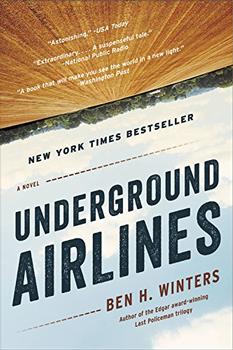
Underground Airlines
by Ben H. Winters
What could be... (9/4/2016)
It is present day America except for this: the Civil War did not happen and four states have legalized slavery. The main character is a quasi-freed black man living outside of the Hard Four states. Victor grew up on a plantation but escaped when he was a young teen. Although recaptured he is microchipped and has been trained to hunt down and capture fellow escapees. While he is bound to answer to his manager, Bridge he is not geographically enslaved, his life is not unbearable and he is proud of his accomplishments thus far. But things are starting to get complicated; he is beginning to reminisce about his past and question his present.
Winters alternative history thriller is just that—a tightly wound page turner that twists traditional standards into confused pretzels. The legal slave states, the Hard Four, provide the labor force that produce goods for the rest of the country, legally and covertly. This labor force is the oil of the Hard Four economies and along with the various private corporations, they protect and defend their status vehemently. Utilizing people like Victor to track down and recapture their chattel is one such defense. Inevitably the seeds of oppression produce corruption and revolution into which all are drawn.
Underground Airlines may require the reader to consent to the alternate history premise of the story: slavery of black people is legal and exists in four of the United States of America. The premise is a foundation upon which the story is built but the resulting consequences are more familiar to present day than we may want to acknowledge.
Underground Airlines is highly recommended. Winters prose is face paced and readable. The resulting wonder at what could have been takes a lot longer to digest, if at all.









 Power Reviewer

