Page 1 of 1
There is 1 reader review for Slavery by Another Name
Write your own review!
Terry
Deeply flawed work of fiction
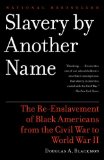
Blackmon is looking for credibility, stating he is from the South. However, his deeply flawed work of fiction exposes his prejudices. Blackmon offers very little real evidence for most of his statements about the condition of blacks in the South. And why pick on the South, the same so-called atrocities against blacks AND poor whites occurred in ALL states.
Check out the The Triangle Shirtwaist Factory fire in New York City on March 25, 1911 for a real eye opener. An atrocity against non-black men & women - mostly women occurred when northern slave drivers locked the only escape hatch to exit the burning building because they feared losing profits from slave labor. All this in NEW YORK CITY, not in the South. I would love to hear Blackmon's excuse for the statement, "The economy of the South couldn't operate without coerced slavery," in view of the Triangle Shirtwaist Factory story.
Blackmon uses one reference to US Steel in Birmingham, Alabama to show the treatment of blacks, but conveniently leaves out the poor whites. Poor whites were issued script for wages and required to purchase their goods from the "company store" the same as blacks. What makes Blackmon's entire work suspect is he did not state that US Steel was owned and controlled by NORTHERN interest, AND he failed to include poor whites into the equation.
The mistreatment of blacks was as much a northern atrocity as any other, owned and controlled by Wall Street and other northern interest. But the reader will never know this because Blackmon refused to include the WHOLE truth in his book.
The personal story of Green Cottenham, a black man born free in the mid-1880s is purely fictional. This gets "Slavery by Another Name" off to a shaky start. Many of Blackmon's wordings are speculative. Even the New York Time's review of Blackmon's book agrees that many of Blackmon's stories are mere speculation.
What a waste of time, resulting in mere propaganda, simply to make money off poor Alabama black people. Shameful.