
-
Your next favorite book
is waiting.
Summary | Excerpt | Reading Guide | Reviews | Beyond the book | Read-Alikes | Genres & Themes | Author Bio
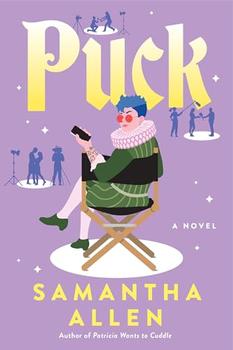
A Novel
by Samantha Allen Book Reviewed by:
Unlike the Puck in Shakespeare's A Midsummer Night's Dream who is a mischievous servant of the Fairy King, Samantha Allen's Puck is a producer on a reality show. Puck's boss is not Oberon but Ron, the executive producer of Homewreckers, a dating show where Puck thrives. After all, their job is, literally, to create chaos: "It's more like a play with an ensemble cast—dozens of players whom Puck can choreograph blindfolded and with earplugs in, moving them up and downstage at will."
Puck is good at what they do. They seem to love and live for their job, and have devoted nearly a decade to it since graduating from college. Now, for the first time in years, they are taking a break to attend the week-long wedding celebration of their best friend from college. The problem: Puck believes their friend is marrying the wrong person.
As Puck explains to a new production assistant, people "don't actually want what they say they want." Mia is about to marry Damon, shortly after ending her long-term relationship with Zander. Meanwhile, Lena has always been in love with Damon. The four of them, along with Puck, belonged to the same friend group at Emory University. Convinced they know better about who should be with who, Puck decides to intervene: their self-appointed mission is to reunite each person with the "right" significant other.
The premise closely echoes Shakespeare's play. Instead of an enchanted forest, the action unfolds in a luxury hotel aptly named the Athenian. Allen is clever with her references to the source material: Hermia becomes Mia, Demetrius becomes Damon, Helena becomes Lena, and Lysander becomes Zander. The setting evokes Athens, and Puck remains the agent of chaos at the center of the story.
Yet the parallels are surface level, and this retelling does not engage much deeper than that. Shakespeare's original play intertwines several plots and groups of characters, but Allen discards these subplots to focus almost entirely on the romantic entanglements of the four lovers and on Puck's orchestrating of them. This makes Puck an easy fit within the contemporary romance market, but it also deprives the novel of the depth and complexity it could have had.
The main counterpoint to the matchmaking plot is Puck's own unfolding romance with the maid of honor, Robyn, an interesting name given that Robin Goodfellow is another name for Shakespeare's Puck (see Beyond the Book). And, in fact, Robyn is, in many ways, Puck's opposite. Puck is androgynous, nonbinary, noncommittal, and a chaos maker who thrives on spontaneity, while Robyn is stereotypically feminine and obsessed with order, schedules, and plans. Their attraction is in part built on this contrast, but one of the novel's stronger moves is to challenge the simplicity of the contrast. From the moment they meet Robyn, Puck labels her "the mascot for straight girls," assumes she would have "bullied" them in high school, and makes assumptions about her sexuality based on her looks: "Robyn looks as straight as they come, with flat-ironed hair and no visible piercings beyond her ears." Just as others have tried to place Puck into a box, Puck has been doing the same thing to everyone around them.
The novel has a tendency to overexplain Puck's moments of growth and learning. Insights and emotional revelations are often repeated, especially in the final chapters, long after readers have already grasped them. The same issue affects the plot. Puck's preparation for their masterful scheme that has supposedly taken them a good part of the week to put together is revealed retrospectively rather than shown unfolding. As a result, some of the story's most important developments feel distant.
Furthermore, apart from Puck, the central cast never feels fully realized. Their personalities are just sketched in; they never really become distinct, convincing individuals to the reader. They function more as pieces on Puck's chessboard than as characters in their own right. Readers are encouraged to care about who ends up with whom, but not necessarily about the people themselves. Ironically, this undermines the novel's central message: that people are not puppets to be manipulated but individuals capable of making their own choices.
Still, Puck remains a light and entertaining read. Allen clearly knows and enjoys Shakespeare's play, and the novel is full of clever references. But rather than expanding on A Midsummer Night's Dream, it is simplified into a lighter romance. The result is a modern, fast-paced, and fun retelling, with some enjoyable romantic and steamy moments (even if the female characters are occasionally hyper-sexualized), but some depth and complexity is sacrificed in the process.
 This review
first ran in the June 24, 2026
issue of BookBrowse Recommends.
This review
first ran in the June 24, 2026
issue of BookBrowse Recommends.

If you liked Puck, try these:

by Madeline Bell
Published 2025
Two feuding co-stars in a Jane Austen film adaptation accidentally travel back in time to the Regency Era in this delightfully clever and riotously funny debut.
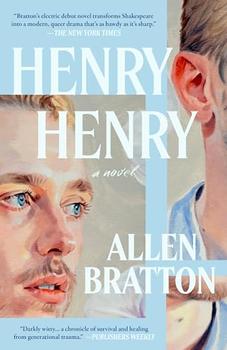
by Allen Bratton
Published 2025
Crackling with intelligence and wit, Henry Henry is a brilliant recasting of the Henriad in which Hal Lancaster is a queer protagonist for a new era.

by Nghi Vo
Published 2025
From award-winning author Nghi Vo comes Don't Sleep with the Dead, a standalone companion novella to The Chosen and the Beautiful, her acclaimed reimagining of The Great Gatsby.

L.A. Women by Ella Berman
Two ambitious writers in 1960s LA face betrayal when one writes a novel based on the other's life.




Your guide toexceptional books
BookBrowse seeks out and recommends the best in contemporary fiction and nonfiction—books that not only engage and entertain but also deepen our understanding of ourselves and the world around us.

