
-
Your next favorite book
is waiting.
Summary | Excerpt | Reading Guide | Reviews | Beyond the Book | Read-Alikes | Genres & Themes | Author Bio
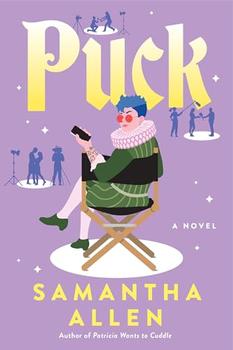
A Novel
by Samantha Allen Book Reviewed by:
This article relates to Puck

 One of the most interesting choices in Samantha Allen's Puck is to not only turn Puck and Robyn into two separate characters, but a romantic pairing. It is almost like an inside joke about the original text between the author and readers, many of whom will know that in the source material, Shakespeare's A Midsummer Night's Dream, Puck and Robin Goodfellow are two names for the same character.
In stage directions and dialogue, both names are used interchangeably. To create this character, Shakespeare drew from a variety of folklore, including analogue figures from Northern European traditions, like the Welsh Pwca (or Pwcca), the Irish Pooka, and the Scandinavian Puk. According to Britannica, the name "Puck" "derives from Middle English pouke and Old English puca, both denoting a tricksy spirit or hobgoblin, terms still visible in dialect words such as 'puckish.'"
Robin Goodfellow, meanwhile, was the most famous (or infamous) of the hobgoblins, household spirits from English folklore. Robin seems to have been present in oral tradition since the 13th century, but the first written record dates back to 1528, nearly 70 years before Shakespeare's play premiered. Robin Goodfellow was known for helping with domestic chores in exchange for small rewards, normally food. But he was equally famous for his pranks, like leading travelers astray, ruining dinner parties, haunting people in their sleep, and swapping human children with deformed elf-changelings—as Ben Jonson would portray in his 17th century ballads. Although this was after Shakespeare's time, Jonson, like the Bard, was drawing from existing folklore.
In his play, Shakespeare combines these traditions into the character we know as Puck: a sort of goblin or spirit in the service of Oberon, king of fairies, who weaves the plot and meddles between the lovers. So he is both helper and troublemaker, and this is where Samantha Allen's decision to have a separate character for Puck and Robyn becomes quite clever.
In her novel, Puck is the agent of chaos, using their talents as a reality television producer to manipulate their friends' relationships and redirect the course of a wedding. Robyn, on the other hand, is the maid of honor, obsessed with organization, schedules, and plans, and, in her own way, also trying to direct events to a desired conclusion: a perfect wedding. Both characters attempt to shape the wedding's outcome, but they do so through opposite methods. By dividing Shakespeare's individual (but polyonymous) trickster spirit into two contrasting personalities, Allen creates an interesting modern reinterpretation that also creates a comic and romantic tension between chaos and control.
The novel also raises an interesting point about gender by making Puck nonbinary. Today, Puck is often imagined as male, an assumption mainly based on the association with Robin Goodfellow, who was generally depicted as male in English folklore, and the result of editorial decisions, stage traditions, and a wealth of adaptations over centuries. But in surviving early printings, like the Quarto of 1600 and the First Folio of 1623, there is no direct reference to Puck's gender through dialogue, directions, or in character lists. Puck is almost always addressed directly by name or described through nouns such as "sprite" or "goblin." One of the earliest descriptions of the character says:
"Either I mistake your shape and making quite,
Or else you are that shrewd and knavish sprite
Called Robin Goodfellow."
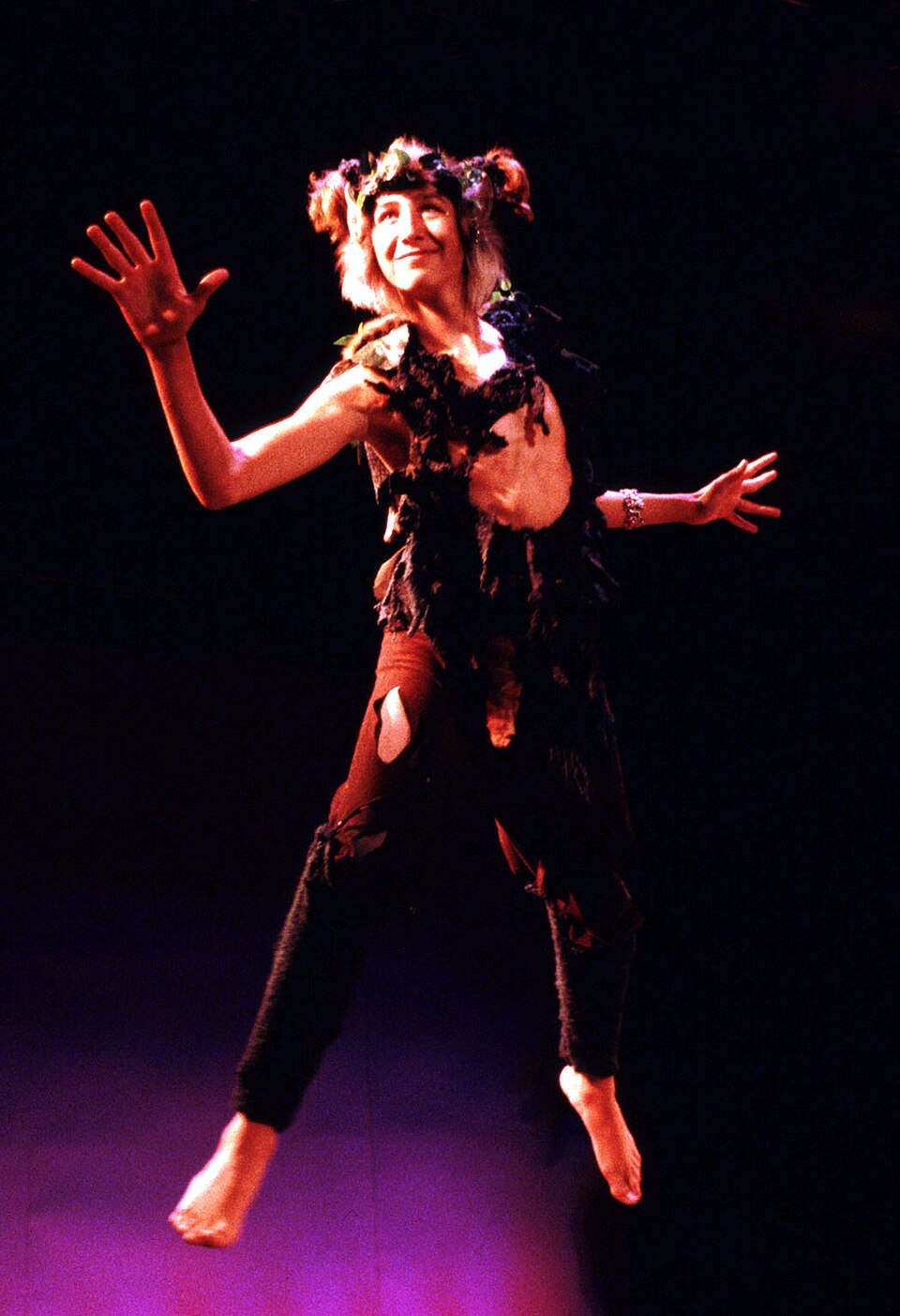
This ambiguity has led some modern productions to blur traditional categories by casting women, androgynous, or nonbinary performers. These interpretations fit with the character's origins—Puck is a shapeshifter that moves between worlds and identities. Seen in this light, Allen's decision to make Puck nonbinary is not simply a contemporary "take" on the original text, but can be seen as something that was already there in the source material: a character whose identity, like their motives and loyalties, resists easy labeling and definition.
Vince Cardinale as Puck from the Carmel Shakespeare Festival production of A Midsummer Night's Dream in September 2000, photo by Smatprt, reproduced with permission from Pacific Repertory Theatre and via Wikimedia Commons CC BY-SA 3.0
Filed under Books and Authors
 This article relates to Puck.
It first ran in the June 24, 2026
issue of BookBrowse Recommends.
This article relates to Puck.
It first ran in the June 24, 2026
issue of BookBrowse Recommends.
Theo of Golden by Allen Levi
One spring morning, a stranger arrives in the small southern city of Golden. No one knows where he has come from…or why…






Your guide toexceptional books
BookBrowse seeks out and recommends the best in contemporary fiction and nonfiction—books that not only engage and entertain but also deepen our understanding of ourselves and the world around us.


