
-
Your next favorite book
is waiting.
Summary | Excerpt | Reviews | Beyond the book | Read-Alikes | Genres & Themes | Author Bio

Stories
by Sarah Braunstein Book Reviewed by:
Sarah Braunstein's third book, the short story collection Baby in a Box, is reminiscent of Jami Attenberg and Lauren Groff with its themes of dysfunctional families and anxieties over parenthood. Past and present mingle as the characters ponder whether bad luck or fate has determined the course of their lives. In particular, the memory of heartbreak lingers for divorcés and single mothers. Conflicted protagonists consider breaking old ties or forming new ones, and glimpses of the future reinforce the author's commitment to realism.
The work is structured as two halves of roughly equal length: six stories under the heading "Lost," followed by five marked "Found." That split suggests a move toward lighthearted content, which is true to some extent as new situations and connections offer fresh prospects. However, the tone as a whole feels more stoic than cheery. This is particularly evident in several stories featuring single women facing tough choices about partners and parenting. In the title story, pregnant Margot decides to leave her diner job and raise a child alone, not trusting her chef boyfriend, who's 18 years younger than her, to be a reliable co-parent. After being dumped, Josephine sleeps with an ex-military man in "Authority," but quickly becomes concerned by his surveillance of people of color who remind her of those she helps via her legal justice foundation work.
Either side of the section break are stories about 16-year-old boys. "Superstition" has Lenny and James becoming obsessed with selling random objects on eBay. They make up backstories, such as that a confirmation cross was blessed by a pope. James feels so guilty when that cross sells for $290 that he sends it to the buyer for free. The story ends with danger and uncertainty—a literal and figurative cliffhanger. "All You Have to Do" continues the focus on teenagers and odd fixations on objects, with Sid Baumwell winning a lifetime supply of aluminum foil via a supermarket competition in 1972. However, the mood is more nostalgic. Both the slick salesman, who resembles James Bond, and Sid decide what to keep from their past and choose to believe in good luck for the future.
"Shavasana" and "Abject Naturalism" are more typical of the collection in that they are about mothers at turning points in life. In the former, Luna accidentally joins a pregnancy yoga class. She's suffering from midlife malaise, discontented with her marriage and sick of chauffeuring her son and daughter. As she cycles through local prenatal yoga courses—always leaving before it's clear she's not growing a bump—she starts to picture herself building a new life based around a female support system.
"Abject Naturalism" was first published in The New Yorker (see Beyond the Book) and was also selected for The Best American Short Stories 2025. Toni had a baby by a colleague from her graduate writing program who left her before her C-section healed. Now that baby, Amalie, is approaching adolescence. While she's afraid for her daughter's safety, Toni tries to trust that all will be well as she herself builds an unexpected romantic connection. The title phrase was Toni's professor's withering critique of her prose, but in this context it's redeemed as a defense of the everyday, which isn't wretched but comfortingly ordinary.
My two favorite stories were "Porcupine" and "The Parents." In the former, penniless Susannah joins Edgar on his wealthy family's island in Maine. She questions Edgar's mental health, especially when he insists on cuddling an injured porcupine they find on the road. What might the hurt animal represent for Edgar? she wonders. Wild animals appear symbolically several times, including at the end of "The Parents," a jolly story set at Cleo and Calvin's wedding reception. It's a second marriage for Cleo, who has a 10-year-old son, so they opted for a low-key City Hall wedding and didn't invite their parents—a tangle of stepparents plus Cleo's father, Jeremy, whose politics she finds repellent—but instead hosted this party in their home. Despite the tricky family dynamics, love shines through. The book ends on an optimistic, if slightly surreal, note.
This collection as a whole felt a little low on original plots and stand-out lines to me. At times the endings are sudden or have unclear meanings, and there is some repetition of themes and elements across the stories, such as relationship age gaps and infidelity. But Braunstein is an expert at drawing authentic situations and then teasing out the practical and emotional factors behind her characters' decision-making. The dark humor and acute observations here have made me curious to try out one of her novels, such as Bad Animals (2024).
 This review
first ran in the June 10, 2026
issue of BookBrowse Recommends.
This review
first ran in the June 10, 2026
issue of BookBrowse Recommends.

If you liked Baby in a Box, try these:

by Lauren Groff
Published 2026
A stunning, fierce collection from a master of the short story and one of the most important writers of our time.
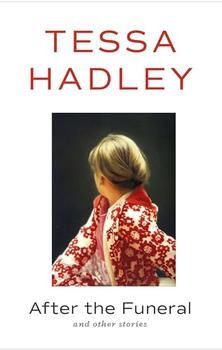
After the Funeral and Other Stories
by Tessa Hadley
Published 2024
A masterful collection of stories that plumb the depths of everyday life to reveal the shifting tides and hidden undercurrents of ordinary relationships.
by Lorrie Moore
Published 2014
These eight masterly stories reveal Lorrie Moore at her most mature and in a perfect configuration of craft, mind, and bewitched spirit.




Give me the luxuries of life and I will willingly do without the necessities.
Click Here to find out who said this, as well as discovering other famous literary quotes!

Can you name the title?
Test your book knowledge with our daily trivia challenge!
Your guide toexceptional books
BookBrowse seeks out and recommends the best in contemporary fiction and nonfiction—books that not only engage and entertain but also deepen our understanding of ourselves and the world around us.
