
-
Your next favorite book
is waiting.
Summary | Excerpt | Reading Guide | Reviews | Beyond the book | Read-Alikes | Genres & Themes | Author Bio

 Book Reviewed by:
In Tesia Tsai's historical fantasy novel Deathly Fates, Kang Siying is a ganshi priestess, tasked with temporarily reanimating corpses who have died far from home in order to return them to their homes for proper burial. It's a feared but respected position, and Siying is proud to continue the work of her father, who was a ganshi priest before he fell gravely ill. In the story's prologue, a horrifyingly vivid scene that sets the tone for the rest of the novel, terrified residents abandon their jobs and retreat into their homes after seeing "a line of stiff corpses, arms outstretched for balance… the scene of sickly-sweet rote [hovering] over their frames." These corpses are being led by Kang Siying's father as she, then a young girl, follows him to learn about ganshi, or corpse-driving (see Beyond the Book).
Years later, Siying, now a priestess in her own right in the kingdom of Sian, has been offered a large sum to retrieve the body of a soldier in the neighboring—and hostile—state of Wen. As she searches the gore-covered battlefield for the body, Tsai vividly describes the realities of being so close to death: the putrid smells; the blood wounds; the fear and sorrow experienced by the deceased, which ganshi priestesses can feel. Siying's stoicism in the face of these horrors shows her commitment to her role, as well as her dedication to her family: Siying only agreed to travel into enemy territory because she could use the significant payment to hire better healers for her father.
However, when Siying finally locates the corpse, she is surprised to discover that her reanimation talisman has resurrected him, as opposed to simply reanimating him for the purpose of travel, and also that he is Meng Renshu, the younger prince of Sian. In order for Ren to stay alive, he must gather qi (life-force energy) by purifying "the spirits of those who no longer need it"—in other words, the qi of "evil spirits." Adding this mission to the original one means a longer and more dangerous journey, and Siying is reluctant—until the prince offers her double her original payment, a fortune with which Siying plans to not only help her father but also "set aside a generous dowry for [her] sister" and "truly be free from care." As much as Siying loves her family, the responsibility of taking care of them weighs on her and has pushed her away from them, as she's been forced to accept job after job to support them.
Siying and Ren make slow progress back towards Ren's palace in the capital city, encountering and defeating restless spirits in order to gather qi, and also uncovering the truth about Ren's death and about the unrest between Sian and Wen on the way. At the beginning of Siying and Ren's relationship, there's a typical commoner-versus-royal dynamic between them: Siying blames the royals for the skirmishes between the two warring states that has led to unnecessary deaths, including that of her mother, who died of a fever that rampaged across the kingdom and which royal physicians were forbidden from curing; Ren defends his family's actions, even as he shies away from responsibilities, preferring to let his father and brother handle actually ruling; and he gets by on charm and luck rather than competence, bumbling into trouble and flirting his way back out. Tsai does a wonderful job not only of creating tension through the contrasting personalities of these two characters but also of flipping traditional gender roles: Siying is the leader of their journey, determining their path and battling the spirits they encounter in order to gain qi for Ren. Although there are some romantic moments between them in the second half, the romance plays a minor role in the story until the ending, in which Siying and Ren finally—although unsurprisingly—decide to get together.
The travel sequences, which move slowly before culminating in a boss battle against an evil spirit, feel a bit disjointed; the pacing picks up in these battles, which, while welcome, creates a sometimes-awkward narrative flow of slow to fast to slow again. But these battles are also where the novel reflects on the nature of death from the perspectives of both the living and the deceased, which imbue them with additional significance. Although Siying is an accomplished priestess, her face-offs with evil spirits aren't as straightforward as she expected. Despite their evil actions, these spirits are also suffering from the circumstances of their deaths, and Siying genuinely wants to help them find peace. When facing off against a new mother who failed to give her husband a son and killed herself in shame, Siying recognizes that the woman "wasn't a villain… she'd been a human girl with human desires and fears, vulnerable to the overwhelming pressures of others." Although Siying acknowledges that the spirit has done terrible things, she also knows that "she'd suffered more than enough" and helps her pass into the afterlife. As she learns the stories of the deceased, Siyin begins to see her job as less of a duty and more as a calling, a way to bring peace to both the spirits and to their remaining families.
The climax and finale satisfyingly conclude the narratives that have been woven through the story, with the characters coming into themselves and finding their power and purpose. Deathly Fates has its flaws, but it's a solid debut filled with unique magic, historical Chinese culture, a strong female lead, and reflections on death that will resonate with anyone who has suffered loss.
 This review
first ran in the April 22, 2026
issue of BookBrowse Recommends.
This review
first ran in the April 22, 2026
issue of BookBrowse Recommends.

If you liked Deathly Fates, try these:

by R. F. Kuang
Published 2026
Dante's Inferno meets Susanna Clarke's Piranesi in this all-new dark academia fantasy from R. F. Kuang, the #1 New York Times bestselling author of Babel and Yellowface, in which two graduate students must put aside their rivalry and journey to Hell to save their professor's soul—perhaps at the cost of ...

by Vanessa Le
Published 2025
"A gritty world filled with a beautifully crafted cast and an intricate magic system. A smart, lush, and utterly compelling read." —Marie Lu, #1 New York Times-bestselling author of Legend
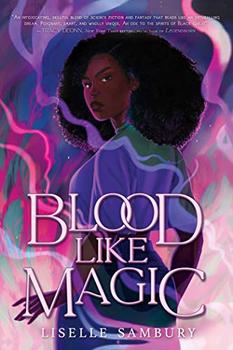
by Liselle Sambury
Published 2022
A rich, dark urban fantasy debut following a teen witch who is given a horrifying task: sacrificing her first love to save her family's magic. The problem is, she's never been in love - she'll have to find the perfect guy before she can kill him.

L.A. Women by Ella Berman
Two ambitious writers in 1960s LA face betrayal when one writes a novel based on the other's life.







Your guide toexceptional books
BookBrowse seeks out and recommends the best in contemporary fiction and nonfiction—books that not only engage and entertain but also deepen our understanding of ourselves and the world around us.

