
-
Your next favorite book
is waiting.
Summary | Excerpt | Reading Guide | Reviews | Beyond the Book | Read-Alikes | Genres & Themes | Author Bio

 Book Reviewed by:
This article relates to Deathly Fates

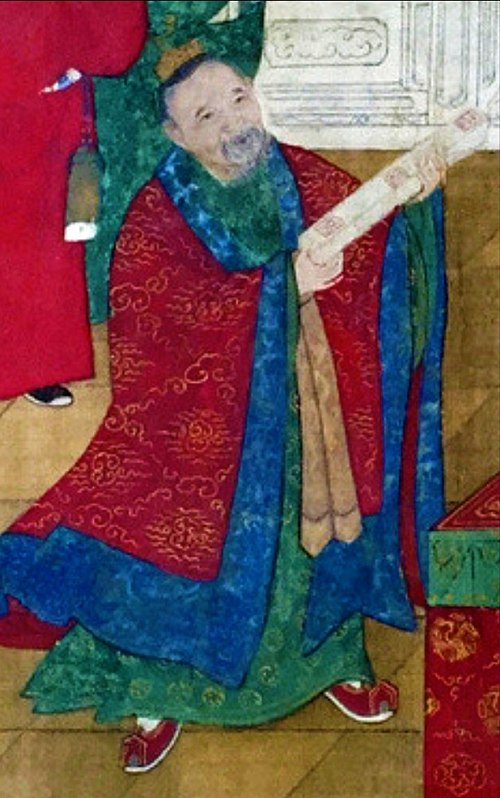 In Tesia Tsai's debut novel Deathly Fates, Kang Siying is a ganshi priestess who reanimates corpses in order to guide them back to their home for burial. This fantastical premise is based off of the historical occupation of "corpse-driving" or "corpse-herding"—gǎn shī—a tradition that stretches back centuries in the Xiangxi region of the Hunan province in central China. In legend, corpse-driving was performed by Taoist priests who used sorcery to reanimate dead bodies for transport.
During the Qing dynasty, which began in 1644 AD and lasted until 1912, Chinese custom required that bodies be buried in the soil of their hometown, so that the individual could become a proper ancestor; if not returned, the spirit could wander and become evil. But people traveled far for work and died far from home; also, there was a practice known as the "autumn executions," in which convicted criminals were executed all within a short period of time each year, meaning there were many corpses that needed to be transported all at once annually. As such, instead of sending four pallbearers for each body, which would be expensive, a group of corpse herders would transport multiple bodies simultaneously.
To do so, these corpse herders would lead a row of dead bodies, each shrouded in black and tied together with rope, using bamboo poles under the corpses' arms to hold them up. An herbal medicine was applied to the bodies to prevent them from decomposing and to soften their joints and prevent rigor mortis.
But the residents of the villages that the corpse herders traveled through did not see these practical effects: they saw sorcery, performed by Taoist priests to reanimate the corpses. (These priests were, indeed, often the ones doing the corpse-herding, hired because people believed in their magic, but not always.) The Taoist priests (or people calling themselves Taoist priests) would begin by praying and chanting over the dead to "possess" them into walking. The movement of the corpses on the poles made them look as if they were swaying or hopping, leading people to believe they were reanimated. Between the typical timing of most corpse-driving—at night in colder months—and the taboo against looking at a walking corpse, most people never truly saw how the corpses were being transported. As one writer, whose grandfather often told the story of seeing a line of corpses travel through his village, explains: "Much of this was for show, so that people would believe that yes, the corpses were actually being reanimated, and yes, they should keep their distance. It was all part of setting the stage for a swift, uninterrupted transport of the dead."
With the rise of the Communist party in China in the 1940s, priests driving corpses became targeted for punishment for "engaging in supernatural activities," putting an end to the practice. Today, corpse driving has become associated with jiangshi, an undead creature featured in movies and literature that moves by hopping and seeks to absorb qi from the living.
Filed under Cultural Curiosities
 This article relates to Deathly Fates.
It first ran in the April 22, 2026
issue of BookBrowse Recommends.
This article relates to Deathly Fates.
It first ran in the April 22, 2026
issue of BookBrowse Recommends.

L.A. Women by Ella Berman
Two ambitious writers in 1960s LA face betrayal when one writes a novel based on the other's life.







Your guide toexceptional books
BookBrowse seeks out and recommends the best in contemporary fiction and nonfiction—books that not only engage and entertain but also deepen our understanding of ourselves and the world around us.

