
-
Your next favorite book
is waiting.
Summary | Excerpt | Reading Guide | Reviews | Beyond the book | Read-Alikes | Genres & Themes | Author Bio

A Novel
by Rebecca Lehmann Book Reviewed by:
On the fifteenth day of May, 1536, disgraced Queen Anne Boleyn was sentenced to death. Two days before her own execution, her brother George's head was sliced off after he had been convicted of incest with Anne and scheming to kill her husband, Henry VIII. By design, Anne's fate mirrored her brother's. Truth wasn't on trial, and Anne was found guilty of adultery with five men and high treason. After her execution, it was noted that her eyes and lips were still moving once her head fell upon straw, and the whispers persisted. What if Anne Boleyn was executed but didn't die?
Therein is the plot of the cleverly written novel The Beheading Game. It is the story of a nearly murdered woman whose fatal wounds are overcome. As she nurtures a thirst to avenge her own death, tension develops. Layered beneath her scheming and natural bitterness at being decapitated is the Socratic idea that character is its own nobility. It is a branch swiped from the feminism tree. Just as men aren't the center of happiness, neither are jewels, maids, and titles. The character of women is grounded in their independence, wit, and faith.
Beginning with the first page of the first chapter, when a new normal awaits her, Anne wonders if she is a ghost. Why is she alive, and in a coffin? Where is her head? She isn't sure what has happened until she remembers the swordsman, her final prayer, and her supposed death. Once she figures out how to escape the coffin, she is reduced to a life of scarcity, similar to a commoner, and it is disorienting because she doesn't recognize herself without her title, possessions, riches. Anne's exploration of herself pulls the reader into her thoughts: How can I fix this? What happens now? In that sense, she is every woman who has been on the other end of solipsistic rage and who nurses revenge fantasies to assuage her physical and emotional pain.
"Get out of the box," she tells herself. "You are still conscious, you can still feel pain, you are still capable of thought. Of anger. Yes, of anger…Leave? Yes, leave."
Once she sees the light of day as a survivor, a basic dilemma materializes. What matters more? Reality or pride? Anne cruises the Thames in a tiny boat on her way to Southwark, a district on the south bank of the river. Her head weighs more than it should, and holding it is weird. Arriving in Southwark, she initially resists her circumstances. The streets have a pungent odor of filth, urine, and mess. "There was the smell of ale as well. And vomit." She imagines women throwing waste out the windows every morning and it sickens her. It is so vastly different from what she was used to in the palace with her lady's maids or when she lived in France as a lady-in-waiting.
Walking about Southwark, she hears jubilation. The Great Whore is dead. The Great Whore, of course, is Anne Boleyn, an unseemly nickname centered on a lie that almost everyone believes. Her daughter Elizabeth would be similarly shamed with the title The Little Whore.
Behind a tavern Anne uses what she pilfered from a family, a large needle and thread. The pain of it she ignores—women who have borne children are excellent at minimizing pain. She stitches beneath her neck and lower ear, this loose head which takes some gymnastic maneuvering. "As she sewed, she felt the skin prickle where it rejoined, as though the wound were healing through some magic." Her head feels wobbly but secure.
A few hours later she befriends a sex worker named Alice who knows Anne is lying about being a commoner. Her shoes are too expensive, her language unbroken. Thinking quickly, Anne offers a different story. She is a victim of a violent husband; she is a discarded rich man's wife. Alice is suddenly empathetic and it's perfect timing for Anne to convince the other woman to accompany her. She badly needs protection in such a chaotic place. She offers to pay Alice in coins if she accompanies her across the bridge. And so there they go, Alice of sex and men. And the executed but not dead Queen, crossing London Bridge.
Inherently, these kinds of stories are a risk. The reader knows the width of history if not the length. The ask is to set it aside and imagine a woman who was killed because she couldn't bear a son. On the surface, it is a basic story of a nihilist villain and innocent victim, a terrorizing husband and wronged wife. But peel back the layers and it's a story of women, silence, and the reclamation of personal power. It isn't that far removed from Shakespeare's A Winter's Tale, where the Queen of Sicilia is accused of adultery, is imprisoned, loses her children and dies of grief but sixteen years later returns to her family.
The Beheading Game is an alternative history novel. Rebecca Lehmann manages the chaos, anxiety, and desperation while contemporizing history. She maintains the historical record, which matters in alternative history. Everything must be as it was, except for the detail that is being reshaped. In this case, Anne Boleyn's life after death.
In a variety of history books, Anne Boleyn lacks complexity, which I attribute to mansplaining. She's one more wife who couldn't give Henry VIII a son. The reason the novel was a stirring experience for me wasn't because of the obvious fantasy inherent in a murdered person of innocence returning to life. That's celebrated on the Christian calendar. Rather, I found myself asking what if. What if Anne Boleyn hadn't been executed? What if she had survived? Who would she have become?
The story tries to settle those questions with a characterization of Anne as twisted, snobbish, and hell-bent on revenge. But one thing stands out. She is determined Henry VIII will not have the last word. He could not kill her intellect and wit. This intentionality she clings to and it gives her liberty. The story of women, Lehmann implies, doesn't end with our torture. The story of women begins with our resilience.
 This review
first ran in the April 8, 2026
issue of BookBrowse Recommends.
This review
first ran in the April 8, 2026
issue of BookBrowse Recommends.

If you liked The Beheading Game, try these:

by Senaa Ahmad
Published 2026
Written by an inimitable new voice, The Age of Calamities is a genre-defying, mind-bending collection of absurdist, funny, and speculative short stories.

by Hilary Mantel
Published 2010
In the ruthless arena of King Henry VIII's court, only one man dares to gamble his life to win the king's favor and ascend to the heights of political power.
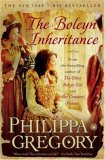
by Philippa Gregory
Published 2007
Gregory vividly brings Henry VIII's court, with its intense intrigues, politics, and passions, to life though the lives, and deaths, of his fourth, fifth and sixth wives.
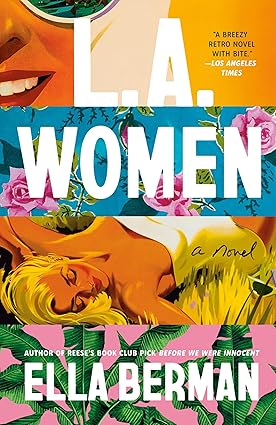
L.A. Women by Ella Berman
Two ambitious writers in 1960s LA face betrayal when one writes a novel based on the other's life.






Your guide toexceptional books
BookBrowse seeks out and recommends the best in contemporary fiction and nonfiction—books that not only engage and entertain but also deepen our understanding of ourselves and the world around us.

