
-
Your next favorite book
is waiting.
Summary | Excerpt | Reading Guide | Reviews | Beyond the Book | Read-Alikes | Genres & Themes | Author Bio

A Novel
by Rebecca Lehmann Book Reviewed by:
This article relates to The Beheading Game

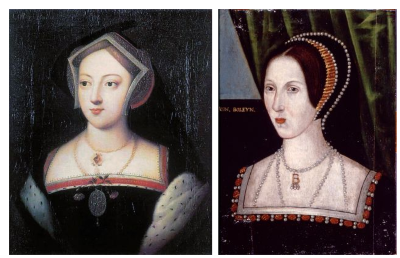 There is a warning about children born into the same family. Three children are problematic because one can always be left out and two can gang up on one. That was the case in the Boleyn family. Mary was the oldest. The other two, Anne and George, were best friends. They were sophisticated, intelligent, religious, loved art and literature and loved to laugh. They told each other their secrets, stood trial together, and were executed days apart.
Mary and Anne lacked the closeness of Anne and George because they traveled in different circles, and had different temperaments and personalities, not particularly unusual for siblings. Anne was more opinionated than her older sister, who had an adulterous affair with King Henry VIII before Anne became his wife.
Henry first took an interest in Mary when she became maid-of-honor to his first wife, Catherine of Aragon. Mary was described as beautiful, so it wouldn't have been a surprise that Henry of the roving eye noticed her. Their affair, while he was married to Catherine and she was married to her first husband, William Carey, was quite public. Henry even named a ship after her. Mary's two children, Catherine and Henry, were rumored to be children of the king, but they were never given royal bastard status and historians have never been able to confirm their paternal lineage.
While Mary was gladly sleeping with another woman's husband, her sister Anne was living in France. After Anne had returned to England and Mary's affair with Henry had cooled, Henry turned his attention to Anne. Unlike Mary, Anne was sharp-witted and religious. She had strong boundaries. She wouldn't sleep with Henry until he was divorced from Catherine.
Anne, who pushed for marriage instead of taking the mistress route, may have befuddled Mary. In the novel The Beheading Game by Rebecca Lehmann, Mary voices her consternation: "Do as I did and bed the poor man—put him out of his misery, enjoy his virility while he still has it, wed someone else and have a couple of gorgeous, fat babies the king will endow with lands and titles—it's really very simple, Anne."
Anne, however, enjoyed both power and prizes. She wanted to give birth to a prince; she loved the throne, court, aristocracy, and titles. Another difference between the sisters was that Anne was an outspoken radical. In The Beheading Game she is described as a believer with a linear mind. "She didn't believe the Eucharist really transformed into Christ's blood and body; it was clearly just wine and bread. She thought the mass should be delivered in English, not Latin, a language the common people couldn't speak or understand. She thought each person should be trusted with their own salvation, should form their own relationship with God. She sneaked copies of English Translations of biblical passages not just to other noblewomen but also to her maids."
Once her sister was queen, Mary suffered heartbreak. Her husband died from the sweating sickness and she was penniless. Six years later, Mary fell hard for a man younger than her, a soldier named William Stafford, who she wed. But Mary had not asked for permission to marry. The queen had just delivered a stillborn and was in no mood to grant charity to her sister. William Stafford wasn't a high match for a sister of the queen, Anne grumbled.
Mary was banished from court and her family disowned her. She left England to live with William and struggled financially. Unashamed, Mary admitted she would rather beg for bread as the wife of William Stafford than become queen.
Mary and Anne never reconciled.
When Anne and George were executed in 1536, Mary became an only child again as an adult. In 1543, in her 40s, she died of unknown causes.
Left: Mary Boleyn, unknown artist (18th century), via Wikimedia Commons
Right: Queen Anne Boleyn (before 1626), acquired by Edward Alleyn, via Google Arts & Culture
Filed under People, Eras & Events
 This article relates to The Beheading Game.
It first ran in the April 8, 2026
issue of BookBrowse Recommends.
This article relates to The Beheading Game.
It first ran in the April 8, 2026
issue of BookBrowse Recommends.
Theo of Golden by Allen Levi
One spring morning, a stranger arrives in the small southern city of Golden. No one knows where he has come from…or why…






Your guide toexceptional books
BookBrowse seeks out and recommends the best in contemporary fiction and nonfiction—books that not only engage and entertain but also deepen our understanding of ourselves and the world around us.


