
-
Your next favorite book
is waiting.
Summary | Excerpt | Reviews | Beyond the book | Read-Alikes | Genres & Themes | Author Bio

Stories
by Liadan Ní Chuinn Book Reviewed by:
All six stories that make up Every One Still Here by Liadan Ní Chuinn are set in contemporary Northern Ireland; that is, in a Northern Ireland officially at peace, yet still shadowed by the decades-long conflict known as the Troubles. On either side of this conflict were those who wanted Northern Ireland to remain in the United Kingdom, known as unionists and mainly Protestant, and those who wanted to be unified again with the Republic of Ireland, known as nationalists and mainly Catholic. There was regular violence among paramilitary groups, civilians, and British military forces. Though the Troubles are over, in theory, the aftershocks of the period reverberate through the pages of this book, haunting the lives of both those who lived through it and survived it, and those born after.
In the first story, "We All Go," a university student mourns his father while reflecting on his family history and how events he never directly witnessed have shaped his life. "Amalur" follows a young woman involved in the unspoken tensions of her boyfriend's family as she tries to define her own complicated relationship with her mother. "Mary," written in the second person, follows a narrator forced to confront a painful truth that reshapes her understanding of her beloved boyfriend as she struggles to find her voice as a writer. In "Russia," a man adopted from the country that gives the story its title works at a museum showcasing a controversial exhibition of preserved human bodies and tries to understand his fractured relationship with his sister. "Novena" centers on workers at a local crafts market divided by a scandal involving a fraudulent pregnancy clinic. The final story, "Daisy Hill," depicts a young man who witnesses his uncle's collapse—an experience that forces long-suppressed memories and emotions to the surface.
Each story has a plot, yet in all of them, it hardly matters, it feels incidental. In fact, they are all left unfinished, untied: scandals, sex trafficking, institutional failures, Instagram feeds dominated by trad wives, suicides, all are related in a flat, matter-of-fact tone, as the inevitable stuff that permeates our lives. What's underneath, the themes the plots bring forward, is what really matters: silence and unanswered questions, unhealed wounds and lingering guilt, responsibility, conformity and complicity, identity, the tension between belonging and existing at the margins, memory, fractured parent-child relationships, intergenerational trauma, and the display of hurt and suffering, both physical and emotional.
The first and last stories most explicitly confront the legacy of the Troubles. In an interview with Tolka, the author said they knew they wanted these two stories to bookend the collection.
In both, young male protagonists are haunted by a conflict they didn't live through, and try to get answers from adults who did but are unwilling to discuss it. The narrator of "We All Go," Jackie, thinks to himself: "This is my family. This is my dad's dad, and my dad's brother, and my dad. I can feel the blood in my head. This is home, isn't it? This is where we all come from. So why aren't they here? Why's there nobody here?" When visiting his family's home province, where only one aunt remains, he's haunted by his uncle and grandfather's internment by the British forces, and the hijacking of his parents' car by British soldiers when his mother was pregnant with him. The past hovers. In the same vein, in the last story, "Daisy Hill," Rowan demands, "How the fuck is it history?" when discussing the conflict with a relative who wants to leave the past behind. For Rowan, it simply is not past: it still affects those who made it out alive.
These characters are just as obsessed with the past as their creator. Of "Liadan Ní Chuinn," nothing is known but that their name is a pseudonym and that they were born in 1998, the year of the Good Friday Agreement that ended the Troubles. They belong to what has been called the "ceasefire generation": those born in the mid to late 1990s, in a society transitioning to peace, who did not experience the violence directly, but still navigated, and continue to navigate, its legacy.
During those years, Northern Ireland saw an increase in the rate of suicides double, many among the adults who had experienced the conflict as children, but a significant percentage among the younger generations as well. As professor of mental health sciences at the University of Ulster Siobhan O'Neill explains, "being parented by people who've been traumatized and everyone around you has been traumatized, you are going to be affected by that, even if you've never seen anything. Even if they never tell you the stories." Intergenerational trauma is a real, documented phenomenon.
Every One Still Here is heavy, and impactful. The prose is reiterative, but not in a way that feels like dwelling—repetition stands in for resolution. And if the writing feels unfinished, it aptly reflects Northern Ireland's history.
Then comes the coda. In nine pages, the author includes a litany of over fifty real-life victims of British state violence during the conflict. Their final moments are recounted in blunt, unadorned sentences: soldiers shoot, beat, crash, kill. "This is the truth," the author insists. It feels like a dam breaking.
"Where is it all supposed to go?" Rowan writes, over and over. The answer could be: into language, into the pages of stories like the ones that make up Every One Still Here, a powerful debut that carves out a space for grief and memory.
 This review
first ran in the March 11, 2026
issue of BookBrowse Recommends.
This review
first ran in the March 11, 2026
issue of BookBrowse Recommends.

If you liked Every One Still Here, try these:

The End of the World Is a Cul de Sac
by Louise Kennedy
Published 2024
Brilliant, dark stories of women's lives by "a very major talent" (Joseph O'Connor, Irish Times)
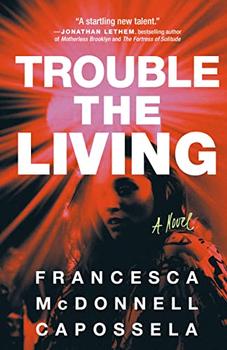
by Francesca McDonnell Capossela
Published 2023
From Northern Ireland to Southern California and back―a mother and daughter confront the violence of the past in an enthralling novel about the possibility of love and redemption during the most transforming and unsettled times.
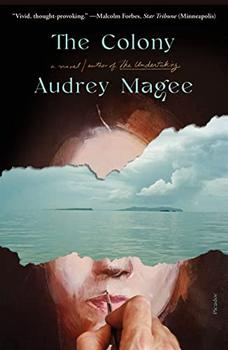
by Audrey Magee
Published 2023
In 1979, as violence erupts all over Ireland, two outsiders travel to a small island off the west coast in search of their own answers, despite what it may cost the islanders.
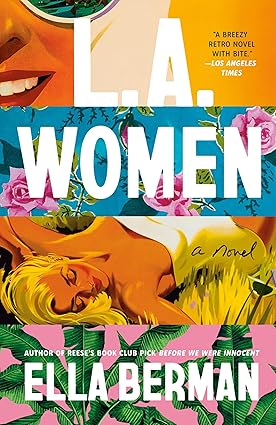
L.A. Women by Ella Berman
Two ambitious writers in 1960s LA face betrayal when one writes a novel based on the other's life.




Your guide toexceptional books
BookBrowse seeks out and recommends the best in contemporary fiction and nonfiction—books that not only engage and entertain but also deepen our understanding of ourselves and the world around us.

