
-
Your next favorite book
is waiting.
Summary | Excerpt | Reviews | Beyond the Book | Read-Alikes | Genres & Themes | Author Bio

Stories
by Liadan Ní Chuinn Book Reviewed by:
This article relates to Every One Still Here

In "Amalur," the second story in Liadan Ní Chuinn's debut collection Every One Still Here, a young Irish woman finds herself drawn less to her boyfriend than to his Basque family. Meals stretch late; anecdotes slip across generations. Through allusion and quotation, Chuinn traces a subtle symmetry between Ireland and the Basque Country, two territories shaped by distinct languages, mythic traditions, and long political struggle.
The parallels are there. Both Northern Ireland and the Basque Country possess ancient linguistic inheritances—Irish (aka Gaeilge or Gaelic) and Euskera, respectively—that predate the modern states governing the regions. Both experienced powerful nationalist movements in the twentieth century, and in both contexts armed groups emerged in response to national subjugation.
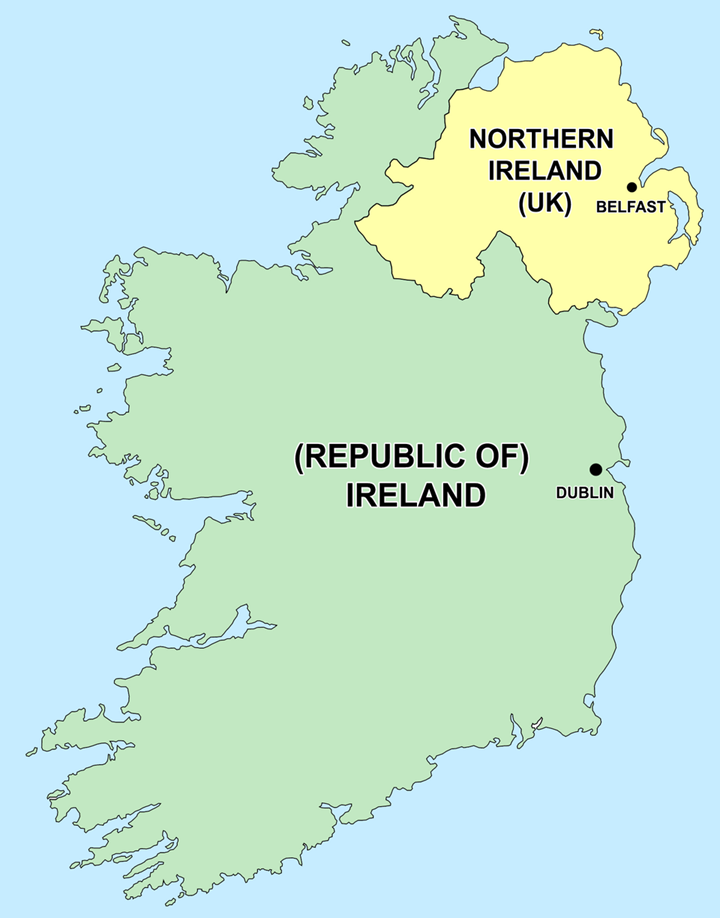 In Ireland, the conflict is rooted in centuries of British rule. Land confiscations, laws targeting Catholics, political exclusion, and the marginalization of Gaelic through state structures and education policy shaped a history widely recognized as colonial domination.
The Irish Republican Army (IRA) first operated under that name during the War of Independence (1919–1921), which followed the 1916 Easter Rising and the subsequent declaration of an Irish Republic. The conflict concluded with the 1921 Anglo-Irish Treaty, establishing the Irish Free State but partitioning the island: six counties in Ulster remained within the United Kingdom, a compromise that led directly to the Irish Civil War (1922–1923). Decades later, violence erupted again in Northern Ireland. During the period known as the Troubles (late 1960s–1998), the Provisional IRA (a branch of the original IRA that emerged in 1969 and prioritized armed over political measures) sought to end British rule in Northern Ireland and achieve reunification in a conflict that also involved paramilitaries loyal to the United Kingdom and British security forces. Over 3500 people were killed between both sides; the IRA was responsible for over 1800 of the deaths. The conflict formally concluded in 1998 with the Good Friday Agreement.
During the Troubles, the Irish language gained renewed symbolic force. Republican prisoners learned and taught it in jail as an act of resistance, and its public use often signaled political allegiance. The word "Taig," derived from the Irish name Tadhg, was used by Protestant loyalists as a derogatory slur against Catholics. It does not seem accidental that Ní Chuinn writes under a Gaelic pseudonym, aligning their authorial identity with this tradition of linguistic self-assertion.
Indeed, Northern Ireland's conflict was not solely national but also religious, pitting predominantly Protestant unionists who were loyal to the United Kingdom against predominantly Catholic nationalists. That religious dimension, central to the Irish case, has no direct equivalent in the Basque Country.
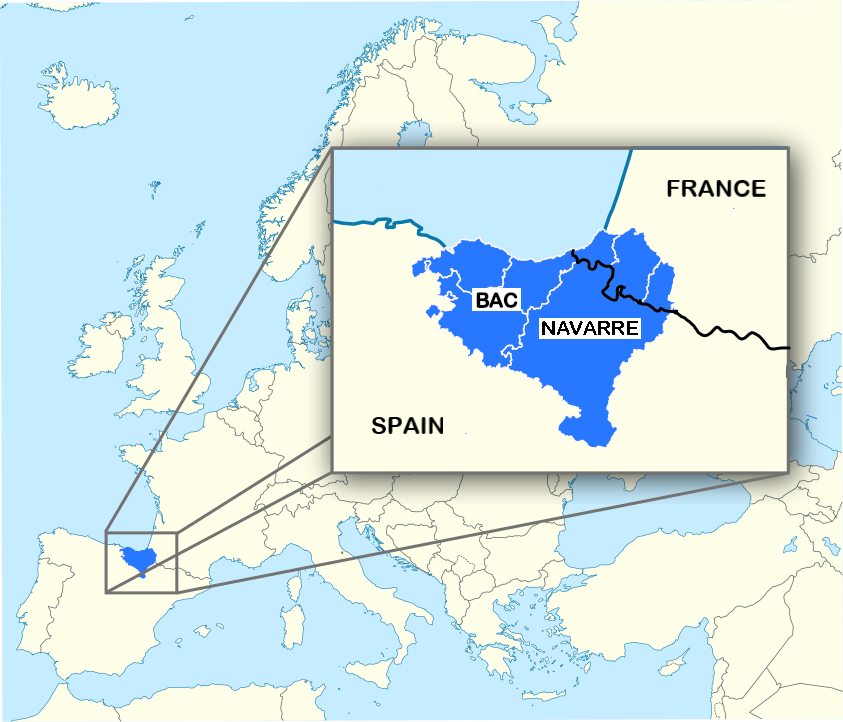 In Spain, ETA (Euskadi Ta Askatasuna, or "Basque Homeland and Freedom") was founded in 1959 during the dictatorship of Francisco Franco. It pursued an independent Basque territory spanning parts of northern Spain and southwestern France. ETA carried out attacks from the late 1960s, originally targeting security forces and politicians of opposing ideologies. From the 1980s onward, the group increasingly directed large-scale, indiscriminate attacks on civilians. In 2011, there was an international plea for ETA to cease its violent operations; among those who spoke out on the subject was Gerry Adams, the leader of Sinn Fein, the political branch of the Provisional Irish Republican Army (IRA). From 1970 to 2010, ETA killed 852 people, around 350 of whom were civilians. The organization formally dissolved in 2018.
Unlike Ireland's struggle against what is widely recognized as colonial rule, Basque nationalism didn't develop in a colonial context, though under Franco's dictatorship (1939–1975) the Basques faced severe repression. Under Franco, the state imposed a unified Spanish identity at the expense of minority groups like the Basques. The regime restricted the public use of Euskera, banned Basque names from civil registries for periods of time, and excluded the language from official education and administration. In "Amalur," one character explains that Euskera "was banned, it was illegal to give your child a Basque name, illegal to teach the language or learn it, and they fined us for speaking it, our own language, in our own land, the government removed the language even from graves." Later, another protests, via a quote attributed by many to Kurdish journalist Musa Anter: "if my mother tongue is shaking the foundations of your state, it probably means you built your state on my land," a line that could be applied to both Northern Ireland and the Basque Country.
What most enduringly unites both cases, however, is not armed struggle but the persistence of memory. That persistence is visible in the literary afterlife of each conflict: in the Basque Country, Fernando Aramburu's Patria (2016), or Homeland in English (which sold more than a million copies and has been translated to over thirty languages), is the best example of a new revival exploring this conflict, while Ní Chuinn's collection enters a long-established Northern Irish tradition of reckoning with the Troubles through fiction. In both contexts, literature becomes a space for communication, memory, language, and connection.
Map showing location of Northern Ireland, uploaded by Jonto, via Wikimedia Commons, CC BY-SA 3.0
Map of the Basque Country, created by Gabriel Trisca and edited by Jone Makazaga, via Wikimedia Commons, CC BY-SA 3.0
Filed under Places, Cultures & Identities
 This article relates to Every One Still Here.
It first ran in the March 11, 2026
issue of BookBrowse Recommends.
This article relates to Every One Still Here.
It first ran in the March 11, 2026
issue of BookBrowse Recommends.
Theo of Golden by Allen Levi
One spring morning, a stranger arrives in the small southern city of Golden. No one knows where he has come from…or why…






Your guide toexceptional books
BookBrowse seeks out and recommends the best in contemporary fiction and nonfiction—books that not only engage and entertain but also deepen our understanding of ourselves and the world around us.


