
-
Your next favorite book
is waiting.
Summary | Excerpt | Reviews | Beyond the book | Read-Alikes | Genres & Themes | Author Bio

 Book Reviewed by:
Jeanette Winterson is a prolific author with more than twenty books to her name and has written fiction, nonfiction, stories for children, memoirs, and scripts. Her first novel, Oranges Are Not the Only Fruit, won the Whitbread Prize, and in 2019 she was longlisted for the Booker Prize for Frankissstein: A Love Story. She also won a BAFTA for adapting her debut into a BBC miniseries.
In her new book, One Aladdin Two Lamps, inspired by The One Thousand and One Nights (or The Arabian Nights), she reflects upon a wide variety of issues through the lens of stories. More specifically, she explores the power of stories and how they can shape us and the world we live in.
The central story of The One Thousand and One Nights begins when King Shahryar, outraged by the unfaithfulness of his wife, orders her execution and then starts marrying a new virgin every night only to behead her by dawn. As the number of women dwindles, Persian queen Shahrazad volunteers to become Shahryar's wife to save those remaining. By narrating a different story each night, which is never finished by daybreak, she postpones her death until the next dawn, and the next, and the next, until eventually she saves herself from the king's rage and the king from his evilness.
Winterson starts each section of her book with a retelling of one of Shahrazad's tales. Taking them as a starting point, she reflects on a wide variety of topics, ranging from gender and economic inequality to AI and the climate crisis.
The main takeaway is the many-sided power of stories. Winterson argues that tales not only transform, but, perhaps more importantly, are themselves transformed depending on the agendas and biases of those who share them. It is thus important to recognize that the wrong stories can end up harming innocent lives by shaping and constraining people and groups even before they are born. For example, colonizers spread the story of the "uncivilized African" to serve their own interests. Men have long told stories about what women can and cannot do, socially engineering gender inequality. And higher classes continue to promote the myth of talent—that working hard enough alone is enough to bring one out of poverty. All in all, Winterson's main argument is that powerful men shape fake narratives we end up believing and internalizing.
Stories, however, also have the power to change all this by providing us with the necessary wisdom to realize that these fake narratives are not the only stories. Nor are they absolute truths. The world doesn't have to be as it is now and some tales help us imagine better, fairer futures. Here Winterson shares some of her own visions for the future. Many of these ideas sound far-fetched, but as she points out, that's the point—imagine the impossible. For instance, she envisions a future where advances in virtual reality remove bodily restrictions, where robots pave the way toward a non-binary world where gender becomes irrelevant, or where AI enables a global economy of abundance through a universal basic income. Winterson is clearly optimistic and inventive, but she does not go into detail about how these ideas might be implemented.
The final way stories can be powerful is in how they can change us by forcing us to look inward, away from the many distractions of today's world, and instead self-reflect. They can teach us how to be kinder, more tolerant, and able see the world from multiple angles by introducing us to flawed characters and letting us explore their dilemmas and troubles from a safe distance.
Winterson's book is structurally interesting. She essentially shares four different stories at the same time, interweaving them: Shahrazad's story, the story Shahrazad tells, her own story of herself growing up, and the story of our world's past and future. In retelling Shahrazad's tales, Winterson uses her own unique voice and style, often including 21st-century slang and references. She then pivots into her reflections on politics, the economy, history, art, life. A small detail from one of the tales, for example, a shape-shifting creature, inspires her to reflect on something else, such as how women are forced to "shape-shift" to meet social expectations. She frequently jumps from topic to topic, following loose threads in a free-associative way, sharing her views. On the one hand, this is engaging, since it almost feels like we are inside her mind, reading her thoughts as they come. On the other hand, this approach can be tiresome and hard to follow at times.
Her prose in the retellings of the Nights is fragmented and poetic, transferring the magic of Shahrazad's imaginary world to the reader. For the rest of the book, however, her style is direct, unstructured, and conversational. The prose often shifts from raw, dry language to more literary passages.
What I liked most was the central message concerning the power of stories to transform us both positively and negatively. I found the interweaving of the different narrative layers interesting and the free-associative structure engaging. Readers who like books that act as starting points for pondering topics such as identity, culture, and power dynamics, those who enjoy books about storytelling, and fans of Winterson's distinctive voice will surely enjoy this book.
 This review
first ran in the February 25, 2026
issue of BookBrowse Recommends.
This review
first ran in the February 25, 2026
issue of BookBrowse Recommends.

If you liked One Aladdin Two Lamps, try these:
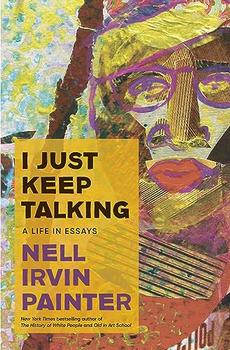
by Nell Irvin Painter
Published 2024
From the New York Times bestselling author of The History of White People and Old in Art School, a finalist for the NBCC Award, comes a comprehensive new collection of essays spanning art, politics, and the legacy of racism that shapes American history as we know it.
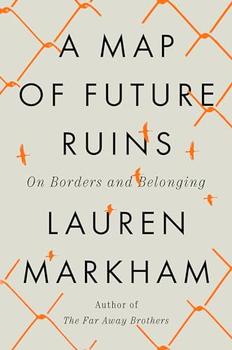
by Lauren Markham
Published 2024
A mesmerizing, trailblazing synthesis of reporting, history, memoir, and essay.
Why Be Happy When You Could Be Normal?
by Jeanette Winterson
Published 2013
Witty, acute, fierce, and celebratory, Why Be Happy When You Could Be Normal? is a tough-minded search for belonging, for love, identity, home, and a mother.

L.A. Women by Ella Berman
Two ambitious writers in 1960s LA face betrayal when one writes a novel based on the other's life.






Your guide toexceptional books
BookBrowse seeks out and recommends the best in contemporary fiction and nonfiction—books that not only engage and entertain but also deepen our understanding of ourselves and the world around us.

