
-
Your next favorite book
is waiting.
Summary | Excerpt | Reviews | Beyond the book | Read-Alikes | Genres & Themes | Author Bio

 Book Reviewed by:
Years before it landed on PEN America's Banned Books List, I checked out the sole copy of The Bluest Eye from my private school library, surprised Toni Morrison's novel was even there. I admit it was the cover that got me. A black girl holding a blue-eyed white doll with such benevolence. The image was startling and I was intrigued by this thing I never imagined, the idealization of blue eyes. But my mother wasn't pleased—to put it mildly—with my selection and tried to snatch it away from me when I wasn't paying attention. She knew the character Pecola Breedlove was having her father's baby, which was strike one in my mother's book, a pregnant eleven-year-old. Strike two: Pecola didn't believe in God because she prayed for blue eyes and nothing changed. Despite her blatant censorship, my mother lost the battle. I read The Bluest Eye. And then read it again. It was earth-shattering in its correlation of poverty to neglect and the uniquely positioned view of a father's rape of a daughter. But even Toni Morrison wasn't thrilled that children were reading her first novel. She agreed with my mother about The Bluest Eye. "It's not a children's book. It's scary."
Revisiting Toni Morrison's fiction, including The Bluest Eye, is English professor and novelist Namwali Serpell, whose book On Morrison is a literary deconstruction of Morrison's work replete with formal techniques, symbolism, and didactic structure. If a classical novel is like a brain, then Serpell is that novel's neurologist, separating the dura mater from the skull, exposing the insides with precise maneuvering. While she doesn't refer to Morrison as Queen Toni, it's clear that Serpell admires and adores Morrison's work, and in her academic way she halfway swoons over the subject of her analysis, which I'm fine with, because Serpell carefully plots out the why of Morrison's brilliance.
On Morrison is a book of essays in which Serpell journeys through specific Morrison novels as a literary anthropologist. Her scholarship has an elegance in the style of an academic trying to soften the taste of intellectualism so regular people can read their books. Serpell teaches at Harvard, and you are warned from the opening line: "There are many ways to be difficult in this world." To be sure, there are rich passages of deep literary thought designed to expose us to the full width of Morrison's intentions. Along with The Bluest Eye, there are essays on Sula, Jazz, Song of Solomon, Tar Baby, Beloved, and Paradise, among others, including her lone short story Recitatif.
Morrison's second novel (covered in the third essay in the book) is Sula, a story of best friends Sula Peace and Nel Wright, who are raised in opposite kinds of families. Sula lives with her grandmother Eva Peace and mother Hannah surrounded by chaos while Nel is raised by her meticulous mother Helene. The mothers and grandmothers are richly shaped as conventional, inappropriate, loose, meticulous, chaotic, or fierce, models that Sula and Nel either emulate or dismiss. They live in a place called the Bottom. This is an example of the literary device antiphrasis wherein a name evokes an image of what it is not. The Bottom isn't the bottom at all but is up in the hills where the Negroes live. The same can be said about the surname of Sula's family, the Peaces. They are not of peace, but chaos, confusion, and impulsivity.
Character names in Morrison novels are spiritual and symbolic. Milkman Dead (Jazz) latched on too long to his mother's breast, until the age of four, and leans into arrogance as he ages and becomes estranged from his father. The name Cholly (The Bluest Eye) is remarkably close to "chilly." Cholly is the character who impregnates his own daughter.
Morrison's favorite of her eleven novels was Jazz. It's a story of marriage and murder. A couple named Joe and Violet Trace leave Virginia for New York. Years later, Joe falls for a teenage orphan girl named Dorcas, and after she breaks things off to be with someone closer to her age, he shoots her to death.
As Morrison was shaping the character Violet—another evocative name in a cornucopia of Morrison character names—she reflected, "'I know that woman. I know her skirt size, what side she sleeps on. I know the name of her hair oil, its scent.' So that's what I wrote, effortlessly without pause, playing, just playing along with the voice." Which turned into: "I know that woman. She used to live with a flock of birds on Lenox Avenue. Know her husband, too. He fell for an eighteen-year-old girl with one of those deepdown, spooky loves that made him so sad and happy he shot her just to keep the feeling going."
My favorite essay is the book's sixth, "Beloved's Possessions," which examines Morrison's Pulitzer Prize-winning novel Beloved. For too many reasons to mention here, Beloved is my favorite Morrison novel despite its complexity, and Serpell's analysis is staggering, although I initially found it diminishing when she called Beloved a haunted house story.
In literary terms Beloved is classified as a neo-slave narrative, a modern fictional story steeped in slavery, but that is not what Beloved is about. A murdered girl who rises from the dead and haunts the mother who killed her, a woman named Sethe, is what Beloved is about. A ghost who judges the mother who killed her despite the mother's past trauma and reasoning is what Beloved is about.
Morrison took seriously the writerly responsibility to raise the dead and haunt the living, because of history. "I feel for the woman I'm calling Sethe, and for all of these people; these unburied, or at least unceremoniously buried…" Serpell notes that Morrison erases the gap between the living and the dead and the past and the present by extolling the dedication of the novel on its first page: "Sixty million and more." Referring to the diaspora dead that drowned in ocean waters en route to enslavement and the dead that reached Southern land and were tortured.
Beloved is layered with meanings about how the past never dies and how slavery violence was barbaric. The aesthetic is impossible to ignore. On Sethe's back is a chokecherry tree from the whippings, a work of art and a work of trauma. On Beloved's throat lay a jagged line from east to west to keep her free. On Denver's face is discernible fear; she is unable to leave the house and her mother Sethe, too afraid of the ghosts in the world.
Toni Morrison's brilliance is balanced by her regularity, which Serpell points out. Morrison was a writer for her high school newspaper. She was active in theater at Howard University. She wrote letters to editors. She changed her name. She was divorced. She was a mother. She's like us.
She's not. Toni Morrison was one of the few black editors at a publishing house (Random House) who left to write novels and became canonical. The black writers she worked with at Random House left soon after Morrison departed. Morrison has written classics and is often understood to be a writer too difficult to understand or too experimental to read over a single weekend or too in love with ghosts and death and expressing the ways in which sexual violence interrupts the childhoods of black girls.
"People tell me that I am always writing about love…I nod, yes, but it isn't true—not exactly. In fact, I am always writing about betrayal. Love is the weather. Betrayal is the lightning that cleaves and reveals it."
What drew me to Toni Morrison was a story about a black girl who wanted blue eyes. What kept me rereading Toni Morrison was something Nelson Mandela once said. If you talk to a man in his language you speak to his heart. She spoke my language and it did something to my heart. While I won't lie and say I understand the layered complexities of all her novels—I find myself searching for help from academics like Serpell—I recognized early on the literary genius of Toni Morrison. And the wisdom.
"Somewhere inside you," Morrison wrote in her novel Home, "is that free person I'm talking about. Locate her and let her do some good in the world."
 This review
first ran in the February 25, 2026
issue of BookBrowse Recommends.
This review
first ran in the February 25, 2026
issue of BookBrowse Recommends.

If you liked On Morrison, try these:

by Ta-Nehisi Coates
Published 2024
The #1 New York Times bestselling author of Between the World and Me journeys to three resonant sites of conflict to explore how the stories we tell—and the ones we don't—shape our realities.
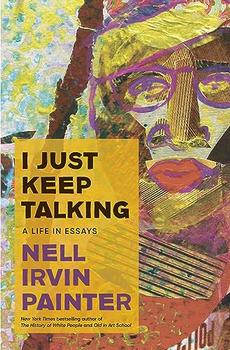
by Nell Irvin Painter
Published 2024
From the New York Times bestselling author of The History of White People and Old in Art School, a finalist for the NBCC Award, comes a comprehensive new collection of essays spanning art, politics, and the legacy of racism that shapes American history as we know it.

by Elaine Castillo
Published 2022
An exploration and polemic that redefines the power and potential for reading by a novelist whose "prose is as good as it gets" (NPR) and who has "a real voice: vernacular and fluid, with a take-no-prisoners edge" (Kirkus).

L.A. Women by Ella Berman
Two ambitious writers in 1960s LA face betrayal when one writes a novel based on the other's life.






Your guide toexceptional books
BookBrowse seeks out and recommends the best in contemporary fiction and nonfiction—books that not only engage and entertain but also deepen our understanding of ourselves and the world around us.

