
-
Your next favorite book
is waiting.
Summary | Excerpt | Reviews | Beyond the book | Read-Alikes | Genres & Themes | Author Bio

An African Childhood
by Patrice Nganang Book Reviewed by:
A self-professed "street kid" who grew up in the Cameroonian capital of Yaoundé, Patrice Nganang begins his winsome memoir, Scale Boy, "I had a scale as a kid"—an enigmatic opener from which he unfurls a delightful mélange of stories, memories, and trenchant observations of his boyhood in post-independence Cameroon. Urged by his mother to learn a trade, young Patrice first apprentices at a local mechanic, where he learns how to disassemble an engine. But what he wants most is a scale, because, as Nganang explains, weighing people on the street is an established, lucrative sideline in Yaoundé, and one that would afford him a freedom most ten-year-old boys never enjoy.
Of his experiences as a scale boy, Nganang writes with a novelist's perceptive eye for both the absurd and the awful (as when he writes that the "flying taxis" of the city hit a child "right in front of me, his white brains splattered on the dusty asphalt"). Becoming a scale boy was his way of "discovering Ongola"—a nickname for the city of Yaoundé—as well as "people's behavior." Nganang has an ear for the spoken word, and his many dialogue scenes are infused with tribal languages, such as Medumba:
"Musa a nkwan? Or worse; a bu'? Poor boy! Like me he was probably on a path to acquiring the form of lap wut that his northern culture prized!"
In addition to Medumba, German and French are used throughout the book, as well as arcane English words (e.g., "axanthic," "phagocytosis," and "allogenous"). Some readers may stumble over these linguistic complexities, but a slow, close reading pays dividends, as Scale Boy evokes the sights, smells, sounds, and tastes of Cameroon as experienced by a young boy.
As he discusses his work on the streets of Yaoundé, as well as stories of his home life and adventures with his sister, Lili, Nganang reveals fascinating insights into the intertribal linguistic and cultural differences in West Africa—including, for example, his own Bazu and Bamiléké roots and how the two different affiliations played out in his home. But Nganang's dawning understanding of colonial influence—which saw Cameroon under German, British, and finally French rule before the nation achieved independence—comes from books. Nganang recounts how his scale boy work and a treasured book on Cameroonian history from his bookbinder father's workplace influenced his intellectual curiosity:
"Weighing people was bringing me to reading books, and books were throwing me into the belly of Cameroon's history, and into the destructive delusions of World War I and World War II."
Nganang's most sagacious insights revolve around the darker historic significance of scales in West Africa's past, i.e., the larger scales used to weigh human beings for enslavement abroad. He juxtaposes these scales of oppression with his own "side hustle," which earned him money and eventually, via the bookish proclivities his work enabled, a scholarship to study abroad. "For one two three four hundred years, the scale was the very last instrument Black people stepped onto before boarding the slave ships, before entering the soul-wrenching and dreaded institution of their despair," he writes. And yet the scale also inspires and empowers him to be a writer, helping him transform his "boiling mind," fed by a stack of books, into an informed mind that is aware of the power of writing to tell his country's story:
"Papa's library … mostly had books written by Cameroonians. By Black people … I was entering a global religion and did not know it, for these were not the writers whose books you would have in world libraries, but again, do world libraries have books written by Black people, by African, by Cameroonian people?"
A lyrical blend of history, memory, and family stories, Scale Boy is a dynamic memoir equal parts funny, poignant, and revelatory of the early life of one of Cameroon's most lauded contemporary authors.
 This review
first ran in the February 11, 2026
issue of BookBrowse Recommends.
This review
first ran in the February 11, 2026
issue of BookBrowse Recommends.

If you liked Scale Boy, try these:
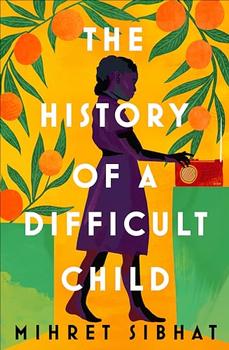
The History of a Difficult Child
by Mihret Sibhat
Published 2024
A breathtaking, tragicomic debut novel about the indomitable child of a scorned, formerly land-owning family who must grow up in the wake of Ethiopia's socialist revolution
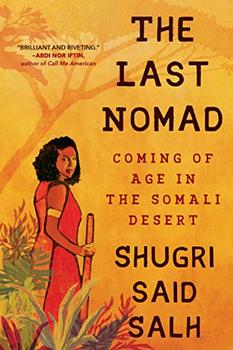
by Shugri Said Salh
Published 2022
"I am the last nomad. My ancestors traveled the East African desert in search of grazing land for their livestock, and the most precious resource of all - water. When they exhausted the land and the clouds disappeared from the horizon, their accumulated ancestral knowledge told them where to move next to find greener pastures. They loaded their ...
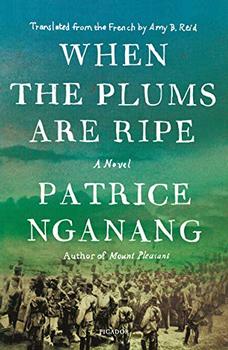
by Patrice Nganang
Published 2020
The second volume in a magisterial trilogy, the story of Cameroon caught between empires during World War II.
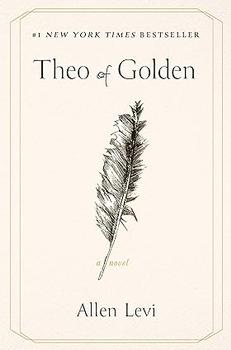
Theo of Golden by Allen Levi
One spring morning, a stranger arrives in the small southern city of Golden. No one knows where he has come from…or why…






Your guide toexceptional books
BookBrowse seeks out and recommends the best in contemporary fiction and nonfiction—books that not only engage and entertain but also deepen our understanding of ourselves and the world around us.

