
-
Your next favorite book
is waiting.
Summary | Excerpt | Reviews | Beyond the Book | Read-Alikes | Genres & Themes | Author Bio

An African Childhood
by Patrice Nganang Book Reviewed by:
This article relates to Scale Boy

In Scale Boy, author Patrice Nganang relates his colorful childhood in the evolving post-colonial world of Cameroon and his love of books, reading, and writing. Nganang left Cameroon to pursue a Ph.D. in Germany and now teaches comparative literature at Stony Brook University in New York. His most renowned novels are the Cameroon trilogy, spotlighting a transformative period in Cameroon's history through the eyes of diverse fictional characters:
Mount Pleasant (2016)
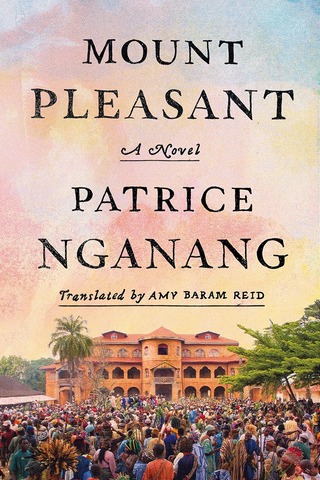 A tale of colonialism and transformation, Mount Pleasant begins in 1931 with Sara, a nine-year-old girl taken from her home to become the 681st wife of Sultan Njoya. A slave named Bertha responsible for "training" the Sultan's wives sees a spark of her dead son in the young girl and decides to save her by disguising Sara as a boy. As a boy, Sara witnesses the magical world of the Sultan, a place where artists and intellectuals thrive. Decades later, a student travels to Cameroon and meets an elderly Sara ready to tell her story.
Nganang's novel was called "a modern epic, tinged with liberal doses of magical realism, of life in his country's colonial era," and critics lauded Nganang's ability to recenter and refocus the African experience of collapsing empires and war.
When the Plums Are Ripe (2019)
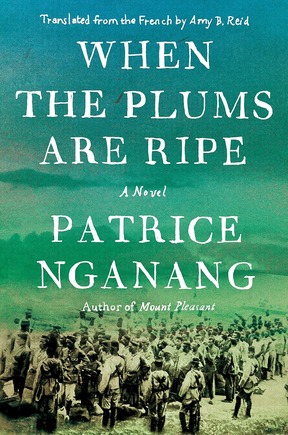 In the second volume of his trilogy, Nganang focuses on a Cameroon caught between empires during World War II. His main character is a poet and bureaucrat, Pouka, who sees in Cameroon's plum harvest season and its aftermath—when "in the evenings the sellers throw all their still-unsold plums into the embers"—the perfect analogy to the forced entry of African infantrymen into the slaughterhouse of war in battles like Kufra and Murzuk. The novel addresses the Cameroonian experience of resisting both Vichy and Free France elements in the country after the fall of France in 1940, just as a growing nationalism advocated resisting colonial rule.
In the Washington Independent Review of Books, Yelizaveta Renfro wrote that Nganang's narrative is "self-conscious about its role in telling a story that has not been adequately told; the narrator often lapses into meta-reflection about giving voice to the colonized—as opposed to versions of history written by the victors."
A Trail of Crab Tracks (2023)
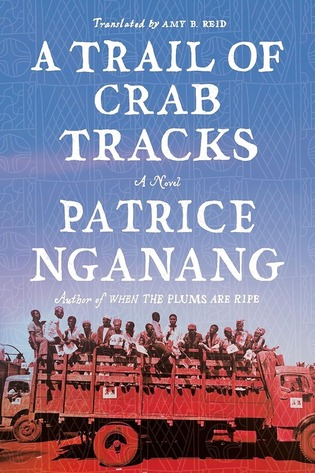 In the concluding volume of his trilogy, Nganang moves to the present day, in which a man named Nithap leaves his native Bangwa to visit his son in America. But the narrative soon becomes a blend of past and present, ranging from New Jersey to Bamiléké country, as Nithap shares his life story with Tanou, his son. Tanou will follow the "trail of crab tracks" in Nithap's tale to discover the truth of his father and his country.
This simple-sounding plot is anything but, however; in the New Yorker, Kristen Roupenian writes that a basic plot summary "hardly begins to capture the sweep of Nganang's novelistic ambitions." Through the father and son dynamic, Nganang explores how heirs of generational trauma—and the parents who endured trauma directly—relate to each other; it is a novel in which "politics looms large over fiction, and fathers loom large over sons."
All three books were translated from the French by Amy B. Reid, an award-winning translator who has worked with Nganang on multiple projects since 2001.
For readers new to Nganang, this trilogy is a dynamic entry point to his craft while also being a rich history of Cameroon and its twentieth century march toward independence.
Filed under Books and Authors
 This article relates to Scale Boy.
It first ran in the February 11, 2026
issue of BookBrowse Recommends.
This article relates to Scale Boy.
It first ran in the February 11, 2026
issue of BookBrowse Recommends.
L.A. Women by Ella Berman
Two ambitious writers in 1960s LA face betrayal when one writes a novel based on the other's life.






Your guide toexceptional books
BookBrowse seeks out and recommends the best in contemporary fiction and nonfiction—books that not only engage and entertain but also deepen our understanding of ourselves and the world around us.

